Listen to New Voices on Studs Terkel our partnership with 826CHI-here! Read the Story


Showing 121 - 135 of 252 results
-
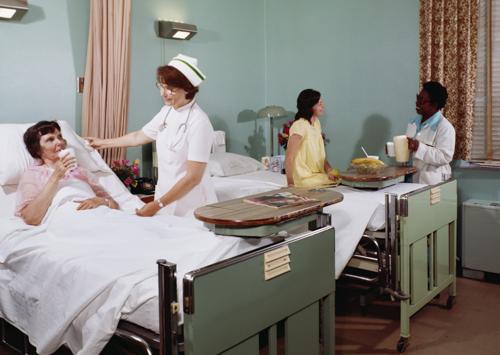
Drs. Quentin Young, Lambert King and Robert Maslansky discuss public hospitals in the United States
Apr. 26, 1976 Drs. Quentin Young, Lambert King and Robert Maslansky discuss public hospitals in the United States. Young is the chairman of the Department of Medicine at Cook County Hospital, King is the medical director of Cermak Memorial Hospital, and Maslansky is the director of medical education at Cook County Memorial Hospital.
-

Drs Marvin Schwarz, Hy Hirschfeld, and Ed Diener discuss the Elan School in Maine
Aug. 11, 1975 Dr. Marvin Schwarz, Dr. Hy Hirschfeld, and Ed Diener discuss the Elan School for troubled adolescents in Poland, Maine. The Elan School is a therapeutic boarding school for adolescents.
-
Dr. Willard Gaylin discusses his book "Rediscovering Love"
Oct. 10, 1986 Thinking a person is special and trusting that person and committing yourself to that person are two steps for real love, as covered in Dr. Willard Gaylin's book, "Rediscovering Love". One can not go through life in an armored car but rather Gaylin talks about taking risks. One of Gaylin's last points, if you find yourself in a loveless life, to compensate, give love away.
-
Dr. Willard Gaylin discusses his book "In the service of their country"
1970 Dr. Willard Gayelin talks about and reads from his book "In the Service of Their Country." He talks about the imprisonment of conscientious objectors who did not want to participate in the war.
-
Dr. Willard Gaylen discusses his book "Feelings" and how humanity and feelings are connected
Feb. 23, 1979 Dr. Williard Gaylen, a physician and professor of psychiatry at Columbia, discusses how feelings define humanity. He explains that there are no "bad" or "good" feelings, because even anxiety and guilt are strictly human emotions. Dr. Gaylen also talks about how envy is the only useless feeling. Two recordings of people talking about pride and guilt are also played.
-

Dr. Urie Bronfenbrenner discusses his book "Two Worlds of Childhood: U.S. and U.S.S.R."
Jul. 22, 1970 Dr. Urie Bronfenbrenner discusses the differences between how children and childhood are treated in the United States and the Soviet Union. Topics of discussion include the age segregation of American society, the value of intergenerational ties, peer group influences on children, and the influence of societal expectations on parenting and child raising.
-
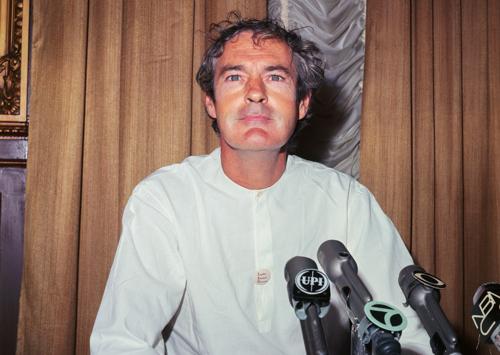
Dr. Timothy Leary discusses the stages of the psychadelic experience of turning on and his role as a Shaman ; part 2
Dec. 1, 1966 Studs interviews Dr. Timothy Leary about the three stages of the psychadelic experience: turning on, tuning in, and dropout. Leary discusses how his life changed from being a successful psychologist and professor at Harvard to renewing his life as a religious teacher. He shares how the drug LSD is used in the tribal communities who turn on and also explains the values of those who practice turning on. Leary also describes other methods used to turn on, which he considers a religious experience. Studs reads what Richard Goldstein said about Dr. Leary.
-
Dr. Thomas Szasz discusses his book "The Manufacture of Madness: A Comparative Study of the Inquisition and the Mental Health Movement"
1970 Dr. Thomas Szasz discusses his book "The Manufacture of Madness: A Comparative Study of the Inquisition and the Mental Health Movement" and the ways that mental illness has been used to control and maintain the status quo, scapegoat certain kinds of people, and label people as "other." Szasz asserts his belief that mental illness and mental health cannot be defined, that depression and schizophrenia are not diseases, and the distinction between individuals seeking mental health treatment and those who are institutionalized against their will.
-
Dr. Theodore Binder discusses his time in Peru and Mexico
Nov. 3, 1975 Interviewing Dr. Theodore Binder and discussing Peru and Mexico.
-
Dr. Theodor Rosebury discusses his book "Microbes and Morals" and the cultural history of communicable diseases and infections
1970 Dr. Theodor Rosebury discusses the history and myths of communicable and sexually transmitted infections, how they are represented in media, and the impact of shame.
-
Dr. Theodor Rosebury discusses his book "Life on Man"
1969 Dr. Theodor Rosebury dissects cultural ideas around cleanliness and shame as presented in his book "Life of Man".
-
Dr. Samuel Gorovitz discusses the book "Doctors' Dilemmas"
Sep. 22, 1982 In his book, "Doctors' Dilemmas: Moral Conflicts in Medical Care," Samuel Gorovitz tries to show his readers the moral dilemmas that doctors face. Gorovitz explained that physicians need to learn what it’s like to be a patient. Gorovitz also believed that before a student enter medical school, he or she should have spent some time in a hospital as a patient.
-
Dr. Samuel Epstein reads from and discusses his book, "The Politics of Cancer"
Nov. 18, 1978 Making people aware that toxic chemicals in our everyday lives can cause cancer has been one of Dr. Samuel Epstein’s main goals. According to his book, “The Politics of Cancer,” the government really won’t step in until there is a public outcry.
-
Dr. Samuel Epstein discusses his book, "Hazardous Waste in America"
Mar. 14, 1983 Dr. Samuel Epstein, author and Director of Occupational and Environmental Medicine, at the University of Illinois Medical School, talks about his book, "Hazardous Waste in America." Dr. Epstein explains the four types of hazardous waste, (nuclear, petroleum, mining, and fossil fuels) and describes how they can better be disposed of including burning, recycling/renewing, and interim storage. He also describes a case study of Hoffman-Taff in Verona, Missouri.
-
Dr. Samuel Epstein discusses cancer prevention
Dec. 15, 1994 Carcinogens, food dyes, food preservatives, pesticides, nitrates and chemicals used to make cosmetics are just a few things that cause cancer, according to Dr. Samuel Epstein. He explains that the public has the right to know what’s being put into our food and into everyday items that we use. One of his missions is to get labelling on packages changed to include more information so the public can be aware and forewarned of harmful ingredients that cause cancer.