Listen to New Voices on Studs Terkel our partnership with 826CHI-here! Read the Story


Showing 31 - 45 of 365 results
-
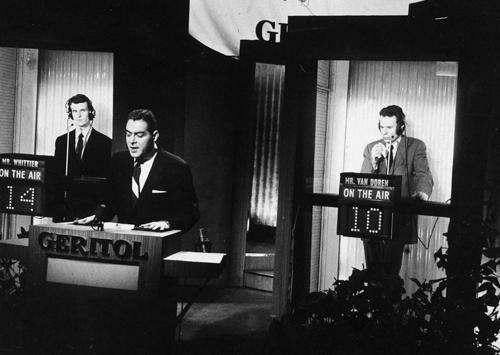
Studs Terkel discusses investigative journalism with author Fred J. Cook
May. 13, 1966 Studs and investigative journalist Fred J. Cook discuss Cook's book "The Corrupted Land: The Social Morality of Modern Americans" (Macmillan, 1966). The main topics of conversation are social morality and the corruption of the American business ethic. Terkel and Cook discuss unsung heroes, television quiz scandals,
-

Studs Terkel discusses interviews he conducted for his book "Working"
Aug. 22, 1978 Studs Terkel plays reenacted excerpts of interviews of various people from his book "Working." These interviews include people in a number of occupations including a car hiker, newspaper delivery boy, farm worker, homemaker, and waitress.
-
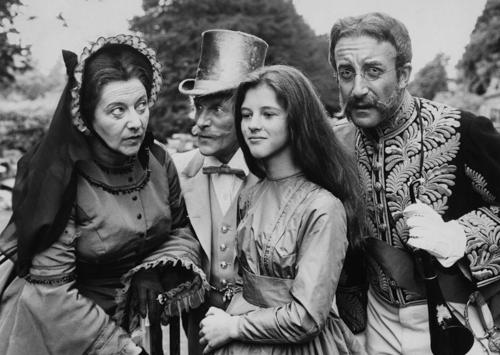
Studs Terkel discusses childhood, imaginiation, science, social history, politics, medicine and theater with Jonathan Miller in London, England
Jonathan Miller reminisces about his childhood in Regent Park, London and offers his opinion on philosophy and the changing English class structure with the loss of the Indian empire. His remake of "Alice in Wonderland" for BBC 1 is reviewed and he states he is most interested in the human imagination.
-
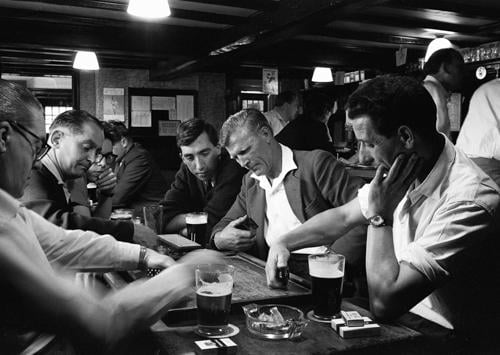
Studs speaks with patrons at Mr. and Mrs' Lawrence's pub in the British Midlands near Stratford-upon-Avon
1962 Studs interviews patrons in a the pub of the Falcon Hotel, owned by Mr. and Mrs. Lawrence, while in Stratford-upon-Avon (Midlands) in England. A variety of questions were asked about favorite memories, jobs, and daily life.
-

Stokely Carmichael, Charlie Cobb, and Courtland Cox discuss the SNCC ; part 1
Jul. 23, 1965 Stokely Carmichael, Charlie Cobb, and Courtland Cox discuss civil rights and African Americans in politics. Discussing the philosophy of SNCC.
-
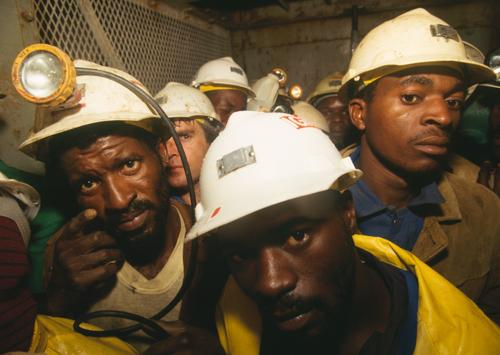
South African gold miners discuss their work
1963 Studs Terkel talks with Mr Law, the chief of the miners hospital, and the workers in the mine as he tours the gold mine. He he speaks to the miners about where they are from and talks with them about their jobs.
-
Sir George Bolton of Bank of London discusses British economic depression
Sep. 23, 1970 Sir George Bolton discusses how the 1929 American stock market crash affected international banking and investment and how economy and culture relate to each other.
-

Seymour Melman discusses his book "Pentagon Capitalism: The Political Economy of War"
Jun. 8, 1970 Seymour Melman discusses his book "Pentagon Capitalism: The Political Economy of War." Topics of discussion include the military-industrial complex and the state management of industry, particularly in regards to defense.
-
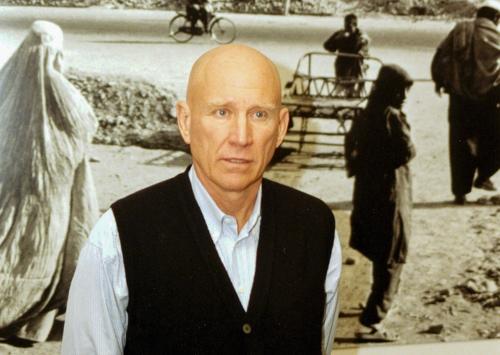
Sebastiao Salgado discusses the book "Workers: An Archaeology of the Industrial Age"
Sep. 27, 1993 Sebastiao Salgado, a Brazilian documentary photographer and photojournalist, converses with Studs about his book "Workers: An Archaeology of the Industrial Age". Mr. Salgado shares stories with Studs of the people he has photographed, and the things he has learned about the perseverance of human nature. Several songs are interspersed;
-
Scott and Helen Nearing discuss their book "Living the Good Life"
Nov. 13, 1970 After being thoroughly disillusioned and disgusted with city life, Scott and Helen Nearing moved to a farm. They talk about homesteading in their book, "Living the Good Life: How to Live Sanely and Simply in a Troubled World". They built their house of stone and they farmed the land. They ate no meat, as they didn't believe in hunting or killing animals. The Nearings hadn't seen a doctor in over 40 years.*Please note: some sections have been edited out from the original recording due to copyright considerations
-
Sam Pilafian and Gerhard Meinl discuss the tuba
Aug. 30, 1991 While in town for the Chicago Jazz Festival, Sam Pilafian and Gerhard Meinl discuss the history of the tuba. With demonstrations on the tuba, they play scales and other short pieces. Gerhard Meinl's family business of making instruments like the tuba has been around since 1810, explained Meinl.
-
Russell Baker reads from and discusses his book "The Good Times"
Sep. 21, 1990 Back in his day, there was no journalism school, explained Russell Baker. He spent time with the police and that's how he often got his stories about the underclass or the superfluous. Baker pointed out when a paper didn't want to print one of his stories, Baker was told the subject matter was in poor taste.
-
Ronald Blythe discusses the village of Akenfield ; part 1
1968 Ninety five miles outside of London, Ronald Blythe has interviewed residents of the village of Akenfield for his next book, "Akenfield: A Portrait of an English Village." Blythe said what surprised him most of all was that newspapers and TV didn't have much effect on this little village. Blythe also learned that the village people would take part in political conversations with one another but they'd never let on as to which political party they were apart of.
-
-
Robert Theobald discusses his books “Teg’s 1994” and “An Alternative Future for America II”
Apr. 30, 1970 Economist Robert Theobald discusses changes in society, the future’s outlook, and his books “Teg’s 1994” and “An Alternative Future for America II” with Studs Terkel.