Listen to New Voices on Studs Terkel our partnership with 826CHI-here! Read the Story


Showing 46 - 57 of 57 results
-

-
-
-

Carl Sagan and Ann Druyan discuss their book "Shadows of Forgotten Ancestors"
Oct. 5, 1992 Evolution and the future of the human race are among topics in Carl Sagan's and Ann Druyan's book, "Shadows of Forgotten Ancestors: A Search for Who We Are." Included is an excerpt of the astronomer Harlow Shapley speaking at the beginning. Carl Sagan also reads an excerpt from the book at the end.
-
Bertrand Russell discusses science and world peace. Phyllis Evans discusses the National Health Plan ; part 1
1962 Sir Bertrand Russell says scientists have a fundamental obligation to let the authorities know if and when what they're working on could lead to or cause a war. Russell claims, no matter the side, there are no winners as a result of war. The world could be a far better place, Russell explained, if it weren't for the fact of man's hatred toward other men. If one lives in the United States and has a grave illness or needs a major surgery, Phyllis Evans says one should not have to go into bankruptcy because of all the costs.
-
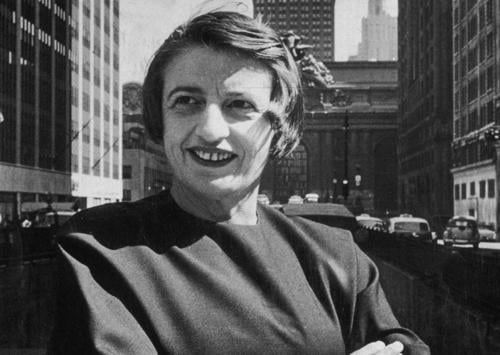
Barbara Branden discusses "The Passion of Ayn Rand"
Aug. 26, 1986 Discussing "The Passion of Ayn Rand" (published by Doubleday) with the author Barbara Branden.
-
-
An interview with journalist and historian Otto Friedrich
Feb. 27, 1976 When Otto Friedrich wrote his book, Going Crazy: An Inquiry Into Madness in Our Time, his intention was to find out from those with mental illness what it was like to go crazy. Of the people Friedrich asked, about a third of them were treated with professional help, a third were helped with medications, and the other third preferred to be left alone.*Please note: some sections have been edited out from the original recording due to copyright considerations
-
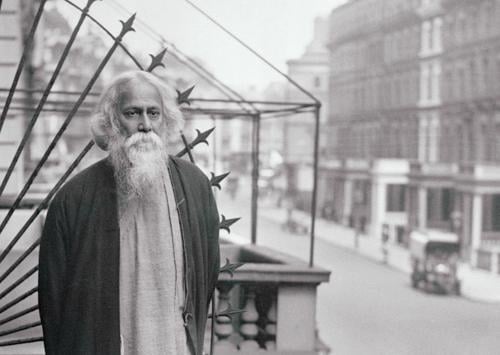
Amiya Chakravarty discusses Rabindranath Tagore
Jun. 11, 1965 Amiya Chakravarty discusses Rabindranath Tagore. Includes song and poem by Rabindranath Tagore.
-
Alan Watts discusses and reads from his book "In My Own Way"
1970 In Alan Watts' autobiography, "In My Own Way," he explains that the song "Onward Christian Soldier" is militant, and of a militant religion, whereas Zen Buddhism is not militant at all. Watts also says that most of the troubles that go in the world are created by people that take life too seriously.
-
A conversation with Mortimer J. Adler about his book, Aristotle for Everybody
Nov. 1978 The philosopher and educator talks about how Aristotle influenced entire branches of science and philosophy - logic, physics, astronomy, ethics, and psychology. Adler explains that Aristotle did so not by answering questions, but by asking them.*Please note: some sections have been edited out from the original recording due to copyright considerations
-
A conversation with Mortimer J. Adler about his autobiography, Philosopher at Large
Sep. 7, 1977 The philosopher and educator talks about how his early studies were influenced by the writings of John Stuart Mill and the Ancient Greek philosophers, and how his career was influenced by his partnership with the University of Chicago president Robert Hutchins.*Please note: some sections have been edited out from the original recording due to copyright considerations