Listen to New Voices on Studs Terkel our partnership with 826CHI-here! Read the Story


Showing 121 - 135 of 212 results
-
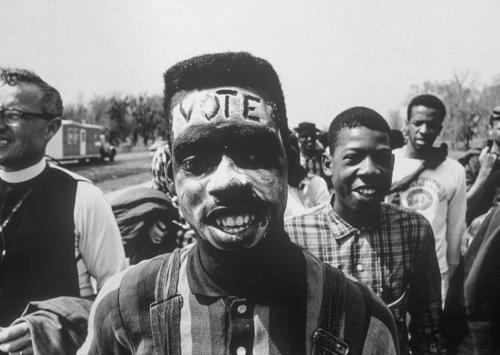
Interview in Montgomery, Alabama
Mar. 25, 1965 Interviewing in Montgomery, Alabama on March 25, 1965 (Montgomery #1). Speaks with Reverend William Franklin Pascal, cab driver, two barbers
-

Horace Cayton discusses his book "Long Old Road" ; part 2
Sep. 7, 1966 Content Warning: This conversation has the presence of outdated, biased, offensive language. Rather than remove this content, we present it in the context of twentieth-century social history to acknowledge and learn from its impact and to inspire awareness and discussion. Loneliness and hardships of both fitting in and finding a job are covered in the continuation of Horace Cayton's, "Long Old Road: An Autobiography." By living in a middle class home in Seattle with a full time Japanese servant, Cayton was seen as better off than most people.
-
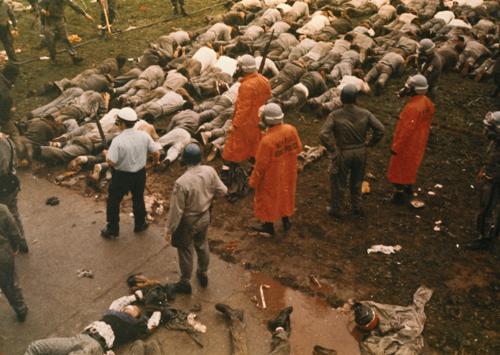
Herman Badillo discusses "A Bill of No Rights: Attica and the American Prison System"
Jun. 26, 1972 Congressman Herman Badillo discusses the prisoner uprising at Attica Correctional Facility in upstate New York, and how race played a role in the unwarranted killing of inmates and the subsequent government and administrative cover up of the incident. Badillo reads excerpts from his book, "A Bill of No Rights: Attica and the American Prison System," and discusses prisoner rights, rehabilitation, and the endemic injustice and racism in the American prison system.
-
Herbert Kohl discusses Myles Horton and the book "The Long Haul: An Autobiography"
Apr. 5, 1990 Progressive educator Herbert Kohl discusses educator and founder of the Highlander Folk School Myles Horton and the book about him, "The Long Haul: An Autobiography." The book was written by Herbert Kohl and his wife, Judith Kohl.
-
Henry Louis Gates, Jr. discusses race and the magazine "Critical Inquiry"
Jan. 24, 1986 As the guest editor of “Critical Inquiry,” Henry Louis Gates, Jr. covered the importance of Black writers and their contributions. Because there is no color blindness is the western world, explained Gates, pointing out that one is a Black writer or a Black doctor is important to society. Gates also covers the issue of race not being solely about Black and white people but rather it has to do with multi-ethnic and multi-cultural people.
-
Henry Fonda and John Houseman discuss the play "Clarence Darrow"
Henry Fonda and John Houseman talk about working with one another on "Clarence Darrow: A One-Man Play". Houseman is in awe of Fonda's portrayal of Clarence Darrow, explaining that in the play, the audience can really see the growth of Clarence Darrow, from a young lawyer to an experienced, wise one. Fonda talks about the opening scene when Darrow recalls his father talking to him when he was a young boy. Fonda reflects on times when his father talked to him. Fonda recalls being taught not to hate individuals.
-
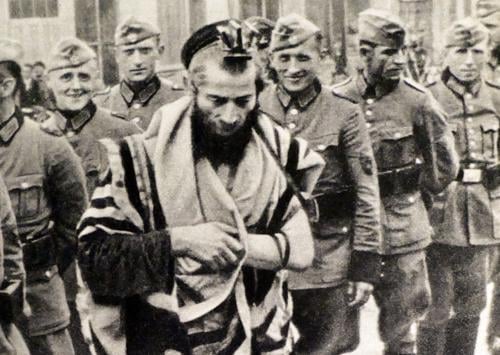
Heinrich Gruber and Howard Schomer discuss Nazi Germany and resistance
1968 German theologian Heinrich Gruber and pastor Howard Schomer discuss Nazi Germany and resistance
-
Handasyde Buchanan and Miss Dillon discuss life in London, England and Scotland, bookshops, and book selling; part 1
1962 Interviewing booksellers Handasyde Buchanan and Miss Dillon while Studs was in England. They discuss life in London, England and Scotland, their bookshops, and book selling.
-
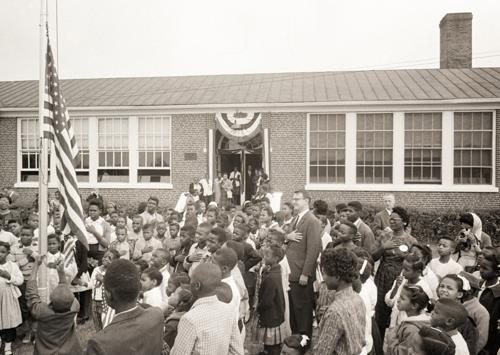
Gregory Coffin and Neil Sullivan discuss civil rights and school integration; part 2
1967 Interviewing school superintendents Gregory Coffin (Evanston) and Neil Sullivan (Berkeley) who discuss school integration and civil rights.
-
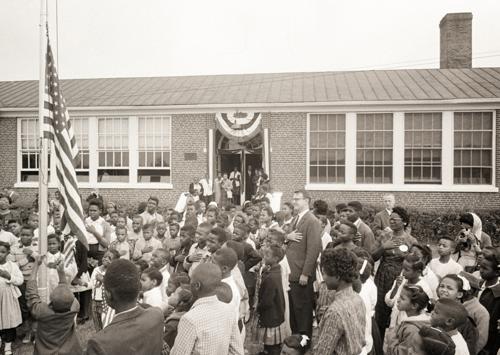
Gregory Coffin and Neil Sullivan discuss civil rights and school integration; part 1
1967 Interviewing school superintendents Gregory Coffin (Evanston) and Neil Sullivan (Berkeley) who discuss school integration and civil rights.
-
Gilbert Moses discusses The Free Southern Theater and his play "Blues for Mister Charlie" with Studs Terkel ; part 2
Aug. 10, 1966 Studs interviews Gilbert Moses about his play, "Blues for Mister Charlie" and The Free Southern Theater. They discuss a variety of plays that include, "White America," "Roots," and "Blues of Mister Charlie."
-
Gilbert Moses discusses "Waiting for Godot" and the Free Southern Theatre with Studs Terkel ; part 1
Aug. 10, 1966 Studs interviews Gilbert Moses about the Free Southern Theatre that performed throughout Mississippi depicting the lives of Southern blacks. Moses describes the audiences and their reactions to the plays and their own participation in acting out their lives.
-
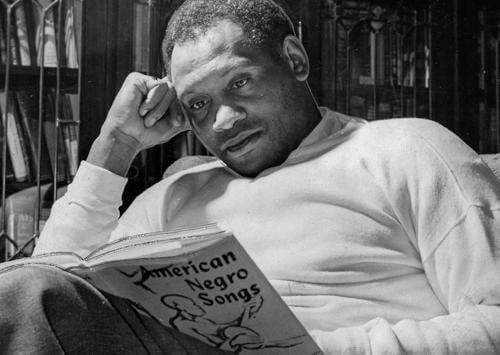
Gathering of friends discussing Paul Robeson
May. 8, 1970 Recorded live on Chicago's South Side. Robeson is ill at the time of recording. Speakers: Earl Dickerson, Etta Moten Barnett, Judge Sidney Jones, J. Mayo "Ink" Williams, Joan Brown (possibly Abena Joan Brown), Charles Hamilton, Margaret Burroughs, [John Gray's sister], [Stevens?]
-
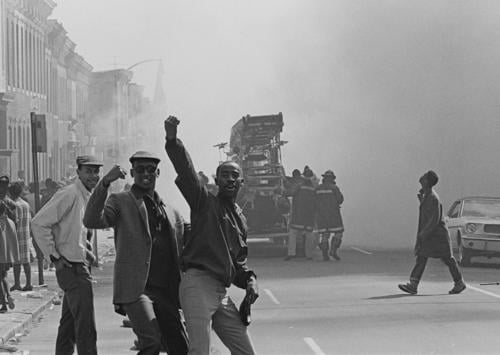
Garrett O'Connor discusses "Reflections in the rubble."
Feb. 1, 1970 Psychiatrist Dr. Garrett O'Connor discusses his article "Reflections in the rubble: some thoughts in the aftermath of civil disorder." Topics of conversation include his experiences working in community clinics with blue collar workers and African Americans; the ways that poverty, racism, and classism are maintained by the American economy; the Martin Luther King, Jr.
-
Gage Park residents discuss race relations and racial integration at Gage Park High School ; part 2
Aug. 4, 1970 A diverse panel of Gage Park residents discuss racial integration at Gage Park High School, neighborhood change, and race relations in general.