

-

-
Thomas Wikman discusses Music of the Baroque
Apr. 22, 1976 Thomas Wikman discusses Music of the Baroque with Studs Terkel. They also discuss composers, musical talent in Chicago, musical instruments, opera, and the history of Baroque music.
-
Thomas Wikman discusses Baroque music and its rise in history
Jun. 30, 1982 Studs interview with Thomas Wikman about MOB (Music of Baroque). Wikman shares historical details of the rise of Baroque music. Studs and Wikman discuss various Baroque pieces and the instruments used. Wikman describes various pieces of his work and members of his group. They discuss Baroque composers, and Wikman describes how acoustics play a role in their music selections for live performances. Studs also explores Wikman's childhood and influences to his music.
-
Thom Bishop discusses the musical revue "Suburbs of Heaven"
Feb. 7, 1979 Interviewing the cast of the musical revue "Suburbs of Heaven," songwriter Thom Bishop, singers Marty Peifer and Megon McDonough. Songs include "Mr. Arthur's Place," "Why Not Talk to Me?" "The Telephone Song," "Just Because You Didn't See Me," "Suburbs of Heaven," "Times I Tried to Love You," "Amateur Night/New Year's Eve," and "Somebody Feels the Water."
-
The Lira Singers in conversation with Studs Terkel
Nov. 28, 1986 Terkel comments and presents a musical performance by The Lira Singers
-
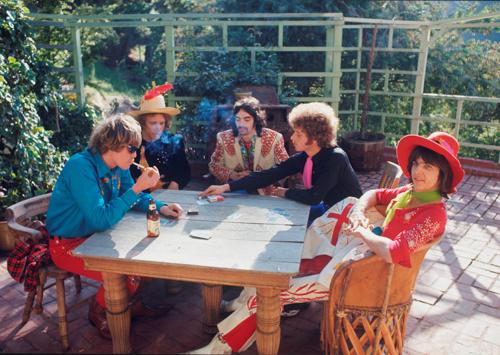
The Flying Burrito Brothers discuss their album "The Gilded Palace of Sin"
Mar. 1, 1969 This program presents the musical group the Flying Burrito Brothers and their album 'The Gilded Palace of Sin'. Studs Terkel interviews two of the band members, Chris Ethridge and Gram Parsons. The following topics discussed are: the artists' backgrounds; their musical perspective; their songwriting; Los Angeles; earthquakes; their early life; their lyrics; life in the south (America); and instrumentation. The following musical excerpts are presented: "Wheels"; "Sin City"; "My Uncle"; "Do You Know How It Feels"; and "Hippie Boy".
-
The Emerson String Quartet discuss the founding and successes of the group
Aug. 30, 1989 The Emerson String Quartet's members Eugene Drucker (violin), Lawrence Dutton (viola), David Finckel (violoncello), and Philip Setzer (violin) discuss their past work, scheduled performances, and musical techniques.
-
The Collier Family, Dr. Kawalak, and Augustine Stevens discuss Sierra Leone and the Peace Corps; part 1
Jul. 26, 1966 Discussing Sierra Leone, the Peace Corps, and interviewing the Collier Family, Dr. Kawalak, and Augustine Stevens. They also discuss the languages, culture, religion, and history of Sierra Leone. Includes clips of African music (from Sierra Leone).
-
Tervalan Porche discusses creole music, language and culture
Dec. 10, 1980 Tervalan Porche discusses creole music, language and culture in which she is an exponent as a singer. The interview starts abruptly which we can deduce that the first part of the introduction was not recorded. This recording has copyrighted material removed.
-
Terkel talks jazz with Teddy Wilson and John McDonough
Apr. 27, 1976 Studs Terkel and John McDonough talk with jazz pianist Teddy Wilson about his influences and career. Wilson was initially strongly influenced by Fats Waller and later came to highly admire Earl Hines. He adapted their clean and clear piano style to his own work. Wilson aspired to be a classical musician but felt he could not attain the performance level required because his time was spent in jazz. He was an original member of the Benny Goodman trio alongside both Goodman and Krupa. He was a part of the first inter racial group to play in public.
-
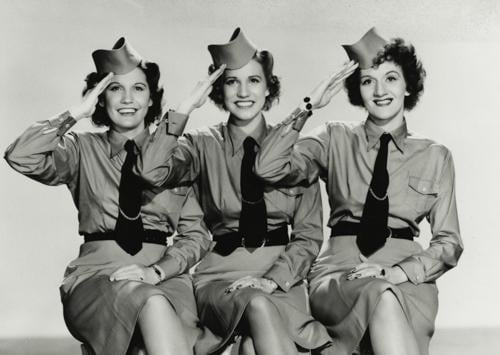
Terkel interviews Maxene Andrews of The Andrews Sisters
Aug. 23, 1982 Maxene Andrews reminisces over Andrews Sisters songs with Studs Terkel. She acknowledges the heavy influence the Boswell Sisters played in the creation of their image. She relays musical stories surrounding songs in Abbott and Costello such as "Bugle Boy" from their movie "Buck Privates". How they found the song "Mir Bist Du Schon" and Sammy Cahn and Saul Chaplin helped with the lyrics. How song pluggers brought The Andrews Sisters "Tip-Pi-Tin". How "Apple Blossom Time" helped an injured soldier at Oak Knoll Hospital upon his return to the states.
-
Terkel interviews Jim Beebe and presents trombone music
Jan. 5, 1983 Presenting trombone music and interviewing trombone player Jim Beebe.
-
Terkel comments on and presents musical performance by Ruby Braff
May. 2, 1985 Presenting music by coronet player Ruby Braff prior to an appearance at Rick's Cafe.
-
-
Terkel comments and presents the Hi-Fi Show
Sep. 18, 1957 Live performance taking place at the Hi-Fi Show at the Morrison Hotel, featuring Marilyn Child, Glenn Yarbrough and Odetta.