Listen to New Voices on Studs Terkel our partnership with 826CHI-here! Read the Story


Showing 61 - 75 of 261 results
-

Pauline Kael discusses contemporary film
1980 Pauline Kael (National Book award winner) discusses contemporary films and her recent publications. Much of the conversation is focused on Stanley Kubrick's work and the role of violence in movies.
-
Ousmane Sembene discusses his films “Xala” and “Ceddo”
Feb. 1, 1978 Interviewing African film maker Ousmane Sembene. Interpreted and translated by Jim Spiegler.
-
Nora Sayre discusses her book Running Time: Films of the Cold War
May. 4, 1982 Nora Sayre discusses her book "Running time: Films of the Cold War" and how Russian-American relations affected Hollywood and celebrity blacklists.
-
Nelson Algren and Mario De Vecchi discuss "La Dolce Vita," part 1
Jun. 17, 1961 Nelson Algren and Mario De Vecchi discuss the international appeal of Federico Fellini’s film, “La Dolce Vita.” In part one, Algren and Devecchi focus on the film’s main character, journalist Marcello Rubini, and his quest for identity, particularly in relation to his interactions with the film’s intellectual character, Steiner. They discuss the film’s key metaphorical images and its portrayal of the influence of media and the emotional detachment and dehumanization it can create.
-
Nelson Algren and Mario De Vecchi discuss ; part 2
Jun. 17, 1961 In this continued discussion of “La Dolce Vita,” Nelson Algren and Mario Devecchi discuss the film’s critical reception, the contrast it draws between humor and bitterness, and the religious and moral nature of the film. Includes part of the 36th issue of the Fiction Review, featuring host Bob Lefley, a review of the program’s first series of interviews with numerous authors, and a biography of writer Howard Nemerov.
-
Morris Carnovsky, Phoebe Brand, and Randall Kim discuss acting and theater
May. 15, 1989 Content Warning: This conversation has the presence of outdated, biased, offensive language. Rather than remove this content, we present it in the context of twentieth-century social history to acknowledge and learn from its impact and to inspire awareness and discussion. Actors Morris Carnovsky, Phoebe Brand, and Randall Kim discuss their various roles in theater, Shakespeare’s plays, and their work at the American Players Theater in Chicago.
-
Morris Carnovsky discusses theatre
Oct. 20, 1959 The Stanislavski Method, Shakespeare's play "The Merchant of Venice," and the role of Shylock are all topics covered in this interview. Carnovsky said that the highpoint of his acting career was playing Shylock. Public relations man, Danny Newman, talks at the end about subscriptions to the Goodman Theatre.*Please note: some sections have been edited out from the original recording due to copyright considerations
-
-
Melvin Douglas and Frank Lovejoy discuss their roles in the play "The Best Man"
Oct. 2, 1961 Melvin Douglas and Frank Lovejoy discuss their roles in Gore Vidal's play "The Best Man", politics, and their careers.
-
-
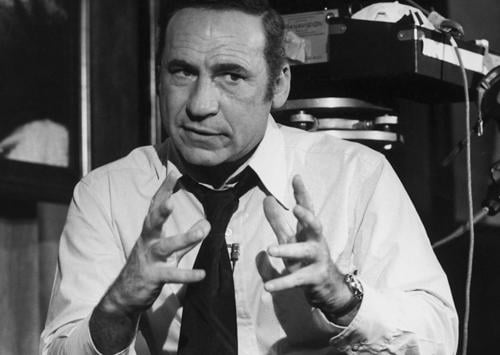
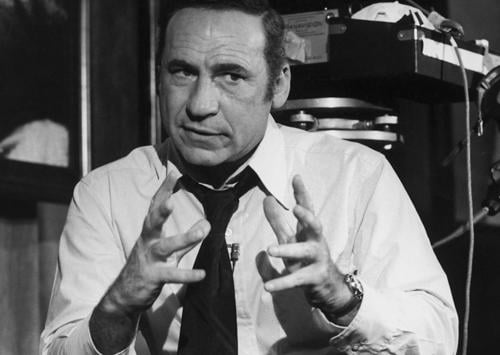
Mel Brooks discusses his new movie "The Producers"
Jul. 2, 1968 In this interview Mel Brooks discusses his new movie "The Producers". The following is discussed: the plot; the other actors in the film; the satirical and campy nature of the film; . Brooks performs several different impersonations throughout the interview.
-
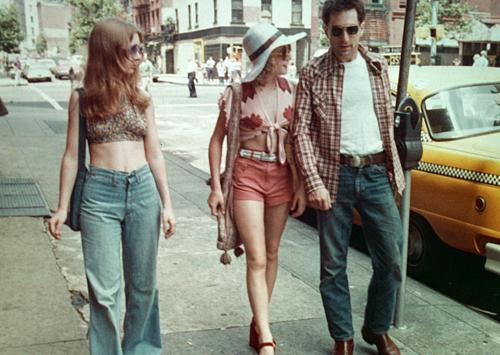
Martin Scorsese and screenwriter Paul Schrader discuss their movie “Taxi Driver"
Feb. 12, 1976 Film director Martin Scorsese and screenwriter Paul Schrader discuss their movie “Taxi Driver,” including interview from 9:04 - 9:49 of Scorsese discussing the character, Johnny Boy, from his film "Mean Streets."
-
Martin Duberman discusses his book "Paul Robeson"
Feb. 28, 1989 Martin Duberman, historian and biographer, discusses his latest work which focuses on the singer, actor, and political activist Paul Robeson. Robeson was known for his performance in Showboat and Emperor Jones.
-
Marlon Brando discusses his views on mankind ; part 3
Apr. 19, 1963 Content Warning: This conversation includes racially and/or culturally derogatory language and/or negative depictions of Black and Indigenous people of color, women, and LGBTQI+ individuals. Rather than remove this content, we present it in the context of twentieth-century social history to acknowledge and learn from its impact and to inspire awareness and discussion. In conclusion, Marlon Brando added that his being a famous actor posed an ugly and difficult burden to his son.
-
Marlon Brando discusses his views on mankind ; part 2
Apr. 19, 1963 Content Warning: This conversation includes racially and/or culturally derogatory language and/or negative depictions of Black and Indigenous people of color, women, and LGBTQI+ individuals. Rather than remove this content, we present it in the context of twentieth-century social history to acknowledge and learn from its impact and to inspire awareness and discussion. In a surprising twist, Marlon Brando asks Studs Terkel why he is so obsessed with asking people so many questions and Terkel’s reply was curiosity.