Listen to New Voices on Studs Terkel our partnership with 826CHI-here! Read the Story


Showing 226 - 240 of 261 results
-

Dalton Trumbo reads from and discusses his book "Additional Dialogue ; part 1
Nov. 27, 1970 In his book, "Additional Dialogue: Letters of Dalton Trumbo, 1942-1962," Dalton Trumbo gives his audience a better understanding of why he was believed to have been warty, abrasive and stubborn. Trumbo believed people have the right to silence and they have the right to speak. He was angered when a book review was written about one book but another author's book was ignored. Trumbo spent time in prison where he was not allowed to write anything negative about the living conditions.
-
Dalton Trumbo reads from and discusses his book ; part 2
Content Warning: This conversation includes racially and/or culturally derogatory language and/or negative depictions of Black and Indigenous people of color, women, and LGBTQI+ individuals. Rather than remove this content, we present it in the context of twentieth-century social history to acknowledge and learn from its impact and to inspire awareness and discussion. Resuming the conversation with regards to his book, "Additional Dialogue: Letters of Dalton Trumbo, 1942-1962," Dalton Trumbo now talks about his time after being in prison for 10 months.
-
Claire Bloom discusses her career
Oct. 22, 1991 Being discovered by Charlie Chaplin, Claire Bloom always felt like the luckiest actress around. Bloom's favorite roles were Nora in a "Doll's House" and Hedda in "Hedda Gabler". Mary Tyrone of "Long Day's Journey Into Night" is a part Bloom would like to play in the future.
-

Christopher Durang discusses his play "A History of the American Film" and "Sister Mary Ignatius Explains It All For You"
Dec. 7, 1984 Studs interviews Christopher Durang, playwright, about his plays. "A History of the American Film" is the highlight of the interview, which is playing at the Heron Theater in Chicago. Durang describes parts of the play and it's characters. He explains that it portrays the different eras and famous moments of movies and references real actors and actresses. Durang reads several times from the play, but all musical numbers are removed from this edited version of the original recording.
-
Charles Dance discusses his acting work
1980 Charles Dance, English actor, talks about his work in the British TV show "The Jewel in the Crown," based on the novel series, "The Raj Quartet," by Paul Scott. Dance also discusses his work on the play, "Thunder Rock" and film, "Plenty," and the TV shows, "The Secret Servant," and "Rainy Day Women."
-
Cesare Zavattini discusses his career
1962 Interviewing Cesare Zavattini while Studs was in Italy. Carlo Baldi translates. This is the second half of the interview that starts with Nervi and Nicoletti.
-
Cast members discuss the documentary Union Maids
Jan. 18, 1977 Julia Reichert, Sylvia Woods, and Stella Nowicki discuss their documentary film "Union Maids" and the tradition of unions in the United States.
-
Carole Langer discusses her documentary film "Radium City"
Feb. 4, 1988 Truth be told, Carol Langer was doing research for another film when she stumbled upon the silent enemy in Ottawa, IL, and then as a result, she made the film "Radium City". Back in the 1920's, young women had jobs to paint clock dials with radium-dipped brushes. The interview includes personal narratives and accounts from the film.
-
Carol Channing discusses her perspective about being a musical and comedic performer
Sep. 19, 1961 In this interview Carol Channing discusses her work as artist: comedic timing; live/club performing; her connection with the audience as a performer; theater as a "spiritual world"; the concept of "opening nights"; creation of Mehitabel's (alley cat) voice; "Lorelei", and her ability deliver comedic characterizations and impersonations (such as Marlene Dietrich, Sophie Tucker, and Cecilia Sisson). Included in this interview are excerpts from the "Little Girl from Little Rock", "Madeline and Other Bemelmans", "Shinbone Alley".
-
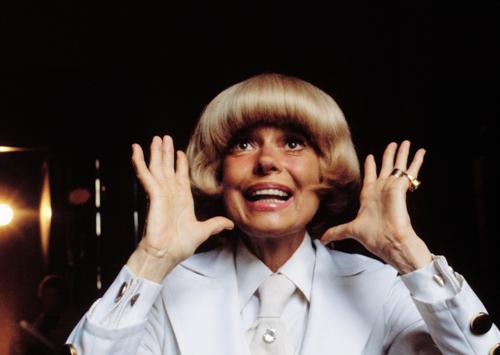
Carol Channing discusses her film and stage career
Jan. 28, 1972 This interview features singer and actress Carol Channing which discusses: the film "Shinbone Alley"; production of "Lorelei"; her grandmother; and her career. It begins with a musical excerpt from the animated movie "Shinbone Alley" featuring Channing singing as the alley cat Mehitabel. It also includes excerpts from the Broadway production called "Lorelei", examples of her character acting/comedy (as Cecilia Sisson), her reading of "Madeline and other Bemelmans", and a portion of the song "So Long Dearie" from the play "Hello, Dolly!".
-
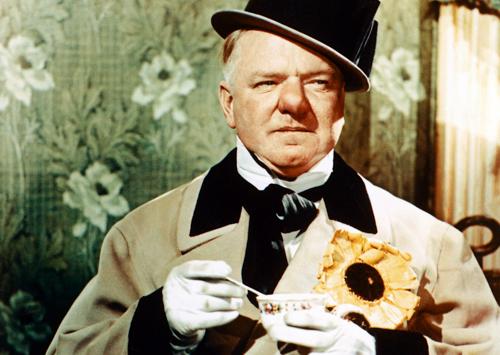
Carlotta Monti discusses W.C. Fields and her book "W.C. Fields & Me"
Jun. 7, 1971 Carlotta Monti discusses W.C. Fields and her book "W.C. Fields & Me".
-
Buzz Hirsch discusses the film "Silkwood"
Jan. 6, 1983 Discussing the film "Silkwood" a movie about Karen Silkwood and the circumstances surrounding her death with movie producer Buzz Hirsch.
-

Buster Keaton discusses the release of "When Comedy Was King"
Sep. 5, 1960 Silent film pioneer Buster Keaton discusses his career following the release of "When Comedy Was King," a compilation of some classic shorts by Keaton, Charlie Chaplin, Harold Lloyd, and others. Keaton reveals how they shot the early silent films, generated material and gags, how they planned big chase scenes, the resurging European interest in silent classics, and more. Studs asks Keaton about the stylistic differences between him and Chaplin, whether he would recreate silent films, and how they compare to today's film-making.
-
Burl Ives discusses his life and music
Burl Ives, actor and singer, discusses his life including childhood, schooling, early career, married life and some of his most popular songs. Ives also talks about his books and writing.
-
Burl Ives discusses his background
Burl Ives was born in Jasper County, IL and he attended Eastern Illinois State Teachers College. While in college, he played some football and then he wanted to become a football coach. Ives spent time in Terre Haute, IN, where he played records and sang songs on the radio. To be a great singer, Ives said he knew he had to add dramatization to certain songs.