

-
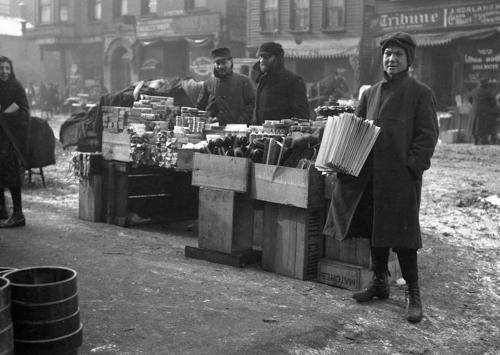
Herman and Rick Kogan discuss their book "Yesterday's Chicago"
Oct. 15, 1976 Herman and Rick Kogan give a brief overview of the history of Chicago (1816-1955) by discussing their book "Yesterday's Chicago".
-

Helga Sandburg reads her poetry
Aug. 1, 1965 Helga Sandburg reads some of her poetry and discusses her life as the daughter of fellow poet Carl Sandburg.
-
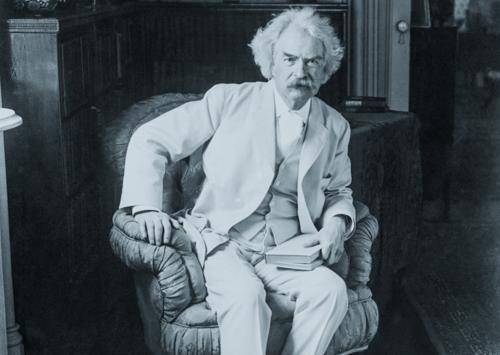
Harry Barnard discusses life as a teacher, writer and biographer
1967 Mr Barnard discusses being a writer and biographer. He strongly discusses the theory, What is literature? and states, "If the work(writing) enriches the person reading and causes deep thought it is literature." He is working, at the time of broadcast, on the papers, notes manuscripts of Upton Sinclair preparing to . He was also writer in residence at Roosevelt University at the time of broadcast.
-
Hans W. Mattick and Father Robert Taylor discuss the scandal at Cook County Jail
1968 Content Warning: This conversation includes racially and/or culturally derogatory language and/or negative depictions of Black and Indigenous people of color, women, and LGBTQI+ individuals. Rather than remove this content, we present it in the context of twentieth-century social history to acknowledge and learn from its impact and to inspire awareness and discussion. Former Assistant Warden of the Cook County Jail, Hans W.
-
Hank De Zutter, Betty Jane Wagner, Barbara Kotto in conversation with Studs Terkel
Sep. 16, 1992 Discussing the Chicago Area Writing Project with authors and educators Hank De Zutter, Betty Jane Wagner and Barbara Kotto.
-

H. E. F. (Shag) Donahue and Nelson Algren discuss "Conversations with Nelson Algren"
Nov. 1, 1964 H. E. F. (Shag) Donahue and Nelson Algren discuss Donahue's book, "Conversations with Nelson Algren," a biographical exploration of Algren's life as a writer. They discuss the creative lives, successes and failures of other authors in relation to Algren's work, including Ernest Hemingway, F. Scott Fitzgerald, J.D. Salinger, Richard Wright, and others. Includes the author reading excerpts from "Conversations with Nelson Algren."
-
Gwendolyn Brooks discusses her poetry
Jan. 3, 1961 Gwendolyn Brooks, Poet Laureate of Illinois, talks about her poetry, her books, and some of her influences.
-
-
Gladys Joyce Adams and Yvonne Hammond discuss female youth in Chicago ; part 2
1968 The D. J.'s, a group of teenagers, discuss their lives, interests, and ambitions. Gladys Joyce Adams and Yvonne Hammond discuss the female youth and youth groups in Chicago. Joyce and Hammond discuss the girl's club the Divine Ladies and other girl's clubs. Christy and Frank Carney in "West Side" (part 3).
-
Gertrude Abercrombie discusses art and music in Chicago
Jul. 7, 1977 Gertrude Abercrombie discusses the overlap between her artwork and Chicago jazz scene.
-
George Esteves discusses the music that will be performed by the Chicago Chamber Choir in the Mother's Day concert
Apr. 17, 1980 Studs interviews George Esteves, the director of the Chicago Chamber Choir. They discuss the musical numbers that the choir will perform in their Mother's Day concert. Dexter Bailey will accompany. Esteves reads the lyrics in Italian of "Ecco Mormorar L'Onde" a Torquato Tasso poem, and Studs reads it in English. Esteves also reads some lyrics of the "Contate Irene Kiesewetter" by Schubert Franz. Esteves shares how members of the choir are recruited. Esteves names all the soloist members of the choir.
-
George Drossos, The Thacker Family, Mrs. Webb and Benny Bearskin discuss living in Chicago
1968 The third program of "Division Street: America" features four profiles: George Drossos, an elderly, Greek man, the Thacker family who recently moved to Chicago, Mrs. Webb, a corner store owner and Native American Benny Bearskin. George Drossos talks about first moving to Chicago and getting acclimated to the city. He recalls visiting other states for a month and then having that feeling of "nostos," or wanting to return home to Chicago. A mother of 15 children and 21 grandchildren, Mrs. Thacker said she doesn't like all the hoodlum business that goes on in Chicago.
-
General Chaney, Charles Roche and Mary Lou Wolff discuss the Citizens Action Program
Nov. 27, 1973 Interviewing General Chaney, Charles Roche and Mary Lou Wolff of the Citizens Action Program.
-
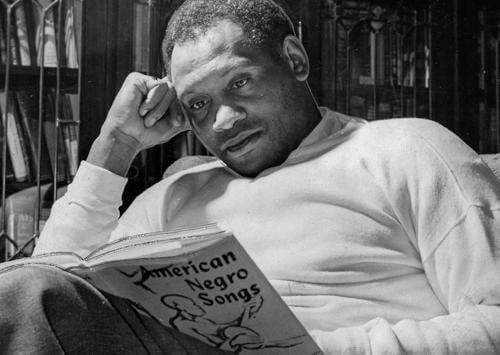
Gathering of friends discussing Paul Robeson
May. 8, 1970 Recorded live on Chicago's South Side. Robeson is ill at the time of recording. Speakers: Earl Dickerson, Etta Moten Barnett, Judge Sidney Jones, J. Mayo "Ink" Williams, Joan Brown (possibly Abena Joan Brown), Charles Hamilton, Margaret Burroughs, [John Gray's sister], [Stevens?]
-
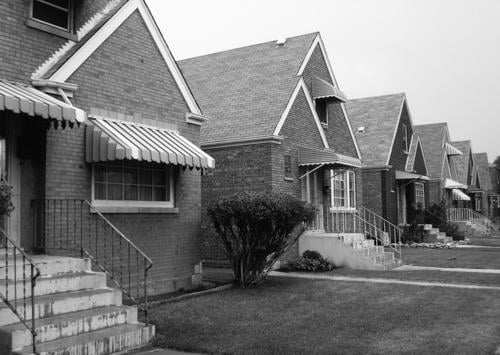
Gale Cincotta discusses community organizing for fair housing and loan practices
Jul. 7, 1977 Interviewing Gale Cincotta, a co-author of the book "Urban Disinvestment: New Implications for Community Organization, Research, and Public Policy." Cincotta is an expert on discrimination in mortgage loans and its effects in Chicago and other cities.