Listen to New Voices on Studs Terkel our partnership with 826CHI-here! Read the Story


Showing 76 - 90 of 777 results
-

Studs Terkel presents a performance of "Feiffer's America"
Apr. 1988 Studs and Jules Feiffer read several of Feiffer’s political cartoons culminating in a performance of “Feiffer’s America.” The performance is preceded by Feiffer’s explanation of the inspiration behind these works. Feiffer attempts to answer what drives him to create these astute observations of political happenings, which are often used as an outlet for his anger regarding social and political events. Studs plays "On the Good Ship Lollipop" - Shirley Temple (1934).
-
Studs Terkel is interviewed by Mitch Kraus and Edward Teller and Albert Szent-Gyorgy discuss science and politics
Dec. 29, 1970 Part 1 of this recording is Mitch Kraus interviewing Studs Terkel on his thoughts of self-indulgence, stereotypes, generational challenges, and historical events.
-
Studs Terkel interviews writer Tom Wolfe ; part 1
Sep. 1, 1968 Studs Terkel and Tom Wolfe discuss Wolfe's recent work. At the time of the interview, Wolfe had recently released "The Electric Kool-Aid Acid Test", his chronicle of Ken Kesey and his colleagues, and a collection of articles, "The Pump House Gang".
-
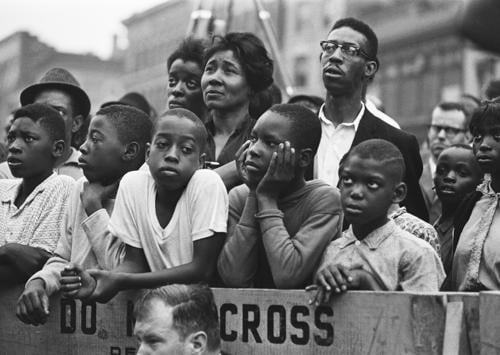
Studs Terkel interviews Professor Charles V. Hamilton on his book written with Stokely Carmichael entitled "Black Power: Politics of Liberation in America" ; part 1
Nov. 21, 1967 Using the backdrop of James Baldwin's "Nobody Knows My Name" and Baldwin's feelings that Blacks were ashamed of where they came from, Terkel interviews Professor and Chairman of the Political Science Department of Roosevelt University on his book coauthored with Stokely Carmichael entitled" Black Power: Politics of Liberation in America". Hamilton states that Blacks were taught to hate themselves and leave school believing that. Institutional racism and the deliberate oppression it creates, holds blacks back. Blacks are left out of crucial decision making processes that concern them.
-
Studs Terkel interviews Professor Charles V. Hamilton on his book written with Stokely Carmichael entitled "Black Power: Politics of Liberation in America" ; part 2
Nov. 21, 1967 Using the backdrop of James Baldwin's "Nobody Knows My Name" and Baldwin's feelings that Blacks were ashamed of where they came from, Terkel interviews Professor and Chairman of the Political Science Department of Roosevelt University on his book coauthored with Stokely Carmichael entitled" Black Power: Politics of Liberation in America". Hamilton states that Blacks were taught to hate themselves and leave school believing that. Institutional racism and the deliberate oppression it creates, holds blacks back. Blacks are left out of crucial decision making processes that concern them.
-
Studs Terkel discusses the WPA Arts Project
Sep. 14, 1989 The influence of the WPA on the music of the 1930's. The heroic sounds heard in song, movies, and theater. He provides Bing Crosby's version of Yip Harburg's "Brother Can You Spare a Dime". As well as the Almanac Singers performing "Roll the Union On". Both Moll's Song and the final scene of Blitzstein's, "The Cradle Will Rock" are performed. Terkel provides a host of other songs which highlight the music of the 1930's. Extensive discussion on "The Cradle Will Rock" with its producer John Houseman.
-
Studs Terkel discusses the novel "Creation" with its author, Gore Vidal
Discussing the book "Creation" with the author Gore Vidal.
-
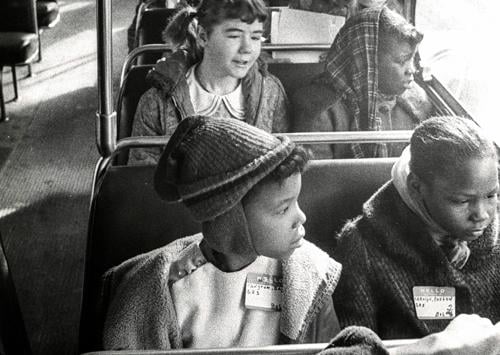
Studs Terkel discusses busing for school integration with psychologist Thomas J. Cottle
Oct. 11, 1976 Studs Terkel discusses the transportation of students for school integration with psychologist Thomas J. Cottle. The main topic of conversation is Cottle's book, "Busing" (1976, Boston, MA, Beacon Press). Terkel and Cottle discuss busing in several cities, focusing on Boston, MA, where Cottle did his research and writing. They each read passages from the book, and discuss the relationship between busing and racism in America.
-
Studs Terkel discusses and comments the musical "The Cradle Will Rock"
Jan. 28, 1992 Studs Terkel presents The Cradle Will Rock, a 1937 musical play. Includes interview with Marc Blitzstein and Hiram Sherman talking about the challenges of presenting for the first time.
-
-
Studs Terkel interviews writer Tom Wolfe ; part 2
Sep. 1, 1968 Studs Terkel and Tom Wolfe discuss Wolfe's recent work. At the time of the interview, Wolfe had recently released "The Electric Kool-Aid Acid Test", his chronicle of Ken Kesey and his colleagues, and a collection of articles, "The Pump House Gang".
-
Studs presents program reflecting on President Roosevelt's death
Apr. 11, 1975 Terkel presents program reflecting on individuals' recollection of the day that FDR died and the former President's legacy among younger Americans.
-
Studs presents program on Sacco and Vanzetti trial
Aug. 22, 1977 Terkel presents program on the controversial trail of Sacco and Vanzetti and people's contemporary perception of the trial and execution after Massachusetts Governor Michael Dukakis proclaimed they were treated unfairly.
-
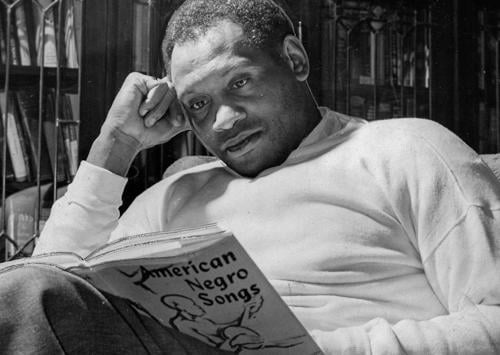
Studs presents a tribute to singer, actor, athlete, author and civil rights crusader Paul B. Robeson
Jan. 28, 1976 Studs presents a tribute to singer, actor, athlete, author and civil rights crusader Paul B. Robeson. Studs talks about his personal memories, the social impact and music of Paul Robeson. Excerpts from 1925362-4-1 Mr Robeson' friends recall memories of him: Earl Dickerson one of the 1 st black aldermen of Chicago, J. Mayo "Ink" Williams football player, Studs Terkel, Claudia Cassidy(1925655-4-1), Eddie Balchowski, Veteran, painter, poet(1934701-3-1) Includes excerpts from 1925362-4-1 and music. Similar to 1925362-3-1, but not identical. 01/23/1976 date of death.
-
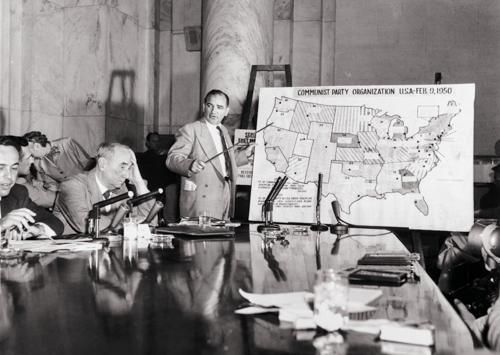
Studs discusses McCarthyism with journalist Fred J. Cook
Jul. 27, 1971 Studs discusses McCarthyism with investigative journalist Fred J. Cook. The recording opens with an excerpt from a speech by U.S. Senator Joseph McCarthy. Cook then reads from his recent book "The Nightmare Decade: The Life and Times of Senator Joe McCarthy" (Random House, 1971). Studs and Cook discuss the history, consequences of Senator McCarthy's relentless pursuit of suspected communists and communist sympathizers in the United States throughout his term in office (1953-1955). They also discuss the possibilities for similar campaigns to emerge during the 1970s.