Listen to New Voices on Studs Terkel our partnership with 826CHI-here! Read the Story


Showing 61 - 75 of 777 results
-
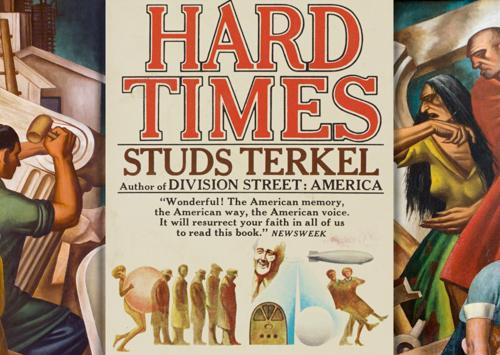
Terkel comments and presents "Hard Times: an Oral History of the Great Depression" ; Chapter 7
1971 Presenting "Hard Times: an Oral History of the Great Depression" High Life, Sixteen Ton: Chapter 7. Sally Rand talks about the creation of her signature fan dance and predictions for future depressions. Doc Graham discusses his upbringing, Chicago mobs, and Count Victor Lustig. Tony Soma talks about prohibition before and after the 1929 crash. Jerome Zerbe talks about inventing paparazzi photography, spending two weeks working in a coal mine, and the New Deal. Buddy Blankenship recalls working 16 hour days in West Virginia coal mines. Mary Owsley remembers life as a coal miner's wife.
-
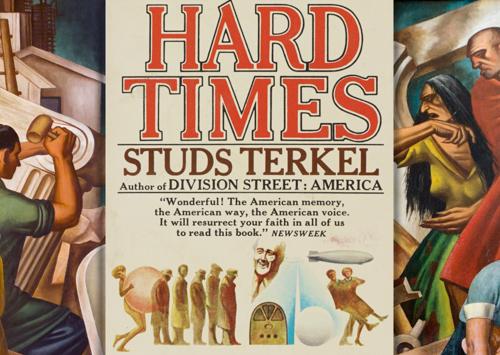
Terkel comments and presents "Hard Times: an Oral History of the Great Depression" ; Chapter 1
1971 Presenting "Hard Times: An Oral History of the Great Depression" Chapter 1: A Fairy Tale. Montage of young voices that talk about their parents' stories of surviving the Depression. The March: Jimmy Sheridan explains the origins of the Bonus March and what life was like on the rails. The Song: Edgar Yipsel (Yip) Harburg talks about writing "Brother, Can You Spare a Dime" while a version by the Weavers plays. Born Losers: Ed Paulsen discusses traveling the country to find work, march riots in San Francisco, and the relief felt as WPA projects and money began to lift burdens.
-
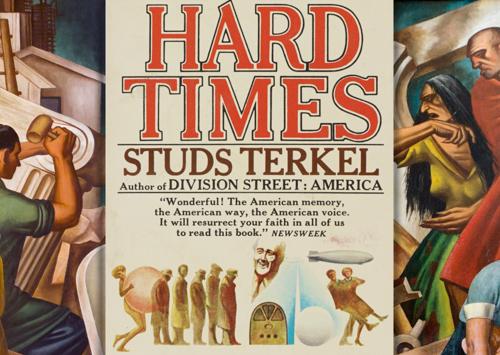
Terkel comments and presents "Hard Times: an oral history of the great depression" ; Program 5 ; part 2
1971 Presenting "Hard Times: An oral history of the great depression": "Bonnie laboring boy" with Joe Morrison, Evelyn Finn and Jose Yglesias (program V).
-

Terkel comments and presents "A search for innocence" a monologue with Rose a teenager of St. Timothy Episcopal Church, Chicago
1970 Studs Terkel discusses life in the Vietnam era with children from Father Charles Pond's St. Timothy Episcopal Church Parish in Chicago. Rose is the featured speaker at 16 years of age she is no longer in school but is very well spoken. Acknowledging that people with mental illnesses are not always able to make sound decisions which are needed for individuals to make group decisions. She sees one of the problems in the world being that people are losing their individuality to a group mentality.
-
Talking about the American Civil War, with Tom Wicker
Feb. 17, 1984 The American editor, journalist, and novelist talks with Studs about his Civil War novel, Unto This Hour, and how he did not set out to romanticize the war, but to show that war does not always lead to glory, despite the bravery of the fighting soldiers.*Please note: some sections have been edited out from the original recording due to copyright considerations
-
Talking about Paul Robeson, with Dorothy Gilliam
Feb. 11, 1977 The American journalist joins Studs to discuss the life of singer, actor, social activist, and lawyer Paul Robeson, as chronicled in her biography, Paul Robeson, All-American.*Please note: some sections have been edited out from the original recording due to copyright considerations
-
Talking about hobo culture, with Kenneth Allsop
1968 While in London, Studs sits down for a discussion about American hobos, with the British author of Hard Travellin': The Hobo and His History.*Please note: some sections have been edited out from the original recording due to copyright considerations
-
Talking about George Washington, with Garry Wills
Jun. 22, 1984 The American journalist and historian joins Studs to talk about political morality and the uses of power, as further described in his book, Cincinnatus: George Washington and The Enlightenment.*Please note: some sections have been edited out from the original recording due to copyright considerations
-
Talking about FDR, with Robert Vaughn
Oct. 17, 1977 The film, television, and stage actor discusses his one-man show FDR at the Studebaker Theater. Includes clips of President Franklin D. Roosevelt speaking and dramatic readings by Vaughn.*Please note: some sections have been edited out from the original recording due to copyright considerations
-
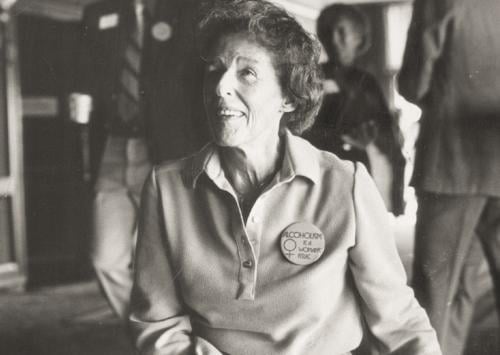
Susan Brownell Anthony discusses her book "The Ghost in My Life"
Oct. 29, 1971 Ms. Anthony, the grand-niece of Susan B. Anthony, comments on the women's liberation movement, her personal political life and her view of Christian life.
-
Studs visits the Illinois Institute of Technology to view student work about Vietnam
May. 24, 1970 Interviewing guests at the Institute of Design memorial in Crown Hall on the campus of the Illinois Institute of Technology. The student work on view is a collaboration between the Schools of Architecture and Planning, and the Institute of Design.
-
Studs Terkel talks with three World War Two veterans
Apr. 17, 1985 Interviewing Ed Ruff, Joe Polowski, and Leroy; three veterans of the meeting of U.S. and Soviet forces at the Elbe River on April 25, 1945. The result of this meeting was the splitting of Nazi Germany into two parts and the ensuring of victory in Europe.
-
-
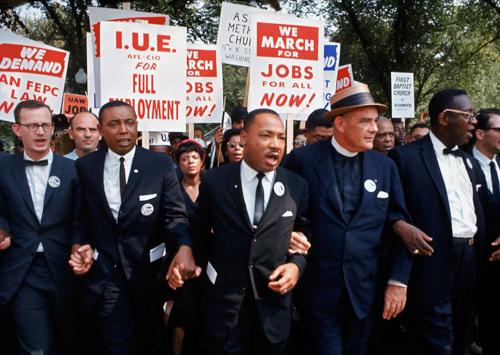
Studs Terkel presents a tribute to Martin Luther King, Jr.
Apr. 5, 1968 Studs Terkel shares a special program honoring the birthday of civil rights leader Martin Luther King, Jr. Includes excerpts from Terkel’s 1965 interview with King about King’s dream for civil rights in the United States, influence of his father, the damaging effects of segregation, and the role of love in bringing about social change. The program also includes excerpts from King’s 1963 “I Have a Dream” speech from the Civil Rights March on Washington, and his 1967 Christmas Eve speech at Bethesda Memorial Church in Atlanta.
-
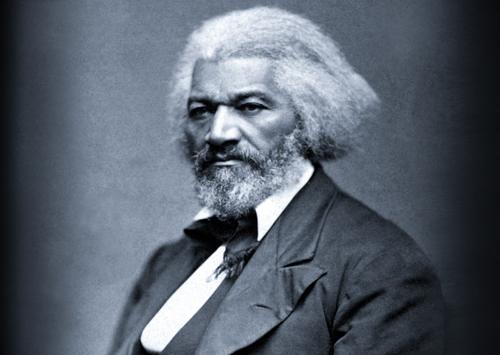
Studs Terkel presents a program in honor of the birthday of abolitionist and African American leader Frederick Douglass
Feb. 15, 1971 Studs Terkel presents a program in honor of the birthday of abolitionist and African American leader Frederick Douglass, including excepts from Terkel's 1964 interview with African-American scholar, author and social historian Lerone Bennett. Terkel reads at length from Douglass' autobiography, "My Bondage and My Freedom," focusing on Douglass' interactions with slave owners Hugh and Sophia Auld.