Listen to New Voices on Studs Terkel our partnership with 826CHI-here! Read the Story


Showing 241 - 255 of 777 results
-

Lew Kreinberg, German (Herman) Leyte, and Nate Duncan discuss Maxwell Street, Chicago
Dec. 8, 1993 Discussing Maxwell Street with Lew Kreinberg and vendors German (Herman) Leyte, and Nate Duncan.
-
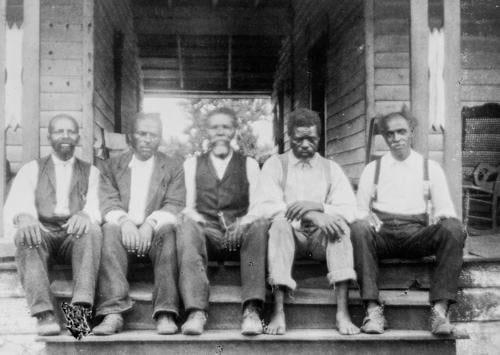
Lerone Bennett, Jr., John Hope Franklin and Hoyt Fuller discuss the book "Distortions of Negro History"
Jun. 3, 1965 Discussing "Distortions of Negro History" and interviewing Lerone Bennett, Jr., John Hope Franklin and Hoyt Fuller.
-
Lenore Griesing, Carol Kleiman, and Joan Smutny discuss women suffrage and the event they organized, "Woman Power Through Education"
Mar. 1, 1969 Studs interview with Lenore Griesing, Carol Kleiman, and Joan Smutny, organizers of "Woman Power through Education" at the National College of Education. Studs played a part of a recorded interview he had with Sybil Thorndike, a pacifist. The recording was about women's right to vote and political involvement. He also played part of a song that was played at Susan B. Anthony's birthday party but no title was given. The interview covered motherhood, education for women, family life, choices, and liberation.
-
Lawrence Weschler discusses his book “Mr. Wilson’s Cabinet of Wonder”
Jan. 22, 1997 Lawrence Weschler discusses his book “Mr. Wilson’s Cabinet of Wonder” and the Museum of Jurassic Technology. Weschler discusses the director of this museum, David Hildebrand Wilson, and the surreal and often humorous exhibits on display in the museum. Studs plays "Suite Anglaise No. 2 in A Minor: II. Bourrée 1 et 2" - Jean-Frédéric Neuburger.
-
Lawrence W. Levine in conversation with Studs Terkel
Oct. 18, 1996 Discussing the book "The Opening of the American mind: Canons, Culture, and History" (published by Beacon Press) with the author, historian Lawrence Levine.
-
Laurence Shoup discusses his book, "The Carter Presidency and Beyond: Power and Politics in the 1980s"
1970 Author Laurence Shoup discusses his book, "The Carter Presidency and Beyond: Power and Politics in the 1980s," and explains how President Carter came to be elected. He describes the Trilateral Commission and other groups created by corporations and the richest American families to lobby. the government. He also discusses the Carter presidency and his double-dealing with major issues such as unions and regulating big businesses.
-
Laurel Snyder discusses prostitution and the COYOTE organization
Aug. 26, 1980 Laurel Snyder describes to Studs Terkel her journey into prostitution and her involvement in the organization COYOTE, which advocates for the rights of sex workers and the decriminalization of prostitution.
-
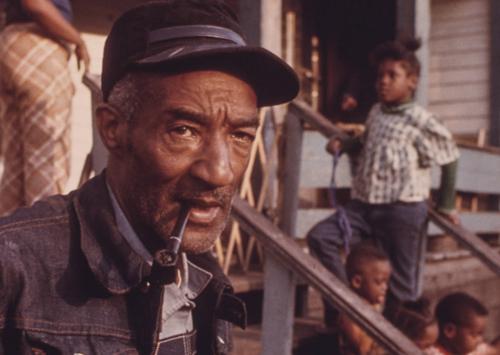
Laurel Shackelford discusses the book "Our Appalachia: An Oral History"
Mar. 30, 1977 Interviewing Laurel Shackelford, author of "Our Appalachia: An Oral History," and discussing oral history.
-
Larry Heinemann, Chuck Rosenburg, Saul Brody in conversation with Studs Terkel
Aug. 2, 1990 Discussing the songs and music of the Vietnam War with author Larry Heinemann, musician Chuck Rosenburg, and folk singer Saul Brody.
-
Larry Heinemann discusses his book "Paco's Story"
Nov. 14, 1986 Discussing the novel "Paco's Story" (published by Farrar, Strauss & Giroux) with the author Larry Heinemann.
-
Lani Guinier discusses her book "Tyranny of the Majority"
Apr. 7, 1994 *Please note: some sections have been edited out from the original recording due to copyright considerations
-
Lady Borton discusses her book "After Sorrow"
May. 10, 1995 In her book, "After Sorrow: An American Among the Vietnamese," Lady Burton tells stories and reflects on what it was like to live among the village people in South Vietnam. Borton found the people to be smart. Among some of her stories, she learned how women carried messages and weapons through enemy territories.
-
Jules Feiffer discusses his cartoonist history and his play "Elliot Loves"
Apr. 12, 1990 Jules Feiffer and Studs read several of Feiffer's previous cartoons as they discuss his history as a cartoonist and his retrospective on display at the Walton Street Gallery in Chicago. Feiffer discusses his attempt to move away from political cartoons and instead shift focus to social commentary. Feiffer also discusses his play "Elliot Loves", a love story that captures the complications of love and the “gap” between the sexes.
-
Jules Feiffer discusses his book “Jules Feiffer’s America: From Eisenhower to Reagan”
Oct. 29, 1982 Jules Feiffer discusses his book “Jules Feiffer’s America: From Eisenhower to Reagan”, a retrospective that chronicles his years as a social and political cartoonist. Studs and Feiffer read through several of Feiffer’s cartoons featured in this book, working their way through the book in “eras” which are categorized based on the U.S. President of that particular time frame. Studs plays “Sh-Boom” - The Crew Cuts (1954), “Big Bad John” - Jimmy Dean (1961). “Yellow Submarine” - The Beatles (1966), and “Happy Days Are Here Again” - Casa Loma Orchestra.
-
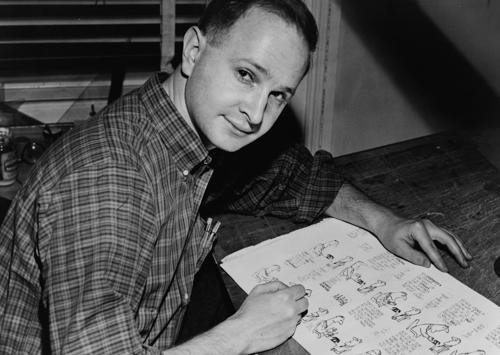
Jules Feiffer discusses his book "Feiffer on Nixon"
Nov. 10, 1974 Content Warning: This conversation has the presence of outdated, biased, offensive language. Rather than remove this content, we present it in the context of twentieth-century social history to acknowledge and learn from its impact and to inspire awareness and discussion. In his book, "Feiffer on Nixon: The Cartoon Presidency," Jules Feiffer tries to give his readers his take on politics and the government. In addition, through his descriptions of the cartoon panels, Feiffer offers his explanations of who President Nixon was.