Listen to New Voices on Studs Terkel our partnership with 826CHI-here! Read the Story


Showing 151 - 165 of 777 results
-

Renault Robinson and Robert McClory, author of "The Man Who Beat Clout City" discuss the the Chicago Police Department and race relations
Jul. 24, 1978 Renault Robinson, founder of the African American Patrolman's League in Chicago, and Robert McClory, journalist and author of a biography of Robinson, "The Man Who Beat Clout City," discuss Robinson's life and court case, Robinson v. Chicago Police Department. Robinson recalls how he was seen as a model policeman until he created the Afro-American Police League, when the Police Department started treating him differently.
-
-
-
-
Reading Richard Wright's "The man who lived underground" with Michel Fabre ; part 1
1964 Terkel comments and reads from The Man Who Lived Underground
-
Raymond T. Exum and Marguerite Klimkowski discuss the merits of the Equal Rights Amendment
Nov. 22, 1978 Rev. Raymond Exum and Marguerite Klimkowski discuss the merits of the Equal Rights Amendment by comparing the 14th amendment, reviewing other federal and state laws, and considering gender based discrimination.
-
Raymond Bonner discusses his book "Waltzing with a Dictator: The Marcos and The Making of American Policy"
May. 21, 1987 Interviewing author Raymond Bonner on American foreign policy, America’s relationship with dictators, and the rise of the Marcos family. Includes a test tone lasting about 30 seconds. Content Warning: This conversation includes racially and/or culturally derogatory language and/or negative depictions of Black and Indigenous people of color, women, and LGBTQI+ individuals. Rather than remove this content, we present it in the context of twentieth-century social history to acknowledge and learn from its impact and to inspire awareness and discussion.
-

Ralph Nader in conversation with Studs Terkel
Jun. 25, 1986 Discussing the book "The Big Boys: Power and Position in American Business" (published by Pantheon) with the author, lawyer and consumer advocate Ralph Nader.
-
Ralph McGehee reads from and discusses his book "Deadly Deceits"
May. 11, 1983 Discussing the book "Deadly deceits: my twenty five years in the C.I.A" with the author Ralph McGehee.
-
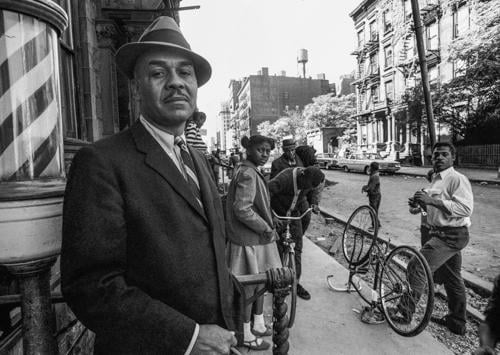
Ralph Ellison American novelist and literary critic discusses his life and writing
1970 Ralph Ellison, winner of the National Book Award for Fiction for his book "Invisible Man," discusses his early life and education and his life as a writer and lifetime scholar. He speaks on being a musician (trumpet), the joy of music and the Church and how they fit into the lives of African Americans.
-

R. Buckminster (Richard ) Fuller talks with Studs Terkel
Jan. 20, 1965 A sprawling conversation with R. Buckminster Fuller including his great aunt Margaret Fuller, future communication, the nature of work, human nature, and physics.
-
Professors Adolph Baker, Jurgen Hinze, Richard Lewenton and Father William Wallace discuss science and the younger generation; part 2
Jan. 12, 1971 Professors Adolph Baker, Jurgen Hinze, Richard Lewenton and Father William Wallace discuss science and why the younger generation is not choosing to enter the science field. The four professors debate on how to change the world an whether science is the answer to that problem. Discussions about the future of mankind also occur.
-
Professor Ali Irani [pseudonym name to protect his identity] talks about the regime of the Shah [Mohammad Reza Pahlavi]
Nov. 8, 1978 Professor Ali Irani (pseudonym name) is a Humanities professor at a recognized midwest university that discusses the regime of the Shah, Mohammad Reza Pahlavi. Includes a fiften minute interview with an American couple, Luis and Joan Smiley, that talks about their experience with students protesting the regime in Kentucky, Louisiana.
-
Professor Adolph Baker, Jurgen Hinze, Professor Richard Lewenton and Father William Wallace discuss science and politics; part 1
Jan. 12, 1971 Professors Adolph Baker, Jurgen Hinze, Richard Lewenton, and Father William Wallace discuss science and politics. The four professors explore question such as whether scientists be involved in political decisions. World War II and Vietnam War are used as examples by the scientists. An earlier interview with scientists Edward Teller and Albert Szent-Gyorgy is played.
-
Presenting Terezin chamber music with violist Mark Ludwig of the Hawthorne String Quartet.
Jun. 26, 1991 Terkel comments and presents music with Mark Ludwig