Listen to New Voices on Studs Terkel our partnership with 826CHI-here! Read the Story


Showing 46 - 60 of 91 results
-

-
-
-
Interviewing Earl B. Dickerson, a Chicago lawyer
Oct. 28, 1975 The distinguished lawyer and former Chicago alderman reflects on his long career, before being honored at an NAACP Legal Defense Fund event at the Continental Plaza Hotel. Studs includes a clip of W.E.B. DuBois speaking.*Please note: some sections have been edited out from the original recording due to copyright considerations
-
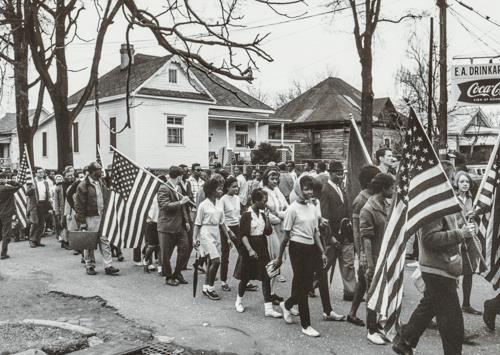
Interview with Rev. Paschal Carlton Part 2
1967 Residents of Selma, Alabama discuss Selma to Montgomery March (part 2 of 2). Includes interviews of Bishop Anderson, Father [Denston] and Mr. Carlton.
-
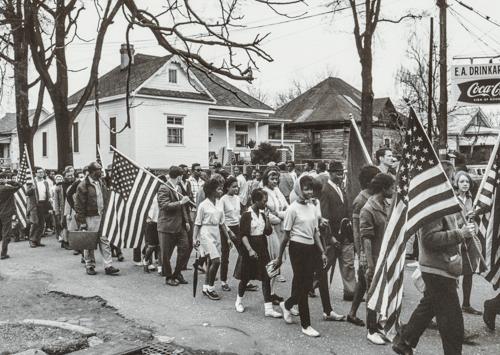
Interview with Rev. Paschal Carlton Part 1
1967 Residents of Selma, Alabama discuss Selma to Montgomery March (part 1 of 2). Includes interviews of elderly African Americans and of Rev. Paschal Carlton.
-
Interview with Heather Booth and Harry Boyte
1980 Citizen Action and the New American Populism
-

Interview with Harry C. Boyte
Feb. 16, 1981 Discussing the book "Backyard Revolution: Understanding the New Citizen Movement," (published by Temple University Press) with the author Harry C. Boyte.
-
Horace Cayton discusses is book "Long Old Road" ; part 3
Sep. 7, 1966 Content Warning: This conversation includes racially and/or culturally derogatory language and/or negative depictions of Black and Indigenous people of color, women, and LGBTQI+ individuals. Rather than remove this content, we present it in the context of twentieth-century social history to acknowledge and learn from its impact and to inspire awareness and discussion.
-
Horace Cayton discusses his book "Long Old Road" ; part 1
Sep. 7, 1966 Content Warning: This conversation includes racially and/or culturally derogatory language and/or negative depictions of Black and Indigenous people of color, women, and LGBTQI+ individuals. Rather than remove this content, we present it in the context of twentieth-century social history to acknowledge and learn from its impact and to inspire awareness and discussion. In "Long Old Road: An Autobiography," Horace Cayton talks about growing up in Seattle in a well to do, mostly white neighborhood. Cayton's grandfather was the first Black man elected to the U.S.
-
Harrison Evans Salisbury discusses his book "A Time of Change"
Mar. 18, 1988 His experiences as a journalist are what's covered in Harrison Evans Salisbury's book, "A Time of Change: A Reporter's Tale of Our Time". Salisbury believed as a reporter, one truly needed to be at the event, in order to obtain the true story. Once Salisbury questioned if he was living in America because he was asked to switch rooms at a hotel in Birmingham, only to find out later that there were special, bugged rooms for reporters.
-
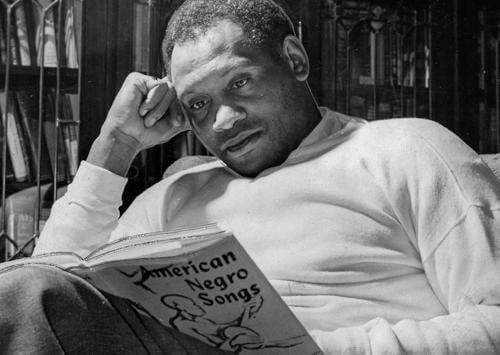
Gathering of friends discussing Paul Robeson
May. 8, 1970 Recorded live on Chicago's South Side. Robeson is ill at the time of recording. Speakers: Earl Dickerson, Etta Moten Barnett, Judge Sidney Jones, J. Mayo "Ink" Williams, Joan Brown (possibly Abena Joan Brown), Charles Hamilton, Margaret Burroughs, [John Gray's sister], [Stevens?]
-
Frye Gaillard in conversation with Studs Terkel
1980 Discussing the book "Lessons From the Big House: One Family's Passage through the History of the South: a Memoir," (published by Down Home Press) with author Frye Gaillard.
-
Frank Donner discusses the article he wrote "Theory and Practice of American Political Intelligence" ; part 2
In his article, "Theory and Practice of American Political Intelligence," Frank Donner brings up the poisonous effect of surveillance on people's invasion of privacy. Donner explained people adjust their lives to it. Donner's last reflection is for people to not just be frightened by surveillance but rather to do something about it like study how much money is spent on surveillance and who is accountable.
-
Frank Donner discusses the article he wrote "Theory and Practice of American Political Intelligence" ; part 1
Surveillance, informants, and provocateurs are some of topics covered by Frank Donner with his article, "Theory and Practice of American Political Intelligence". Donner explained that intelligence practices exist so that everyone has something to fear.