Listen to New Voices on Studs Terkel our partnership with 826CHI-here! Read the Story


Showing 91 - 105 of 139 results
-

Ella Jenkins discusses call and response music
Jul. 17, 1993 Using past recordings, Ella discusses how she works with children to help them find their rhythms using call and response music and percussion. She explains the West African and Latin music influences within her own music. Music played includes Jenkins' own music such as "Miss Mary Mack," "Tahboo," and "Where Has My Little Dog Gone?" She also plays song written by Carl Orff and performed by the Chorus of the Children's Opera Group, such s "Pat-a-Cake," and "Name-Calling." Untitled West African music is also played. Music has been removed due to copyright restrictions.
-
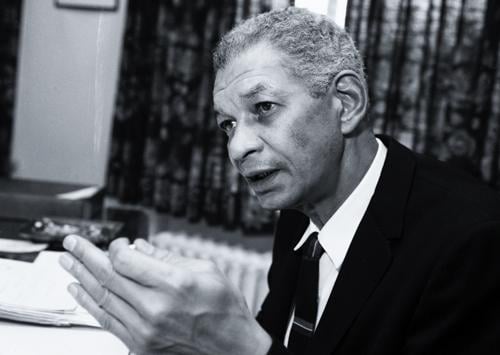
Edwin C. Berry (Bill) discusses civil rights. Part 2
1968 Interviewing civil rights activist Edwin C. "Bill" Berry. Part 2
-
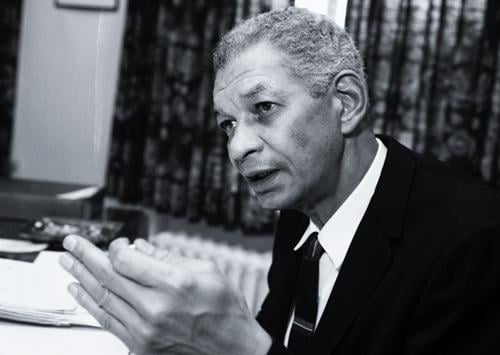
Edwin C. Berry (Bill) discusses civil rights. Part 1
1968 Interviewing civil rights activist Edwin C. "Bill" Berry. Part 1.
-
Dr. Samuel Floyd, Jr. discusses his book "The Power of Black Music: Interpreting Its History from Africa to the United States"
Feb. 21, 1996 Author Dr. Samuel Floyd discusses his projects in relation to black music and elements from his book "The Power of Black Music: Interpreting Its History from Africa to the United States." Includes an interview with Langston Hughes.
-
Dr. Samuel Floyd, Jr. discusses Black music, history, and culture
Oct. 11, 1990 Interviewing Dr. Samuel Floyd, author and scholar of Black music. He discusses prominent Black musicians and composers who shaped their perspective genres.
-
Dr. Samual Floyd talks with Studs Terkel
Mar. 17, 1988 Interviewing author and scholar of Black music Dr. Samuel Floyd, Jr.
-
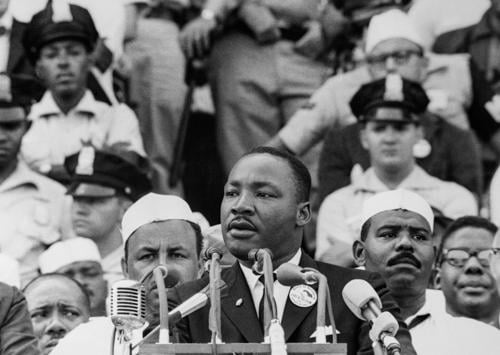
Dr. Martin Luther King Jr. discusses civil rights in regards to his "I Have a Dream" speech
Oct. 22, 1964 Studs Terkel interviews Dr. Martin Luther King Jr. at the home of gospel singer Mahalia Jackson. They discuss King's "I Have a Dream" speech that he made in 1963, at the foot of the Lincoln Memorial. At the end of the program there are various gospel music selections featuring Jackson and others.
-
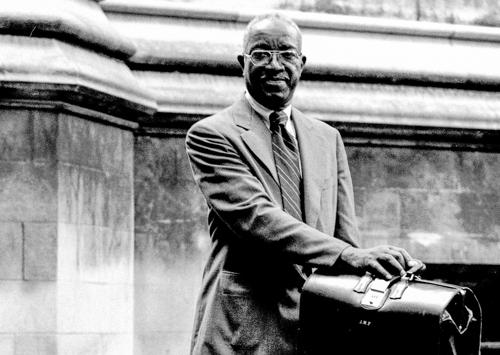
Dr. John Hope Franklin discusses the history of Civil War Reconstruction; part 1
1966 Dr. John Hope Franklin, professor of history at University of Chicago, outlines the history of reconstruction during the American Civil War and briefly his experience at the March to Montgomery; part 1.
-
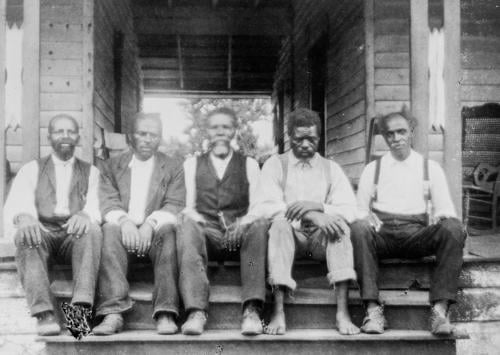
Dr. John Hope Franklin discusses reconstruction after the American Civil War; part 2
1966 Dr. John Hope Franklin, professor of history at University of Chicago, discusses the political history of reconstruction after the Civil War, along with which political decisions led to a power imbalance and the rise of the Ku Klux Klan in the southern states; part 2.
-
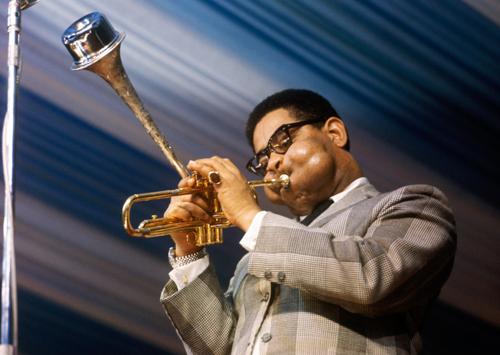
Dizzy Gillespie discusses the art of jazz ; part 1
Mar. 30, 1961 Part 1 of this program begins with Studs Terkel reading an excerpt from the book "Giants of Jazz" , which describes Dizzy Gillespie's early life. Gillespie discusses the following: the state of jazz; his fellow musicians; jazz contributors; jazz fundamentals; and his tours abroad. Gillespie's "Groovin' High" is played towards the end of this part of the program.
-
Discussing the work of Josephine Baker with Ivory Moss
Mar. 21, 1979 Program includes excerpts of performances by Baker.
-
Discussing The Hammonds of Redcliffe, with Carol Bleser
Dec. 2, 1981 After discovering the family letters of James Henry Hammond in the archives of a South Carolina library, Carol Bleser set about telling a rather troubling saga - of slavery, sexual assault, and hypocrisy in the South, before and after the Civil War.*Please note: some sections have been edited out from the original recording due to copyright considerations
-
-
-