Listen to New Voices on Studs Terkel our partnership with 826CHI-here! Read the Story


Showing 196 - 210 of 271 results
-

Dr. Samuel Floyd, Jr. discusses his book "The Power of Black Music: Interpreting Its History from Africa to the United States"
Feb. 21, 1996 Author Dr. Samuel Floyd discusses his projects in relation to black music and elements from his book "The Power of Black Music: Interpreting Its History from Africa to the United States." Includes an interview with Langston Hughes.
-
Dr. Samuel Floyd, Jr. discusses Black music, history, and culture
Oct. 11, 1990 Interviewing Dr. Samuel Floyd, author and scholar of Black music. He discusses prominent Black musicians and composers who shaped their perspective genres.
-
Dr. Samual Floyd talks with Studs Terkel
Mar. 17, 1988 Interviewing author and scholar of Black music Dr. Samuel Floyd, Jr.
-
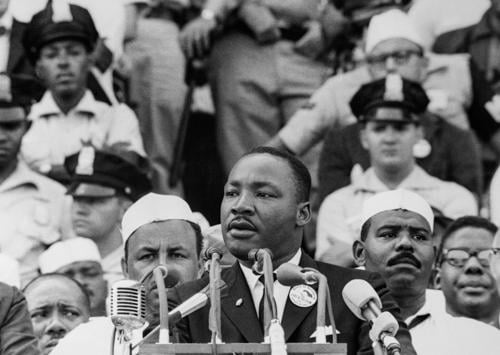
Dr. Martin Luther King Jr. discusses civil rights in regards to his "I Have a Dream" speech
Oct. 22, 1964 Studs Terkel interviews Dr. Martin Luther King Jr. at the home of gospel singer Mahalia Jackson. They discuss King's "I Have a Dream" speech that he made in 1963, at the foot of the Lincoln Memorial. At the end of the program there are various gospel music selections featuring Jackson and others.
-
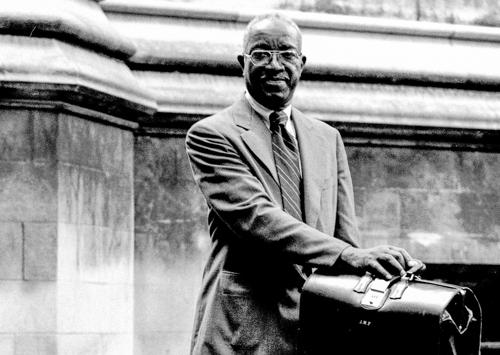
Dr. John Hope Franklin discusses the history of Civil War Reconstruction; part 1
1966 Dr. John Hope Franklin, professor of history at University of Chicago, outlines the history of reconstruction during the American Civil War and briefly his experience at the March to Montgomery; part 1.
-
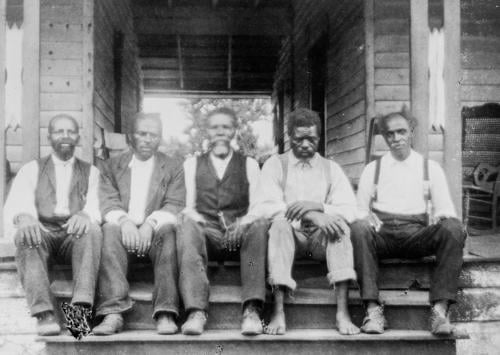
Dr. John Hope Franklin discusses reconstruction after the American Civil War; part 2
1966 Dr. John Hope Franklin, professor of history at University of Chicago, discusses the political history of reconstruction after the Civil War, along with which political decisions led to a power imbalance and the rise of the Ku Klux Klan in the southern states; part 2.
-
Dr. C. L. R. James discusses his book "Black Jacobins"
1970 Trinidadian historian Dr. C.L.R. James discusses his book "The Black Jacobins: Toussaint L'Ouverture and the San Domingo Revolution." The book was originally published in 1938. At the end of the interview, the song "Voodoo American: Bya Bulako" by Michel LaRue is played (00:46:26-00:51:
-
Douglas Turner Ward discusses the play “The River Niger”
Dec. 4, 1973 Theater director Douglas Turner Ward talks with Studs Terkel about the play "The River Niger." Further discussion is had about the play's writer, Joseph Walker, as well as the story and characters, and the play's connection to the African-American community.
-
Donald Bogle discusses his book "Toms, Coons, Mulattoes, Mammies and Bucks"
Aug. 6, 1973 "Toms, Coons, Mulattoes, Mammies and Bucks: An Interpretive History of Blacks in American Films is Donald Bogle's study of Black actors and the roles they played in movies. Bogle believed it was important for Black people to see Black heroes in movies. Bogle concluded there were too few roles available for Black actors and too many roles were of stereotypes.
-
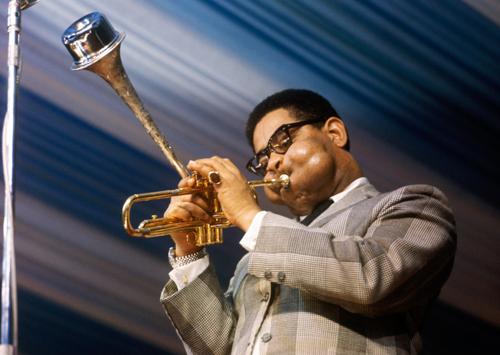
Dizzy Gillespie discusses the art of jazz ; part 1
Mar. 30, 1961 Part 1 of this program begins with Studs Terkel reading an excerpt from the book "Giants of Jazz" , which describes Dizzy Gillespie's early life. Gillespie discusses the following: the state of jazz; his fellow musicians; jazz contributors; jazz fundamentals; and his tours abroad. Gillespie's "Groovin' High" is played towards the end of this part of the program.
-
Discussing the work of Josephine Baker with Ivory Moss
Mar. 21, 1979 Program includes excerpts of performances by Baker.
-
-
Discussing The Hammonds of Redcliffe, with Carol Bleser
Dec. 2, 1981 After discovering the family letters of James Henry Hammond in the archives of a South Carolina library, Carol Bleser set about telling a rather troubling saga - of slavery, sexual assault, and hypocrisy in the South, before and after the Civil War.*Please note: some sections have been edited out from the original recording due to copyright considerations
-
-