Listen to New Voices on Studs Terkel our partnership with 826CHI-here! Read the Story


Showing 106 - 120 of 271 results
-

Langston Hughes, John Sellers, James Cotton and Otis Spann discuss blues music
Jul. 15, 1960 Langston Hughes, John Sellers, James Cotton, and Otis Spann discuss their origins and blues music. The interview focuses heavily on Langston Hughes and how deeply he is influenced by the blues. Hughes also discusses his upcoming book "An African Treasury" at length. Hughes, Sellers, Spann, and Cotton perform a number of songs during the interview, they have been removed due to copyright.
-
Judy Hough, Lily (Rose Rigsby) Lowell and Jimmy White talk with Studs Terkel Part 2
1968 Discussion of Division Street: America
-
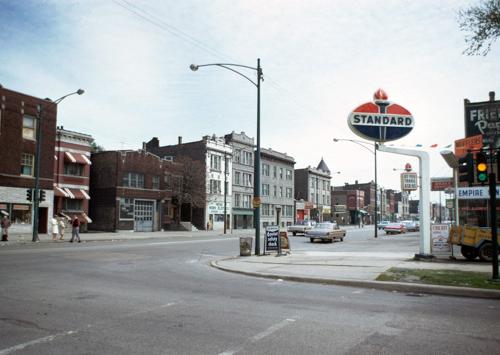
Judy Hough, Lily (Rose Rigsby) Lowell and Jimmy White talk with Studs Terkel Part 1
1968 Discussion of Division Street: America
-
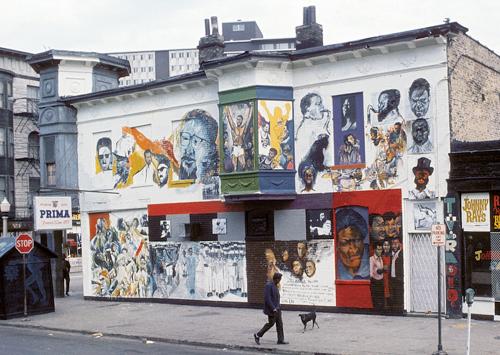
John Weber, Mark Rogovin and Justine DeVan discuss their work on murals and the Wall of Respect in Chicago
1970 John Weber, Mark Rogovin and Justine DeVan discuss their involvement with the mural movement as well as their involvement with the Chicago community and their various art projects. Includes excerpt of an interview with Bill Walker at the Peace and Salvation Wall of Understanding in (near?) Cabrini Green.
-
John Ray, Jimmy Ray and Henry discuss life in Chicago; part 2
1968 Jimmy Ray, John Ray, and Henry discuss their personal feelings on a variety of topics including religion, every day life, and what an ideal world looks like.
-
-
John Keyes in conversation with Studs Terkel
Jan. 23, 1990 Discussing the Regal Theater with actor and theater historian John Keyes.
-
John Hope Franklin discusses racial inequality in America
Mar. 15, 1979 John Hope Franklin, historian, discusses his life and the racial inequality he witnessed. He also talks about John Hope and W. E. B. Du Bois. Dr. Franklin also talks about his Jefferson Lectures, Thomas Jefferson, and slavery.
-
John Hammond and John McDonough discuss music and their careers
Sep. 11, 1975 Presenting music with music producer (impresario) John Hammond. The following topics were discussed: various recordings; his encounters with famous jazz musicians; the first time he met Billie Holiday; the song "Strange Fruit"; improvisation; racial reform; Bessie Smith's death; and uniting rural and urban artists. The following musical excerpts were played and have been removed for copyright reasons: "7 Come 11"; "This Years Kisses"; "Lady Be Good"; "Young Woman's Blues"; "What More Can Jesus Do"; and "Piney Brown Blues".
-
John D. Weaver discusses his book "The Brownsville Raid"
Apr. 6, 1971 Events not recorded in history books is what prompted John D. Weaver to write "The Brownsville Raid: The Story of America's Black Dreyfus Affair". Weaver had heard the story of Black Army soldiers causing a raucous, when they were actually set up. Without even being granted a trial, President Theodore Roosevelt, dismissed those soldiers from the United States Army, Weaver explained.
-
James McPherson discusses his book "Battle Cry of Freedom: The Civil War Era" ; part 2
Jun. 6, 1989 Historian James McPherson discusses the his book, "Battle Cry of Freedom: The Civil War Era." McPerson explores the American Civil War and introduces some Civil War music. He talks about black soldiers, photography, and reconstruction. Content Warning: This conversation has the presence of outdated, biased, offensive language. Rather than remove this content, we present it in the context of twentieth-century social history to acknowledge and learn from its impact and to inspire awareness and discussion.
-
James McPherson discusses his book "Battle Cry of Freedom: The Civil War Era" ; part 1
Jun. 6, 1989 Historian James McPherson discusses the his book, "Battle Cry of Freedom: The Civil War Era." McPerson explores the American Civil War and talks about some Civil War music. He also discusses the reasoning behind the Civil War and some of the key figures during that time and how many songs came to be written about the battles and leaders.
-
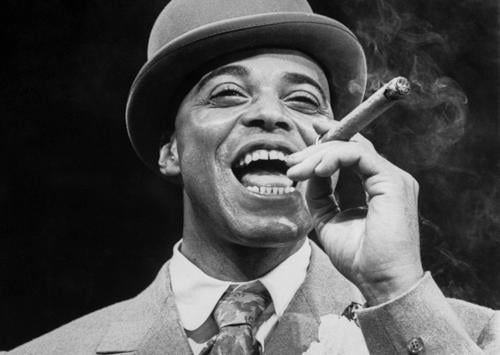
James Earl Jones discusses the play "Othello"
Feb. 1, 1968 Jones discusses the play "Othello" where he plays the lead character Othello.
-
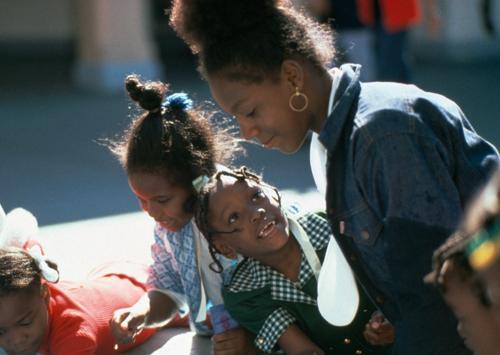
James Comer and Alvin Poissaint talk with Studs Terkel
Aug. 5, 1975 James Comer and Alvin Poissaint discuss their book " Black Child Care: How to Bring Up A Healthy Black Child In American - A Guide to Emotional and Psychological Development". They discuss raising a Black child in America in the 1970's, amid racism. Clip played of Odetta "All the Pretty Little Horses"(Studs Terkel Archive WAV ID 1853133-3-1)
-
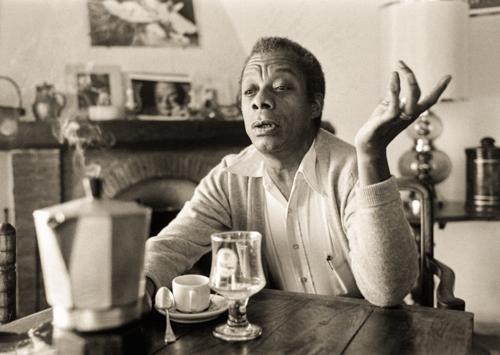
James Baldwin discusses his book "The Evidence of Things Not Seen"
Nov. 22, 1985 John Baldwin talks about his book "The Evidence of Things Not Seen" in which discusses the Wayne Williams Atlanta child murders of 1979-1981. This record is part of the Studs Terkel Almanac.