Listen to New Voices on Studs Terkel our partnership with 826CHI-here! Read the Story


Showing 181 - 195 of 204 results
-

David T. Dellinger discusses his book "From Yale to Jail"
Apr. 23, 1993 The early influences of his father, his time in prison, and a bomb being sent to his home are among the topics covered in Dellinger’s book, “From Yale to Jail: The Story of a Moral Dissenter”. Dellinger is best known for being one of the Chicago Eight. He recalls a time in Lincoln Park, IL when he was warned to get out of there quickly because the police were told to attack Dellinger and his group.
-
Dave Dellinger discusses his book, "More Power Than We Know: The People's Movement Toward Democracy"
Jun. 27, 1975 Dave Dellinger, activist, discusses his book, "More Power Than We Know: The People's Movement Toward Democracy." Dillinger describes his thoughts and past experiences with non-violent protesting. He recalls his experiences with the police during Vietnam War protests and the Trialrial of the Chicago . He also discusses Dr. Martin Luther King Jr. and other well-known protesters.
-
-
Dan McCarthy and Max Smith discuss gay rights
Oct. 1, 1979 Dan McCarthy and Max Smith discuss their lives including the differences between growing up gay in different races. They also discuss religion, employment and housing issues they have encountered. Part of an earlier interview with Henry Weimhoff is played.
-
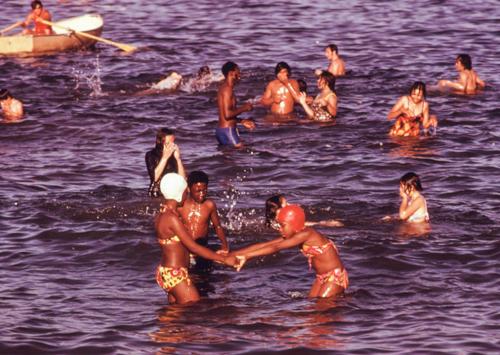
Clifford Burke, Marilyn Nelson and Earl Doty discuss young people ; part 1
1968 Talking to Earl Doty, Clifford Burke, Marilyn Nelson, and West Side kids after the 1968 Chicago Riots. Clifford Burke had already retired from the CTA. As president of the Mile Square Federation, he talks about the youth community of the West side of Chicago, and the need for recreation opportunities for them. Marilyn Nelson is a student from California working in west-side Chicago as an advocate for the community. Studs also talks to Earl Doty, while riding in a car, about the neighborhood youth. There are sounds of hydrants being opened and the children playing.
-
Cleveland Amory strikes back
Nov. 14, 1979 The outspoken reporter, critic, and commentator joins Studs to discuss his book, The Trouble with Nowadays: A Curmudgeon Strikes Back.*Please note: some sections have been edited out from the original recording due to copyright considerations
-
Claire Culhane discusses her time in Vietnam during the war
In 1967, Clair Culhane worked as a hospital administrator at a tuberculosis hospital near Saigon, Vietnam. She discusses what she observed at the hospital and her anti-war work when she returned home.
-
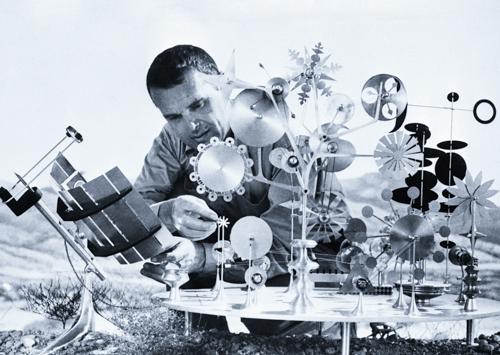
Charles Eames discusses his life of travel and his study of design and architecture, part 1
Oct. 1, 1965 Charles Eames, an architect, designer, artist, filmmaker and student of human nature, talks with Studs about his years of travel in India and Europe. He discusses studying architecture and working as an architect and the nature of his film making. (Part 1 of 2)
-
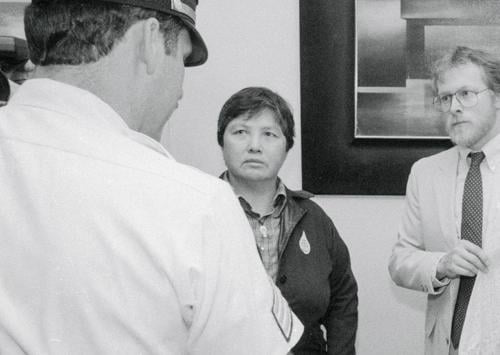
Charito Planas discusses his testimony before the U.S. Congress
Aug. 21, 1981 Discussing with Charito Planas his testimony before the U.S. Congress: "On the Withdrawal of U.S. Bases from the Philippines."
-
Cesar Chavez discusses unionizing migrant farm workers
Jun. 4, 1973 Cesar Chavez discusses unionizing migrant farm workers, and how nonviolent tactics made the farm workers' struggle a cause with nationwide support(grape boycott). Includes excerpt from Hard Times: Voices of the Great Depression.
-
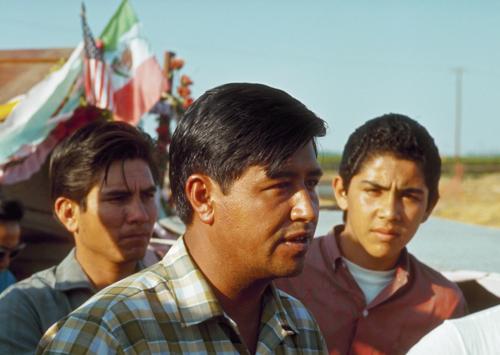
Cesar Chavez discusses farm labor rights
1967 Cesar Chavez discusses the United Farm Workers effort to gain rights for farm laborers and his childhood that led him to become a labor rights activist.
-
Bill Cunningham discusses court cases he has participated in
Jan. 5, 1979 Bill Cunningham, Jesuit priest and lawyer, discusses some court cases he has participated in. He talks about the Berrigan Brothers who protested against the Vietnam War. Cunnginham also talks about the Rice-Poindexter case, where two Black Panther Party members were charged for murder. He also discussed the Freedom of Information Act and the COINTELPRO the FBI's Counter Intelligence Program. Studs reads poetry from David Rice and plays a song by Hank Ferguson.
-
Bill Adelman, Paul Avrich, Carolyn Ashbaugh, and Bill Neebe discuss the Haymarket Square Riot
May. 2, 1986 Commemorating the centennial of the Haymarket Square Riot, or Haymarket Affair, are authors and historians Bill Adelman, Paul Avrich, Carolyn Ashbaugh, and the grandson of Haymarket defendant Oscar Neebe, Bill Neebe. The interveiwees create a timeline of the events leading up to the Haymarket Riot including the German immigrants living situations, unions and strikes, police brutality and corruption. The group also lays out the events from May 1st to May 5th and then the following corrupt trials.
-
-
Barbara Kingsolver discusses her book "Holding the Line: Women in the Great Arizona Mine Strike of 1983"
Sep. 17, 1990 Since no men were allowed to picket against the Phelps Dodge Corp., Mexican American women showed up and according to Kingsolver’s book, “Holding the Line,” the picket lines were a brand new experience for the women. Some of the women had to get their husbands’ permission to picket. The group of women found their lives transformed not only with their cause but with new bonds of friendship from the other women.