Listen to New Voices on Studs Terkel our partnership with 826CHI-here! Read the Story


Showing 106 - 120 of 199 results
-
-

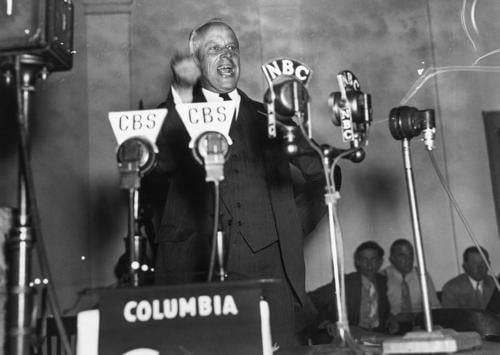
Interview with Harold Rubin, Barno Hughes and Carl [J.?] Douglas Fuchs
1963 Interviewing Barno Hughes, Harold Rubin, Carl Douglas Fuchs : Studs Terkel in South Africa.
-
Interview with Father John O'Brien
1969 Father John O'Brien discusses Humanae Vitae. Includes an interview of a nameless Catholic mother.
-
Interview with Father Daniel Berrigan
Apr. 30, 1996 Discussing the book "Apostle of Peace: Essays in Honor of Daniel Berrigan," with essayist and poet Father Daniel Berrigan.
-
-
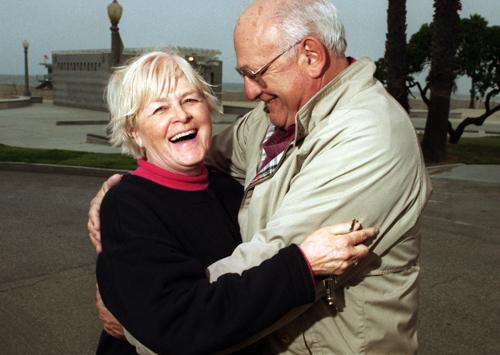
Interview with Father Blase Bonpane
Jun. 5, 1987 Discussing "Guerrillas of Peace: Liberation Theology and the Central American Revolution," (published by South End Press) with the author Father Blase Bonpane.
-
Interview with Eustace Haydon
1968 [This program and its second half are almost identical to 1918316-3-1, but these two programs include a conversation around turning the tape over.]
-
Interview with Eustace Haydon
1969 Interviewing theologian Eustace Haydon. [Almost identical to 1925865-3-1 and -3-2 except this recording is missing the conversation about turning the tape over.]
-
Howard Schomer, Elsie Schomer and Rabbi Jacob Weinstein discuss their experiences in Vietnam
Jul. 26, 1965 Church leaders Howard Schomer, Elsie Schomer and Rabbi Jacob Weinstein talk about their experiences with the Vietnamese people they encountered. The group determined no matter who they came in contact with, two things were true, they were never told that they should leave Vietnam and that all the Vietnamese people longed for peace.
-
Horace Cayton discusses his book "Long Old Road" ; part 2
Sep. 7, 1966 Content Warning: This conversation has the presence of outdated, biased, offensive language. Rather than remove this content, we present it in the context of twentieth-century social history to acknowledge and learn from its impact and to inspire awareness and discussion. Loneliness and hardships of both fitting in and finding a job are covered in the continuation of Horace Cayton's, "Long Old Road: An Autobiography." By living in a middle class home in Seattle with a full time Japanese servant, Cayton was seen as better off than most people.
-
Hendaseyd Buchanan and Miss Dillon discuss life in London, England and Scotland, bookshops, and book selling ; part 2
1962 Hendaseyd Buchanan, a bookseller, discusses his bookshop, customers, and interests.
-
Handasyde Buchanan and Miss Dillon discuss life in London, England and Scotland, bookshops, and book selling; part 1
1962 Interviewing booksellers Handasyde Buchanan and Miss Dillon while Studs was in England. They discuss life in London, England and Scotland, their bookshops, and book selling.
-
Gordon Zahn talks with Studs Terkel
1970 Terkel interviews Gordon Zahn about war and peace.
-
Gordon Zahn discusses his book "In Solitary Witness" ; part 1
Jan. 15, 1965 One's conscience, morals and religion are all apart of Gordon Zahn's book, "In Solitary Witness: The Life and Death of Franz Jagerstatter". Zahn talks about who Jagerstatter was and what made him decide to say "No" to Hitler's army. Jagerstatter chose to lay with the community of saints rather than kill Jewish people.
-
Gordon Zahn discusses his book "In Solitary Witness" ; part 2
Jan. 15, 1965 Gordon Zahn continues to talk about his book, "In Solitary Witness: The Life and Death of Franz Jagerstatter". When doing his research for the book, it puzzled Zahn to find out that very few young people in Jaggerstatt's home village knew who Franz Jaggerstatt was. Zahn explained Jaggerstatt knew he was doing the right thing by objecting to Hitler's army because a Catholic priest had done the same thing.