Listen to New Voices on Studs Terkel our partnership with 826CHI-here! Read the Story


Showing 346 - 360 of 451 results
-

Elisabeth Schwarzkopf discusses her role as The Marschallin in Der Rosenkavalier ; part 2
Nov. 2, 1960 Studs Terkel discusses with Elizabeth her her role as The Marschallin in Der Rosenkavalier. This interview is done in three parts.
-
-
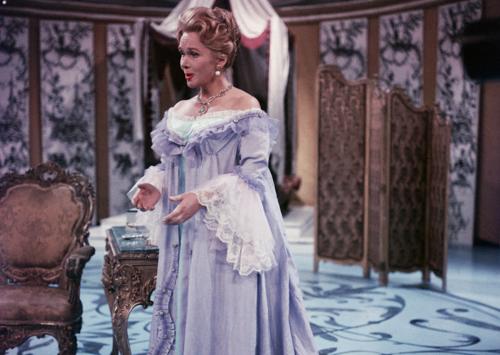
Elisabeth Schwarzkopf discusses her career a week after a performance at Ravinia ; part 2
Jul. 16, 1965 Interviewing soprano Elisabeth Schwarzkopf.
-
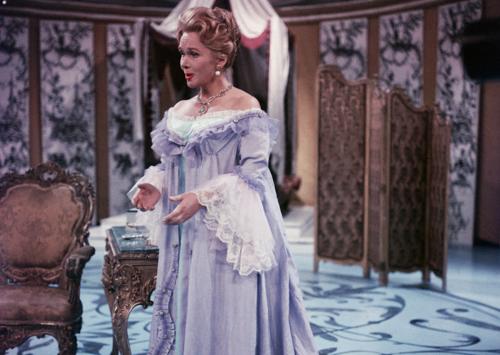
Elisabeth Schwarzkopf discusses her career a week after a performance at Ravinia ; part 1
Jul. 16, 1965 Interviewing soprano Elisabeth Schwarzkopf.
-
Edith Mason discusses her childhood and career in the opera ; part 1
1966 Madam Mason discusses her childhood as it pertains to her career. She shares her training and study in Paris. Mason recalls the many composers and conductors she has worked with and the various opera companies she worked for. The musical numbers are removed from this edited version of the original recording.
-
Edith Mason discusses her childhood and career in the opera
1966 Studs replays his interview with Edith Mason 21 years ago. Madam Mason discusses her childhood as it pertains to her career. She shares her training and study in Paris. Mason recalls the many composers and conductors she has worked with and the various opera companies she worked for. The musical numbers are removed from this edited version of the original recording.
-
Edith Mason discusses her career in opera ; part 2
1966 They talk about other performers Madam Mason worked with. Edith shares her view on the difference between opera in her day and the current opera. Parts of this version appears to be a duplicate of another, but there are a few parts that are not duplicates. The musical pieces are removed from this edited version of the original recording.
-
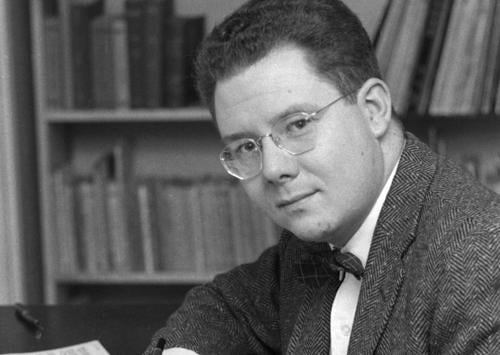
Easley Blackwood, Midwestern composer, pianist and educator at University of Chicago, discusses his music
Mar. 1, 1961 Studs and Mr. Blackwood discuss his musical theory of tonal composition, and Mr. Blackwood plays several excerpts of his piece "Chamber Work for Fourteen Winds" on the piano.
-
Easley Blackwood, Leonard Meyer and Ralph Shapey talk about standards of composition in contemporary music, part 1
1965 The program begins with an excerpt from BBC Radio about a hoax piece of music by Pietorzac (Hans Keller). Hans Keller and a friend went into studio and made noise and presented it as music. In this round table discussion the three gentlemen - all composers, musicians, and educators, discuss with Studs, contemporary music and the standards for defining a composition as music. In the second hour, they discuss what level of knowledge of music a critic should have in order to form a proper opinion of music. All animatedly offer their opinion to both the pro's and the cons.
-
Easley Blackwood, Leonard Meyer and Ralph Shapey discuss the standards of composition in contemporary music, part 2
1965 In this round table discussion the three gentlemen - all composers, musicians, and educators - discuss with Studs contemporary music and the standards for defining a composition in music. In the second hour they discuss what level of knowledge of music a critic should have in order to form a proper opinion of music. All animatedly offer their opinion to both the pro and the con. A movement of both Blackwood and Shapey compositions is played.
-
Easley Blackwood, David Schrader and Ramon Salvatore in discussion with Studs Terkel about music
Apr. 14, 1993 Presenting music published by Chicago record label Cedille Records including the music of composer and pianist Easley Blackwood along with David Schrader and Ramon Salvatore.
-
-
Dr. Carlo Levi discusses Italian literature; Julio & Phillipo sing nursery rhymes, Maria Caniglia discusses opera; part 2
1962 Dr. Carlo Levi talks about the differences in Italian and American literature in the first part. In the second part, children Julio and Phillipo sing Italian nursery rhymes. In the last part, Maria Caniglia and husband Pino Donati discuss opera; part 2.
-
Donald Luce discusses the problems in Vietnam
Donald Luce had been living & helping the people of South Vietnam through the International Voluntary Service. Luce believed it was important to come back to the states to talk about the problems in Vietnam. Luce said the Vietnamese government could not provide its people waste disposal, electricity and running water. Luce went to Congress to voice his concerns. It was at the State Department who didn't seem to care all to much.
-
Donald Gramm discusses his career
Oct. 1, 1973 Donald Gramm discusses working with composers and comparing contemporary and classical opera. He also talks about his approaches to different performances and his experiences singing in multiple languages. Music is played throughout the interview and performances include his role as Creon from Stravinsky's "Oedipus Rex"and selections from Ned Rorem's "War Scenes": "As Adam", "O You Whom", "To You", "Look Down, Fair Moon", and "A Night Battle". Next, a performance as Leporello singing "Madamina, il catalogo è questo" from "Don Giovanni" and "Zwei Gesänge, Op. 1: I.