Listen to New Voices on Studs Terkel our partnership with 826CHI-here! Read the Story


Showing 61 - 75 of 243 results
-

Milton Mayer discusses Quakerism and the impact they have had on society
Dec. 27, 1974 Milton Mayer, journalist and educator, talks with Studs about Quakerism. They talk about how religion relates to society in the times of change. Mr Mayer describes an exchange with a gentleman who asked what is a Quaker. The man had been an SS officer who told Mr Mayer his story. The man had been touched by the anonymous generosity of the Quakers many years before. Mr Mayer speaks of A. J. Musty, clergyman and political activist as his mentor and friend, and the things he learned from him.
-
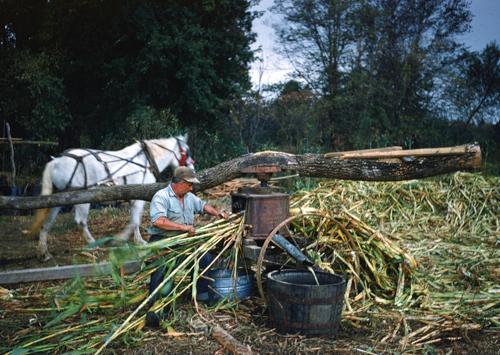
Miles Horton and Elliot Wigginton discuss the Foxfire Project
Jun. 1, 1977 Discussing the Foxfire books and interviewing Miles Horton and Elliot Wigginton. Wigginton is one of the editors/compilers of several of the books in the series about traditional handicrafts and practical methods used in rural life.
-
Mildred Loomis discusses the green revolution and the back to the land movement ; part 2
Mar. 6, 1968 Discussing the green revolution and the "modern homestead" and interviewing Mildred Loomis. Mildred Loomis discusses the back to the land movement.
-
Mildred Loomis discusses the green revolution and the back to the land movement ; part 1
Mar. 6, 1968 Discussing the green revolution and the "modern homestead" and interviewing Mildred Loomis. Mildred Loomis discusses the back to the land movement.
-
Mike Rose discusses his book “Possible Lives: The Promise of Public Education in America”
Sep. 23, 1996 Educator and author Mike Rose discusses and reads from his book “Possible Lives: The Promise of Public Education in America”. Rose focuses his discussion on public school educators that utilize innovative teaching methods to create inclusive environments for all students. Studs plays “Johnny Cuckoo” - Bessie Jones & Group (1961).
-
Metro High School students talk with Studs Terkel
Apr. 7, 1975 Interviewing Shelby Taylor, Paul Goren, Jean Tucker, Paul McCree from Metro High School in Chicago, Ill.
-
Mel Lambert and five Puerto Rican boys discuss the Jobs Project and life in Chicago ; part 1
1968 Studs interview with Mel Lambert and five Puerto Rican boys (Harry, Carlos, Vic, Jose, and Hector) about their life in Puerto Rico and Chicago. They discuss learning English and other subjects in the jobs project. The five boys talk about gang involvement and interactions with other race and ethnic groups. They also discuss their goals, economic opportunity in Chicago, and their difficult experiences of learning English and getting an education.
-
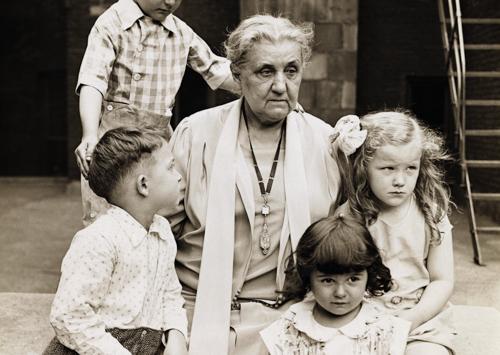
Mary Lynn McCree Bryan talks about her book "Eighty Years at Hull House"
Jan. 13, 1970 Discussing the book, "Eighty Years at Hull House," and interviewing the co-author, Mary Lynn McCree Bryan. Mary Lynn McCree Bryan discusses the Hull House and its founders in Chicago, Illinois. Includes two clips of Florence Scala speaking: one about nature and about a tree that was taken down at Hull House and one about Jane Addams. Includes a clip of Jessie Binford discussing Jane Addams.
-

Mary Lynn Kotz discusses her book "Rauschenberg, Art and Life"
Oct. 29, 1991 In Mary Lynn Kotz's book, "Rauschenberg, Art and Life," Kotz recounts the works and story of 20th century art pioneer Robert Rauschenberg. They survey his career beginning in Port Arthur, TX, discussing his Depression-era upbringing which caused him to reuse and salvage virtually any object and transform it into art, his studies in Paris, made possible by the G.I.
-
Marjorie Kellogg writer and social worker discusses her second novel "Like The Lions Tooth"
1975 Marjorie Kellogg writer and social worker discusses her second novel "Like The Lions Tooth". The discussion begins with a reading of the first stanza of a poem by W.B. Yeats "Crazy Jane Grown Old Looks at the Dancers". Studs and Marjorie Kellogg both read excerpts from her novel "Like the Lions Tooth", as they discuss the book.
-
Maria Cerda and Dick Simpson discuss Chicago: An Agenda for Change, with a focus on education ; part 3
Oct. 8, 1974 Chicago: An Agenda for Change. Part 3 of 5. Maria Cerda is a former Chicago Board of Education member.
-
Lucien Stryk discusses Zen poetry and Zen philosophy
Jan. 1, 1966 Poet Lucien Stryk discusses Zen poetry and Zen philosophy. Styrk focuses this conversation on “Satori," a Buddhist term for “the awakening”, and its influence on Zen philosophy. Styrk also discusses and reads from a book edited by him and Takashi Ikemoto entitled "Zen: Poems, Prayers, Sermons, Anecdotes, Interviews." Stryk reads a poem from “Triumph of the Sparrow” by Shinkichi Takahashi. Studs plays "His Eye is on the Sparrow" - Mahalia Jackson (1958).
-
Lotte Lehmann discusses her opera roles and how opera has changed ; part 2
May. 9, 1967 Lotte Lehmann, legendary opera soprano, discusses her book "Five Operas and Richard Strauss" about her portrayals of famous roles. Interviewing Lotte Lehmann, recorded at the Orrington Hotel, Evanston (including excerpt from master class at Northwestern and recording excerpts from Walkure with Melchior).
-

Loren Baritz discusses the relationship between education and work
Jul. 31, 1974 Loren Baritz, Executive Vice President of Empire State College (part of the State University of New York), discusses the purpose of higher education and the relationship between higher education and work. Topics of discussion include the current state of student apathy driven by economic insecurity, vocationalism, the structure of higher education institutions, and how the generation gap affects learning. Baritz also discusses the redefining of work in American culture and ideas for making liberal arts education more relevant to work.
-
Lois Wille discusses the many problems at Crane High School
Dec. 14, 1965 Lois Wille caused an uproar with the story she wrote for the Chicago Daily News, "Inside a Slum High School." According to Wille's investigation, a lack of money, over crowding of students, lights that don't work in the school and no books were among some of the problems that Wille found at Crane High School. Students also had a pessimistic view, explained Wille, as she found students didn't believe the teachers and counselors cared what theyd do after they got out of high school but they just wanted them to get out and leave Crane.