

-

-
Presenting a performance by pianist, harmonica player, and vocalist Corky Siegel
Performance by Corky Siegel in Grant Park
-
Presenting a concert at Oak Park Mall with jazz pianist Art Hodes and blues musician Corky Siegel
Jun. 15, 1983 Terkel comments and presents a concert at Oak Park Mall
-
Phyl Garland discusses themes from her book "Sound of Soul" and the black influence on music ; part 1
Nov. 25, 1968 Studs interviews Phyl Garland about her book "Sound of Soul." They discuss the history of music and how black music influenced white music. Studs reads a quote from her book where she quoted Lerone Bennett. Garland also reads from her book a few times. They discuss how music changed over time for blacks from spirituals to slave songs to the blues because it was a reflection of their lives. Garland explains how blacks used music to help them through their trials and frustrations.
-
Phyl Garland discusses her book "Sound of Soul" and the history of black music in America ; part 2
Nov. 25, 1968 Studs interviews Phyl Garland about her book "Sound of Soul." They discuss various musicians that she mentions in her book and their influence on black music. Garland explains the music of young black artists and how commercialization of music gave blacks an opportunity that they would not have had otherwise. Garland talks about how Fannie Lou Hamer used music to express her message in the Civil Rights Movement and as a women's rights activist. Studs and Garland discuss various black female artists and their music.
-
Members of the Shanghai Quartet discuss their backgrounds
May. 17, 1989 The day before their concert performance at North Park College, the Shanghai Quartet was at the WFMT studios. Betty Bucchari explained her job was to search for great musicians that were not well-known. The Li brothers were destined to play the violins, as their parents were music teachers for 15 years.
-
Members of the Earth Club radio show discuss their musical repertoires
Feb. 14, 1994 Howard Levy, Stuart Rosenberg, and Johnny Frigo reminisce about their discovery of musical genres that inspired them and discuss the early roots of folk music.
-
Maya Angelou discusses her early life and African American culture and people
Apr. 1, 1960 Angelou discusses: her early life; her international travels; dancing; blues and jazz music; and the book "Youngblood" by John Oliver Killens. In this program "In the Evening (When the Sun Goes Down)" and "Joe Turner No. 2 (Blues of 1892)" by Big Bill Broonzy, "I Ain't Gonna Pick No More Cotton" by Sam Lightnin' Hopkins is played, as well as other musical selections.
-
Maya Angelou discusses her early life and African American culture and people
Apr. 1, 1960 Angelou discusses: her early life; her international travels; dancing; blues and jazz music; and the book "Youngblood" by John Oliver Killens. Musical selections have been removed due to copyright.
-
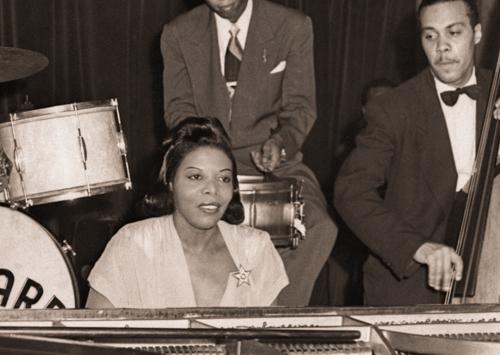
Mary Lou Williams and her manager Father Peter O'Brien discuss Williams' career
Sep. 15, 1978 Studs Terkel interviews Mary Lou Williams and her manager, Father Peter O'Brien. They discuss music, musicians, and instruments. Some clips of piano music playing at the end.
-
Mance Lipscomb discusses the blues
Apr. 26, 1965 Interviewing American blues singer and guitarist, Mance Lipscomb, about his life, musical inspirations, and interest in blues music.
-
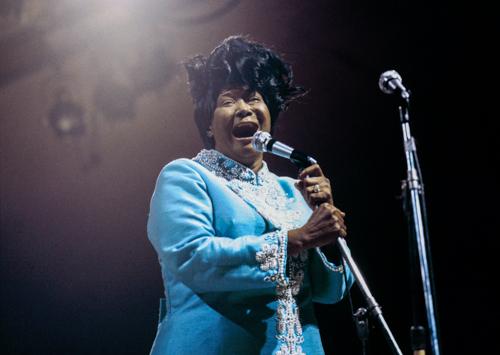
Mahalia Jackson discusses the civil rights movement and the upcoming freedom rally
May. 17, 1963 Studs Terkel interviews gospel vocalist Mahalia Jackson. Jackson discusses the freedom rally that will be taking place at McCormick's Place in Chicago, IL.
-
Mahalia Jackson discusses her affinity for gospel music and singing
1956 Mahalia Jackson talks about her discovery of the blues and what drew her to become a gospel singer. She also discusses her tours around Europe and the U.S.
-
Lawrence Cohn discusses his book Nothing But the Blues: The Music and Musicians
Dec. 20, 1993 The originator of the Roots ‘N’ Blues series and Grammy winner and nominee Lawrence Cohn discusses his latest work which focuses on the life and times of blues and the musicians that helped the genre become what it is today.
-
Langston Hughes, John Sellers, James Cotton and Otis Spann discuss blues music
Jul. 15, 1960 Langston Hughes, John Sellers, James Cotton, and Otis Spann discuss their origins and blues music. The interview focuses heavily on Langston Hughes and how deeply he is influenced by the blues. Hughes also discusses his upcoming book "An African Treasury" at length. Hughes, Sellers, Spann, and Cotton perform a number of songs during the interview, they have been removed due to copyright.