

-

Studs Terkel talks with artist Gene Hall and Dr. Paul Mundy about the painting "The Black Christ Not Worthy of Its Cross" ; part 1
Sep. 21, 1965 Studs Terkel interviews the artist Gene Hall who created "The Black Christ Not Worthy Of Its Cross" and the head of the Loyola University Sociology Department, Dr. Paul Mundy, who used the title and painting reproduction to spark classroom discussions. Hall describes the creation of his 6 ft tall by 2 1/2 feet wide painting and how seeing the color of Christ diminishes Christ. You don't see Christ when you see color. Hall uses barbed wire instead of thorns in the painting to signify there is no time in painting, it is up to date.
-
Studs Terkel talks with artist Gene Hall and Dr. Paul Mundy about the painting "The Black Christ Not Worthy of Its Cross" ; part 2
Sep. 21, 1965 Studs Terkel interviews the artist Gene Hall who created "The Black Christ Not Worthy Of Its Cross" and the head of the Loyola University Sociology Department, Dr. Paul Mundy, who used the title and painting reproduction to spark classroom discussions. Hall describes the creation of his 6 ft tall by 2 1/2 feet wide painting and how seeing the color of Christ diminishes Christ. You don't see Christ when you see color. Hall uses barbed wire instead of thorns in the painting to signify there is no time in painting, it is up to date.
-
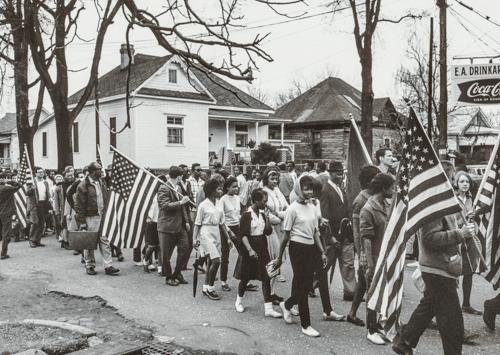
Studs Terkel talks with a newspaper woman, Ruth and a hostess ; part 3
Mar. 31, 1965 Interviewing in Montgomery, Alabama, with a newspaper woman, Ruth and hostess (part 3). He talks with several people about their thoughts on the March on Washington.
-
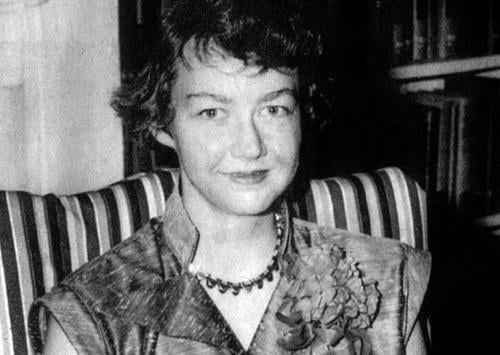
Studs Terkel remembers Flannery O'Connor on WFMT reading from "Everything that rises must converge"
Oct. 26, 1965 Studs Terkel discusses Flannery O'Connor (part 1 of 2). Includes reading of the short story "Revelation." Includes song "Amazing Grace." NOTE: Content is the same as part two, but contains several seconds more of silence at the end where part two does not have several seconds of silence.
-
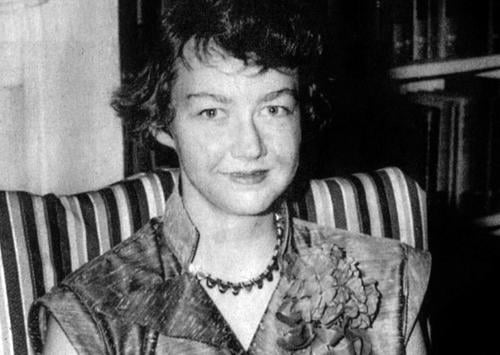
Studs Terkel remembers Flannery O'Connor on WFMT reading from "Everything that rises must converge"
Oct. 26, 1965 Studs Terkel discusses Flannery O'Connor (part 2 of 2). Includes reading of the short story "Revelation." Includes song "Amazing Grace." NOTE: Content is the same as part one, but contains several seconds less of silence at the end where part one has several seconds of silence.
-
Studs Terkel reflects on trip to People's Republic of China to describe Inner Mongolian music
Jun. 11, 1981 Studs Terkel travels to a Yurt shepherd's farm commune to hear the old song ballad of a Mongolian hero. It concerns a slave uprising from 200 years ago and shows the unity of the Mongolian people. Terkel compares this music to the Hungarian legacy before moving to the School of Story Telling and School of Music and Story Telling in the capital of Inner Mongolia, Hohhot. We are introduced to the four string hu that played Homeric ballads of drinking songs that could last four days.
-
-
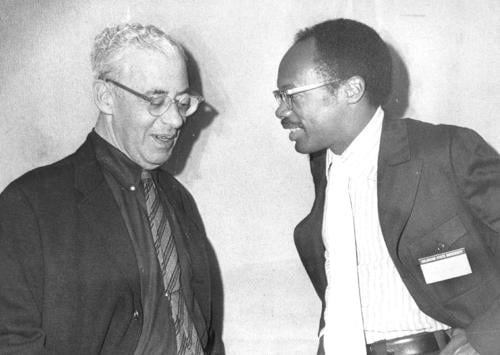
Studs Terkel recalls and plays excerpts from interviews with Saul D. Alinsky as tribute after his death in 1972
1970 Presenting "Agitator: A Tribute to Saul D. Alinsky," after Mr. Alinsky's death in 1972. Community organizer and social activist, discusses his work with advocacy for African-American labor rights, and his connection with the Mexican-American civil rights movement in California. Includes excerpts from interviews with him.(Wav ID: 1968312-3-1)
-
Studs Terkel presents an Easter program of commentary and secular and sacred music
Mar. 24, 1988 Terkel presents an Easter program. Songs include "Lord of the Dance/Simple Gifts" sung by Bill Crofut and Benjamin Luxon; "Plenty Good Room" sung by Roland Hayes; "Vidé" a carnival song of Martinique; "Wondrous Love" sung by Ed McCurdy; "The Cuckoo" sung by Burr Tillstrom as Kukla; "The Cuckoo's Nest" sung by Jimmy MacBeath; "The Cuckoo" sung by Jean Ritchie; "Gloria," Malaga Flemenco song; "Old Blind Barnabus" sung by Golden Gate Quartet; and Bach's "St.
-
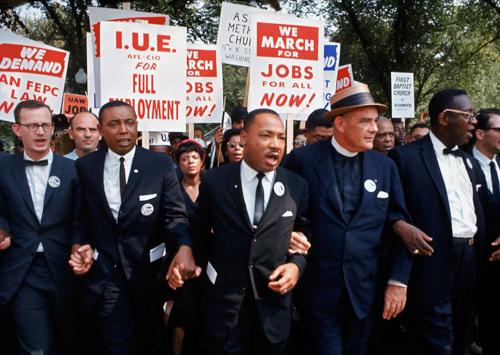
Studs Terkel presents a tribute to Martin Luther King, Jr.
Apr. 5, 1968 Studs Terkel shares a special program honoring the birthday of civil rights leader Martin Luther King, Jr. Includes excerpts from Terkel’s 1965 interview with King about King’s dream for civil rights in the United States, influence of his father, the damaging effects of segregation, and the role of love in bringing about social change. The program also includes excerpts from King’s 1963 “I Have a Dream” speech from the Civil Rights March on Washington, and his 1967 Christmas Eve speech at Bethesda Memorial Church in Atlanta.
-
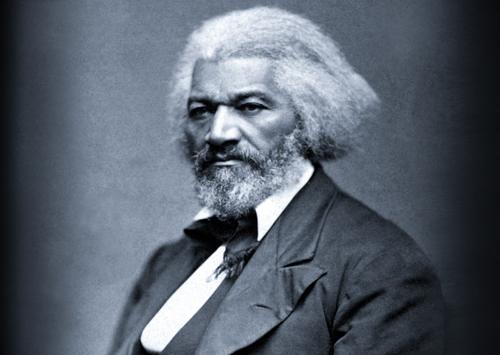
Studs Terkel presents a program in honor of the birthday of abolitionist and African American leader Frederick Douglass
Feb. 15, 1971 Studs Terkel presents a program in honor of the birthday of abolitionist and African American leader Frederick Douglass, including excepts from Terkel's 1964 interview with African-American scholar, author and social historian Lerone Bennett. Terkel reads at length from Douglass' autobiography, "My Bondage and My Freedom," focusing on Douglass' interactions with slave owners Hugh and Sophia Auld.
-
Studs Terkel presents a performance of the Rhos Welsh Choir
Aug. 23, 1988 Terkel comments and presents musical performance by the Rhos Welsh Choir
-
-
Studs Terkel pays tribute to Mike Royko and to Heywood Hale Brown
Feb. 26, 1969 While in Mike Royko's office and hearing typewriters in the background, Royko talks about having received the Heywood Hale Broun Award for outstanding work by a journalist. Ryoko said having to travel to Washington D.C,. to receive the award was part of a let down to the whole thing. After the brief interview w/Royko, Terkel then continues on by reading two articles by Mike Royko and two articles by Heywood Hale Brown.
-
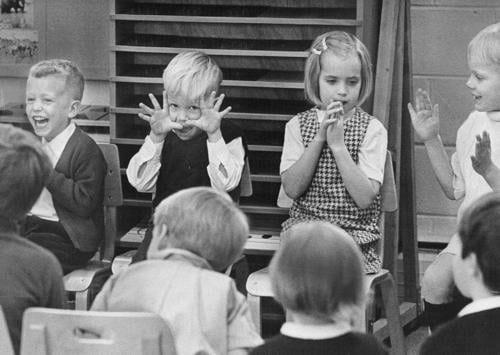
Studs Terkel moderates and comments on a round-table debate about the Montessori educational theory
Nov. 3, 1964 A round-table debate about the Montessori educational theory. Four early childhood development professionals speak of the pros and the cons of the program. Speakers include: Fay Bauling advisor at Wilson Jr. College, Dr. Urban Fleege of DePaul University, Dr. Ner Littner from the Institute of Psychoanalysis, and Hannah MacLaren, head teacher from Ancona School.