

-

Studs Terkel interviews author-dramatist Frank Norman at his Bloomsbury Square Hotel ; part 1
1968 Terkel delves into the life of Frank Norman, a London ex-con who turned his life around and became a novelist and playwright by writing on his experiences. He wrote "Bang to Rights" shortly after his prison release which brought him great fame. He followed that with "The Monkey Pulled it's Hair" that had a U.S. release under the name "Don't Darling Me Darling". Norman opened up to Terkel discussing his illegitimacy, his illiteracy till age 14, his institutionalization in an orphanage which he turned into the novel "Banana Boy".
-

Studs Terkel interviews author Sandra Cisneros
Jun. 30, 1991 Sandra Cisneros recounts the creation of her works from her new release "Woman Hollering Creek and Other Stories" as well as "House on Mango Street". The following have been removed due to copyright restrictions: "Eleven", "Mexican Movies", "Eyes of Zapata", "Bien Pretty" and "One Holy Night". From "House on Mango Street" she reads "A Smart Cookie", "Hips", "My Name", and "Mi Tocayo," "Those Who Don't."
-
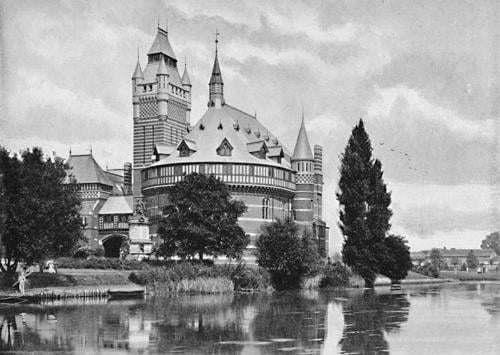
Studs Terkel in Stratford-Upon-Avon. At the National Theatre and at the Falcon Hotel ; part 1
1962 Studs Terkel heads to the British town of Stratford-upon-Avon (the birthplace of William Shakespeare) intending to interview Sir John Gielgud, and getting a few words before Studs realizes that Sir John is not intending to be interviewed. He speaks instead to other members of the company. Then he meets Mr. and Mrs. Lawrence in the Falcon Hotel.
-
-
Studs Terkel in conversation with Buffy Sainte-Marie
Apr. 21, 1972 Studs Terkel interviews Canadian singer-songwriter Buffy Sainte-Marie.
-
Studs Terkel gets reactions on the upcoming destruction of McLaren school and a newly created mural by the school children
Jul. 20, 1978 Studs Terkel returns to his alma mater, McLaren school, prior to its destruction to gain reactions on the loss of a newly created mural by the school children. Terkel provides the reactions of the student artists who can't understand why they were told to complete the oceanography mural when it was to be destroyed with the building. He also talks with parents, teachers and administrators about this loss. Parents pledge $500 to create negatives of mural to save as photographs.
-
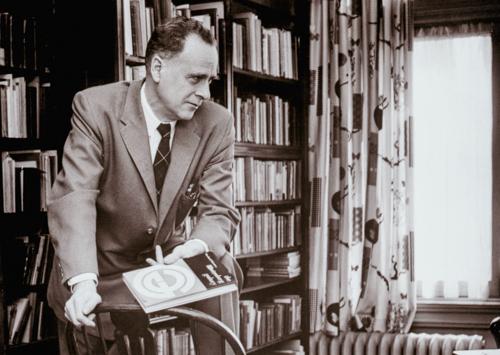
-
Studs Terkel discusses, through music, inventions that made the lives of men and women easier
Jun. 10, 1988 Songs include "Hello, Frisco" sung by Sam Ash and Elida Morris; "He'd Have to Get Under - Get Out and Get Under (To Fix Up His Automobile)" sung by Will Halley; "Come Josephine in my Flying Machine" sung by Blanche Ring; "Jay Gould's Daughter" sung by Ed McCurdy; "Mr.
-
Studs Terkel discusses writing and acting with John Schultz, Paul Pekin, and their students
1968 Studs discusses writing and acting with John Schultz, Paul Pekin, and six of their students: Alex Wayne, Linda Gilbert, Will Jackson, Dan Michalski, Bill Johnson, and Fred Game. The main topic of conversation is the "Story Workshop" method of teaching writing, which Schultz had recently developed and were leading at CAM (Christian Action Ministries) Academy in Chicago. The group discuss their history as teachers and writers, and they demonstrate some of the techniques they employ in their methodology. Some of the students also express the successes they have had in developing their writ
-
Studs Terkel discusses use of the drug Cylert (Pemoline) with Richard Kasperson and Robert Janicki of Abbott Labs
Feb. 23, 1976 Studs Terkel interviews two representatives from Abbott Laboratories: Richard Kasperson, V.P. of corporate regulatory affairs, and Dr. Robert Janicki, V.P. of corporate clinical research. The topic of conversation is the prescribed use of Cylert, which was a trade name for the drug Pemoline. Cylert was used to treat attention-deficit hyperactivity disorder (ADHD) and narcolepsy. Janicki and Kasperson respond to claims that the drug was overprescribed to school-aged children.
-
Studs Terkel discusses the WPA Arts Project
Sep. 14, 1989 The influence of the WPA on the music of the 1930's. The heroic sounds heard in song, movies, and theater. He provides Bing Crosby's version of Yip Harburg's "Brother Can You Spare a Dime". As well as the Almanac Singers performing "Roll the Union On". Both Moll's Song and the final scene of Blitzstein's, "The Cradle Will Rock" are performed. Terkel provides a host of other songs which highlight the music of the 1930's. Extensive discussion on "The Cradle Will Rock" with its producer John Houseman.
-
Studs Terkel discusses the songs by Steve Goodman and songwriter John Prine
Jul. 29, 1975 Studs Terkel comments on folk music entertainers Stever Goodman and John Prine. He discusses a little about their life and names a variety of their song titles. The musical performances have been erased from this edited version of the recording. Includes an excerpt from a previous interview with John Prine who speaks about his grandfather and a song he wrote about him.
-
Studs Terkel discusses the novel "Creation" with its author, Gore Vidal
Discussing the book "Creation" with the author Gore Vidal.
-

Studs Terkel discusses the novel "Blind Date" with its author Jerzy N. Kosinski
Nov. 11, 1977 Studs Terkel and Jerzy Kosinski express their own views on the morality of protagonist George Levanter from Blind Date. Terkel sees him as a vigilante whereas Kosinski sees him as a responsible social reformer. Kosinski states that ethics are viewed differently by Europeans based upon their history of invasions and betrayal which lends itself to an individual code of ethics as exemplified by George Levanter.
-
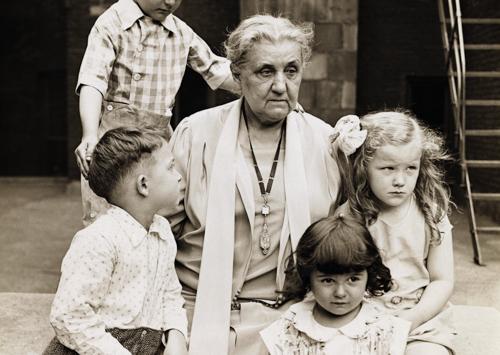
Studs Terkel discusses the life of Hull House founder, Jane Addams with her grand niece, Mrs. John B. Allen
Jul. 1, 1960 Mrs. John B. Allen recalls stories from Jane Addams' "The Long Road of Woman's Memory" and "Twenty Years at Hull House". She also recounts her own personal stories of Thanksgiving and Christmas at Hull House as well as her own volunteer service with The Immigrants Protective League. Jane Addams advocated for shorter hours, child labor laws, women's suffrage, youth, and peace. She prejudged no one and saw individuals as having various needs, desires, and each with their own gifts. She found reassurance that life is good through the spirit of youth. This interview ends at 45:03.