

-

Carl Sagan discusses the book "Contact"
Oct. 4, 1985 Discussing the book "Contact" (published by Simon & Schuster) with the author, astronomer and science writer Carl Sagan. Starts with clip from Arthur C. Clarke (1856688-3-1).
-
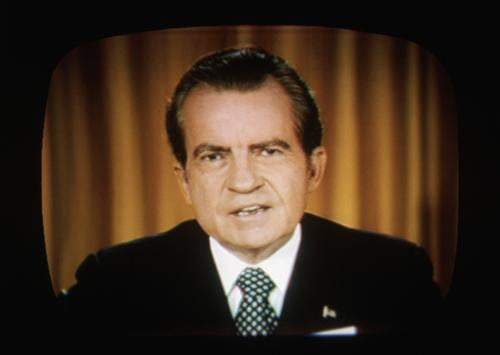
Carl Bernstein and Bob Woodward discuss the book "All the President's Men"
Jun. 21, 1974 Washington Post journalists discuss their book "All the President's Men" about breaking the Watergate scandal.
-

Candy Armstrong-Jones discusses her book "Village of Vice" ; part 2
1968 Interviewing author Candy Armstrong-Jones about her book “Village of Vice.”
-
Candy Armstrong-Jones discusses her book "Village of Vice" ; part 1
Interviewing author and copywriter Candy Armstrong-Jones about her book “Village of Vice.” She discusses her writing techniques and shares themes from her book.
-
Burl Ives discusses his life and music
Burl Ives, actor and singer, discusses his life including childhood, schooling, early career, married life and some of his most popular songs. Ives also talks about his books and writing.
-
Burl Ives discusses his background
Burl Ives was born in Jasper County, IL and he attended Eastern Illinois State Teachers College. While in college, he played some football and then he wanted to become a football coach. Ives spent time in Terre Haute, IN, where he played records and sang songs on the radio. To be a great singer, Ives said he knew he had to add dramatization to certain songs.
-
Bruno Bettleheim discusses his book "The Informed Heart: Autonomy in a Mass Age"; part 2
1961 Psychologist, Holocaust survivor and author Bruno Bettelheim discusses his imprisonment in Dachua and how it influenced his view on life with the effect of Freud and Kant’s philosophy. Bettelheim was known as an early adopter on the topic of autism.
-
Bruno Bettelheim discusses his book “The Children of the Dream”
Interviewing Bruno Bettelheim, writer, scholar, and child psychologist, on his book “The Children of the Dream.” He also discusses his work at the Sonia Shankman Orthogenic School for Disturbed Children in Chicago. Content Warning: This conversation includes racially and/or culturally derogatory language and/or negative depictions of Black and Indigenous people of color, women, and LGBTQI+ individuals. Rather than remove this content, we present it in the context of twentieth-century social history to acknowledge and learn from its impact and to inspire awareness and discussion.
-
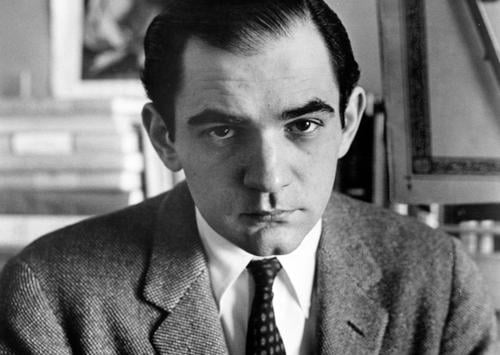
Bill Russo discusses his commedia dell'arte production
Jul. 26, 1974 Bill Russo talks about the commedia dell'arte production being staged at the Center for New Music at Columbia College Chicago. The production includes two pieces, "Pedrolino's Revenge" and "Isabella's Fortune".
-
Bernadette Devlin McAliskey discusses the lack of civil rights in Northern Ireland
The government, explains Bernadette Devlin McAliskey, is to blame for the slums they've built and for not providing proper housing. McAliskey contends there are no Black or white problems but rather that the slums and ghettos exist in the first place.
-

Barbara Kopple discusses her documentary "American Dream"
Mar. 20, 1992 Academy Award winning documentarian Barbara Kopple talks with Studs about her documentary "American Dream" and the battle fought and lost by union workers in Austin, Minnesota during the mid-80s. They set the backdrop in the small, tight-knit community that Hormel Foods had such a profound impact on, how the UFCW international union declined to support the local union, the gripping dynamics between family members who crossed picket lines, and the healing that occurred when the film was screened in the town several years later.
-
Barbara Kingsolver discusses her book "Animal Dreams: A Novel"
Sep. 17, 1990 Barbara Kingsolver reads from and discusses her book, "Animal Dreams: A Novel." The main character, Codi, has returned to Grace, Arizona, to help her father, Doc Homer, with his bout of Alzheimer's. Kingsolver explained that the novel not only has flashbacks but that it's really about people's memories.
-
Barbara Carroll discusses her life as a jazz pianist
Jul. 12, 1989 Barbara Carroll demonstrates her piano skills, discusses her career as a singer and musician, and shares her passion for jazz music.
-
August Everding discusses his opera production of “Ring of the Nibelungen”
Mar. 14, 1996 German director August Everding discusses his career from theater to opera and shares themes from his current opera productions.
-
August Derleth discusses the books he writes ; part 1
To date, August Derleth said he's written 135 books. A good number of his books are of Sauk City, Wisconsin, the German town where is was born and raised. Derleth explained writing books on poetry are not big money makers and for that reason, he then turns to writing horror stories or mystery novels.