Listen to New Voices on Studs Terkel our partnership with 826CHI-here! Read the Story


Showing 1 - 10 of 10 results
-

Tom Wicker discusses his book "On Press: A Top Reporters Life In, And Reflection On, American Journalism"
May. 18, 1978 Wicker discusses advocacy journalism versus objective journalism, freedom of the press, and the role of the press in American society.
-
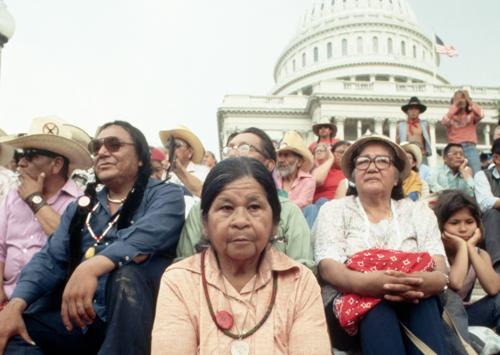
Stan Steiner talks with Studs Terkel ; part 2
1967 Discussing the book "The New Indians" and interviewing the author Stan Steiner.
-
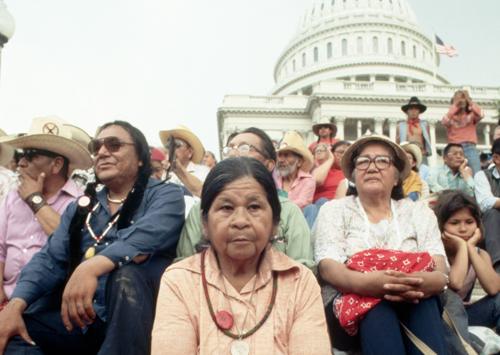
Stan Steiner talks with Studs Terkel ; part 1
1967 Discussing the book "The New Indians" and interviewing the author Stan Steiner.
-
Ronnie Dugger discusses his book "Politician: The Life and Times of Lyndon Johnson"
Jul. 15, 1982 Ronnie Duggar’s book, “Politician: The Life and Times of Lyndon Johnson,” shows Johnson’s rise to power. Duggar explained that from a young age, Johnson knew to court power. While at the Teachers College in Texas, Johnson told his cousin, “It starts at the president’s office,” where Johnson was the president’s right arm man. Once in the Senate, Johnson chose to be on the Armed Services Committee because he knew Senator Richard Russell ran the Senate. Johnson courted powerful men and in exchange, these men would advance his career.
-
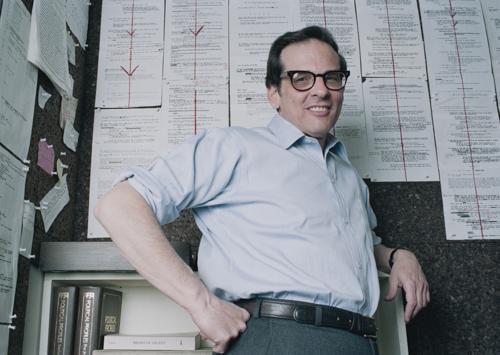
Robert Caro reads from and discusses his book "The Years of Lyndon Johnson"
Dec. 9, 1982 Discussing "The years of Lyndon Johnson, Vol 1: the path to power" with the biographer Robert Caro.
-
Robert Caro discusses his book "The Years of Lyndon Johnson: volume two: Means of ascent"
Apr. 23, 1990 Interviewing journalist and author Robert Caro about his book "The Years of Lyndon Johnson: volume two: Means of ascent," which details seven years of Lyndon Johnson’s life in the House of Representatives as he tries to climb the political ladder.
-
Jules Feiffer discusses his cartoonist history and his play "Elliot Loves"
Apr. 12, 1990 Jules Feiffer and Studs read several of Feiffer's previous cartoons as they discuss his history as a cartoonist and his retrospective on display at the Walton Street Gallery in Chicago. Feiffer discusses his attempt to move away from political cartoons and instead shift focus to social commentary. Feiffer also discusses his play "Elliot Loves", a love story that captures the complications of love and the “gap” between the sexes.
-
Jules Feiffer discusses his book “Jules Feiffer’s America: From Eisenhower to Reagan”
Oct. 29, 1982 Jules Feiffer discusses his book “Jules Feiffer’s America: From Eisenhower to Reagan”, a retrospective that chronicles his years as a social and political cartoonist. Studs and Feiffer read through several of Feiffer’s cartoons featured in this book, working their way through the book in “eras” which are categorized based on the U.S. President of that particular time frame. Studs plays “Sh-Boom” - The Crew Cuts (1954), “Big Bad John” - Jimmy Dean (1961). “Yellow Submarine” - The Beatles (1966), and “Happy Days Are Here Again” - Casa Loma Orchestra.
-
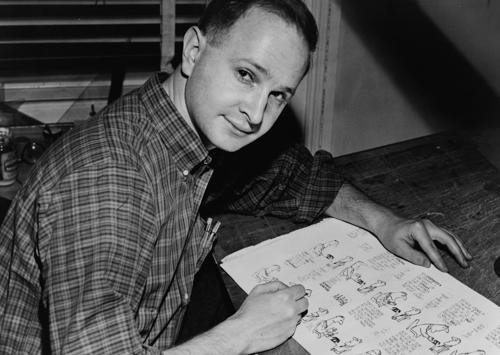
Jules Feiffer discusses his book "Feiffer on Nixon"
Nov. 10, 1974 Content Warning: This conversation has the presence of outdated, biased, offensive language. Rather than remove this content, we present it in the context of twentieth-century social history to acknowledge and learn from its impact and to inspire awareness and discussion. In his book, "Feiffer on Nixon: The Cartoon Presidency," Jules Feiffer tries to give his readers his take on politics and the government. In addition, through his descriptions of the cartoon panels, Feiffer offers his explanations of who President Nixon was.
-
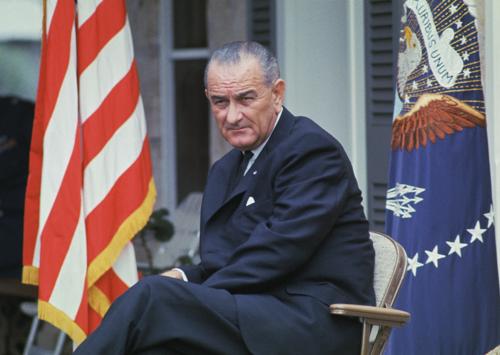
Eric Goldman discusses his experiences as special consultant to President Lyndon Johnson
1967 Historian Eric Goldman discusses his time as special consultant for President Lyndon B. Johnson and his book "The Tragedy of Lyndon Johnson."