

-

Sidney Lens in conversation with Studs Terkel
Feb. 15, 1983 Discussing the book "The Maginot Line Syndrome: America's Hopeless Foreign Policy" (published by Ballinger) with the author, labor activists, and historian Sidney Lens.
-
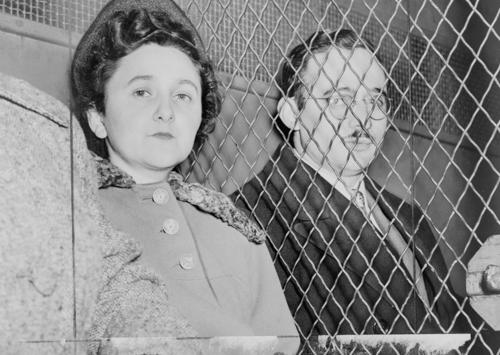
Rob Okun, Richard Fried, and Peter Novick discuss the exhibit “Unknown Secrets: Art and the Rosenberg Era”
Jun. 15, 1990 Historians and exhibit organizers Rob Okun, Richard Fried, and Peter Novick discuss the Spertus Museum’s exhibit “Unknown Secrets: Art and the Rosenberg Era.” Julius and Ethel Rosenberg were both convicted and executed in 1953 for participating in spy activity for the Soviet Union. Okun, Fried, and Novick discuss the Rosenberg case and the subsequent response from the public after the execution, many of whom felt the Rosenbergs were wrongfully convicted. The art in this exhibit captures the passion surrounding this case.
-
Nora Sayre discusses her book Running Time: Films of the Cold War
May. 4, 1982 Nora Sayre discusses her book "Running time: Films of the Cold War" and how Russian-American relations affected Hollywood and celebrity blacklists.
-
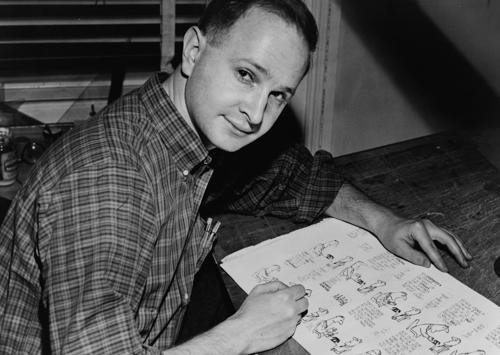
Jules Feiffer discusses his book "Feiffer on Nixon"
Nov. 10, 1974 Content Warning: This conversation has the presence of outdated, biased, offensive language. Rather than remove this content, we present it in the context of twentieth-century social history to acknowledge and learn from its impact and to inspire awareness and discussion. In his book, "Feiffer on Nixon: The Cartoon Presidency," Jules Feiffer tries to give his readers his take on politics and the government. In addition, through his descriptions of the cartoon panels, Feiffer offers his explanations of who President Nixon was.
-
Joshua Rubenstein discusses his book Tangled Loyalties: The Life and Times of Ilya Ehrenburg"
Sep. 25, 1996 Joshua Rubenstein discusses his book "Tangled Loyalties: The Life and Times of Ilya Ehrenburg" and the importance of Ehrenburg during the Stalin regime.
-
James Weinstein discusses the independent socialist magazine “In These Times”
Jul. 14, 1997 Weinstein states how at the time of creation for this magazine, most newspapers were bipartisan, intended to serve and satisfy as many people as possible, which allowed for less and less variation of opinion; Weinstein sought to combat this by producing a magazine that was very assured in its views. Studs plays "We Shall Not Be Moved" - Pete Seeger (1955).
-
Discussing The Atomic Cafe with Jayne Loader
Sep. 28, 1982 The filmmaker joins Studs to discuss her documentary about the pervasive propaganda, newsreels, and pop culture of the Cold-War era.*Please note: some sections have been edited out from the original recording due to copyright considerations
-

Discussing a rebuttal to editorials opposing the nuclear arms freeze
Oct. 27, 1982 Presenting a rebuttal to editorials opposing the nuclear arms freeze with Dr. Jack Geiger, Dr. George Kistiakowsky, Dr. Herbert (Peter) Schoville and Dr. Kosta Tsipis of MIT.
-
Daniel Yergin discusses his book, "Shattered Peace: The Origins of the Cold War and the National Security State"
1970 Daniel Yergin, author and economic historian, discusses his book, "Shattered Peace: The Origins of the Cold War and the National Security State." He explains the key players in the Cold War and his thoughts on the Yalta and Riga Axioms. Yergin also explores the end of World War II and other events that led to the tensions between US and the Soviet Union.
-
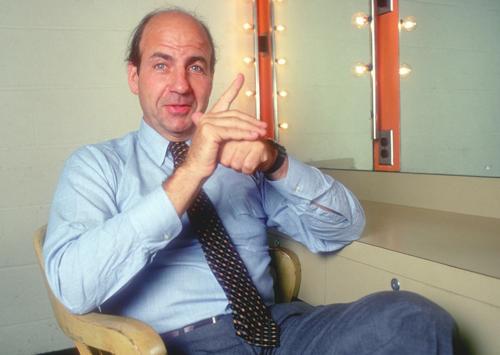
Calvin Trillin discusses his book “Enough’s Enough (and Other Rules of Life)”
Nov. 9, 1990 Author, humorist, and poet Calvin Trillin discusses and reads from his book “Enough’s Enough (and Other Rules of Life),” a collection of humorous essays about everyday topics, from social to political. Studs and Trillin discuss why we get cold fronts from Canada, not Greenland; and how to spot a moderate out in public. Studs plays "Out of My Road, Mr. Toad" - Bud Freeman (1970).
-
Andrew Patner discusses his book, "I.F. Stone: A Portrait" and Stone's career as a newspaper man
Mar. 10, 1988 Studs Terkel interview with Andrew Patner about his book, "I.F. Stone: A Portrait" that speaks to the life of newspaper man Izzy Stone. Patner describes his preparation and efforts to interview Stone. They discuss Stones incredible work in spite of the fact that he was nearly blind and deaf. Both Studs and Patner read excerpts from the book. They discuss Stones knowledge of literature, Greek philosophy, the Vietnam War, and his ability to speak French. Studs quotes a review of Patner's book from a newspaper. Patner also quotes Izzy Stone comments about Socrates.
-