

-

Studs Terkel interviews author-dramatist Frank Norman in his Bloomsbury Square Hotel, London ; part 2
1968 Terkel wraps up his discussion with Frank Norman. Norman gives his opinion on present conditions in prisons and orphanages. He opens up about his relationship with his daughter and a family he has never met.
-
Studs Terkel interviews author-dramatist Frank Norman at his Bloomsbury Square Hotel ; part 1
1968 Terkel delves into the life of Frank Norman, a London ex-con who turned his life around and became a novelist and playwright by writing on his experiences. He wrote "Bang to Rights" shortly after his prison release which brought him great fame. He followed that with "The Monkey Pulled it's Hair" that had a U.S. release under the name "Don't Darling Me Darling". Norman opened up to Terkel discussing his illegitimacy, his illiteracy till age 14, his institutionalization in an orphanage which he turned into the novel "Banana Boy".
-
Sally Trench discusses her book “Bury Me in My Boots” ; part 2
1968 Humanitarian and author Sally Trench discusses her book “Bury Me in My Boots,” her work with the homeless communities in England, her journeys, and her belief in self-help with Studs Terkel. Both Trench and Terkel read an excerpt from Trench’s book “Bury Me in My Boots.”
-
Sally Trench discusses her book “Bury Me in My Boots” ; part 1
1968 Humanitarian and author Sally Trench discusses her book “Bury Me in My Boots,” her work with the homeless communities in England, her journeys, and her belief in self-help with Studs Terkel. Terkel reads an excerpt from Trench’s book “Bury Me in My Boots.”
-
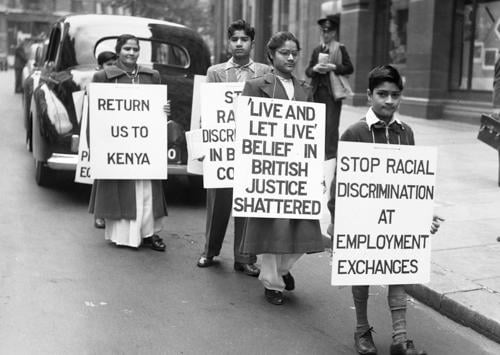
Richard Titmuss discusses poverty and how it keeps reoccurring
1968 Economist Richard Titmuss discusses the cycle and repetition of poverty, economic inequality, and obstacles for immigrants with Studs Terkel. “Fire Brigade” by Attila the Hun is played, as well as “Dance of Zalongo” and a Nepalese piece of music.
-
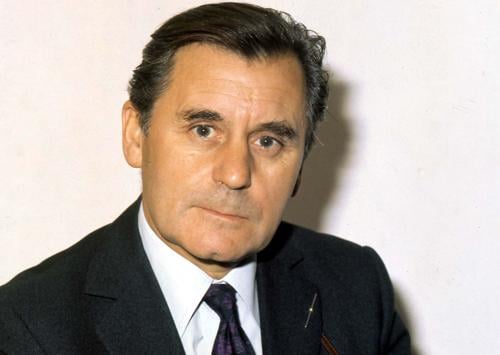
Richard Hoggart discusses culture and media
1968 Content Warning: This conversation includes racially and/or culturally derogatory language and/or negative depictions of Black and Indigenous people of color, women, and LGBTQI+ individuals. Rather than remove this content, we present it in the context of twentieth-century social history to acknowledge and learn from its impact and to inspire awareness and discussion. Richard Hoggart talks about the media and the cultural explosion. Hoggart explains that facts are not knowledge.
-
Interview with Michael Frayn
Sep. 22, 1975 Interviewing British dramatist-novelist Michael Frayn.
-
Interview with Gabriel Fielding
1969 The English novelist began his writing career after having established a medical practice in Kent. Here, he discusses his time in the Royal Army Medical Corps as well as his careers in medicine, literature, and academia.*Please note: some sections have been edited out from the original recording due to copyright considerations
-
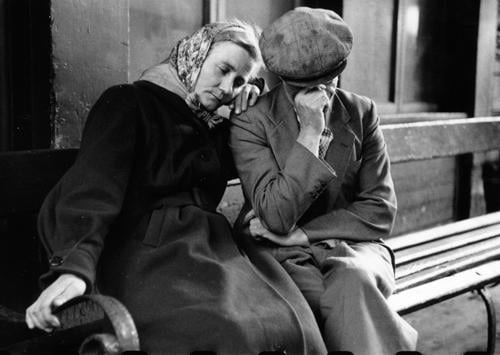
Interview with David Hobman
1966 Interviewing British social worker David Hobman.
-
Interview with Bertrand Russell and Phyllis Evans Part 2
1962 Interviewing Bertrand Russell and Phyllis Evans while Studs was in England.
-
Interview with Barbara Cartland
Mar. 5, 1970 Interviewing Barbara Cartland at her castle and a Welsh physician in Tavistock Square while Studs was in England.
-
Interview with Barbara Cartland
Sep. 17, 1970 Discussing British depression with Barbara Cartland at her castle (part 2) while Studs was in England.
-
Bertrand Russell discusses science and world peace. Phyllis Evans discusses the National Health Plan ; part 1
1962 Sir Bertrand Russell says scientists have a fundamental obligation to let the authorities know if and when what they're working on could lead to or cause a war. Russell claims, no matter the side, there are no winners as a result of war. The world could be a far better place, Russell explained, if it weren't for the fact of man's hatred toward other men. If one lives in the United States and has a grave illness or needs a major surgery, Phyllis Evans says one should not have to go into bankruptcy because of all the costs.