

-
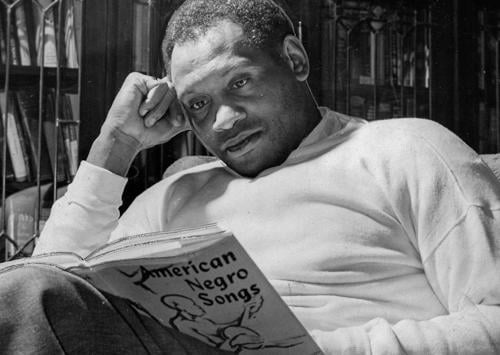
Studs presents a tribute to singer, actor, athlete, author and civil rights crusader Paul B. Robeson
Jan. 28, 1976 Studs presents a tribute to singer, actor, athlete, author and civil rights crusader Paul B. Robeson. Studs talks about his personal memories, the social impact and music of Paul Robeson. Excerpts from 1925362-4-1 Mr Robeson' friends recall memories of him: Earl Dickerson one of the 1 st black aldermen of Chicago, J. Mayo "Ink" Williams football player, Studs Terkel, Claudia Cassidy(1925655-4-1), Eddie Balchowski, Veteran, painter, poet(1934701-3-1) Includes excerpts from 1925362-4-1 and music. Similar to 1925362-3-1, but not identical. 01/23/1976 date of death.
-
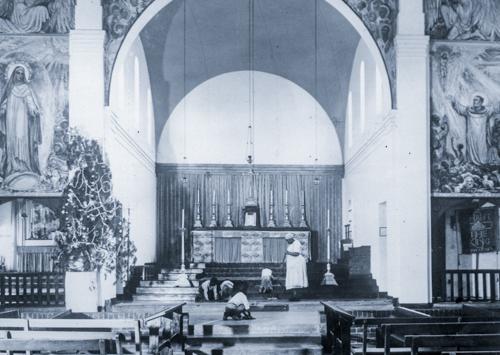
Studs meets with Jeremy Taylor to drive to Sophiatown and attend a service at Church of Christ the King; part 2
1963 Hotel outside in sunshine, observing the people around him on Von Velig St and Clerque St waiting for Jeremy Taylor satirical pop/folk singer. Riding in the car to Sophiatown Church of Christ the King with Jeremy Taylor, they discuss Sophiatown being a truly integrated town and the town being torn down once the government decided it was a white area. They attend a service at Church of Christ the King with beautiful singing of the congregation.
-

Studs interviews "Voices of Light" composer Richard Einhorn
Feb. 19, 1997 Studs and Einhorn discuss the Chicago premiere of the 1928 silent film "The Passion of Joan of Arc," which is accompanied by Einhorn's "Voices of Light" score. Includes snippets of Franck's "Symphony in D minor" as well as three pieces from the "Voices of Light" score.
-
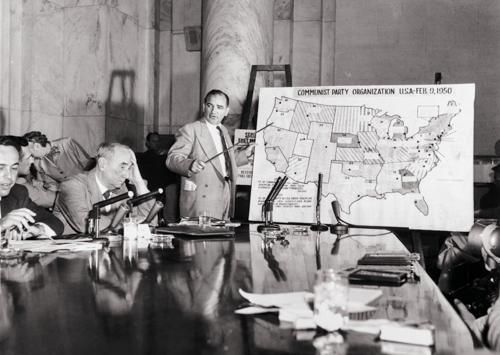
Studs discusses McCarthyism with journalist Fred J. Cook
Jul. 27, 1971 Studs discusses McCarthyism with investigative journalist Fred J. Cook. The recording opens with an excerpt from a speech by U.S. Senator Joseph McCarthy. Cook then reads from his recent book "The Nightmare Decade: The Life and Times of Senator Joe McCarthy" (Random House, 1971). Studs and Cook discuss the history, consequences of Senator McCarthy's relentless pursuit of suspected communists and communist sympathizers in the United States throughout his term in office (1953-1955). They also discuss the possibilities for similar campaigns to emerge during the 1970s.
-
Studs comments and presents tribute to the late jazz trumpet player Roy Eldridge
Studs discusses Roy Eldridge’s work as a jazz musician and recounts prevalent moments from his career.
-
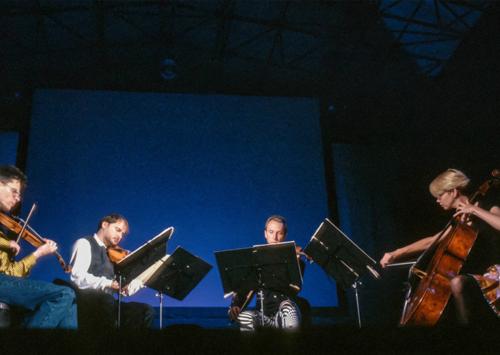
Studs comments and presents a musical performance of the Kronos Quartet
Sep. 22, 1986 Terkel comments and presents a musical performance of the Kronos Quartet
-
Students, teachers, and a parent from St. Mary's Center for Learning talk to Studs Terkel
Dec. 11, 1968 Interviewing at the Saint Mary's Center for Learning, an alternative school on the West Side of Chicago, with students Theresa Gonzales, Joan Perry, Cheryl Petrats and teachers Janice Eritch, Rozelle Nesbit, Sister Elaine Shuster and a parent, Mrs. Lori Waslewski.
-
Stuart Dybek reads from and discusses his book "The Coast of Chicago"
May. 7, 1990 Hearing Chopin being played through the pipes of another apartment and a tale about a young girl who died and whose father froze her body in an ice house are among the stories in Stuart Dybek's book, "The Coast of Chicago." Dybek explained that although his stories may seem dream-like, he tries to come up up with stories from some place of reality.
-
Stuart Chase, John Hawkinson, and Nancy Campbell Hayes discuss environment conservation and Hyde Park
Oct. 1, 1965 Stuart Chase, John Hawkinson, and Nancy Campbell Hayes discuss the "Save the Trees Program". They discuss saving the trees in Hyde Park. Includes Studs Terkel reading Mike Royko's poem.
-
Stuart Brent discusses the demise of the independent bookseller
Mar. 31, 1980 Stuart Brent believes people are totally indifferent to reading. He has come to the realization that, for some, material rewards are more important than cultural activities and as a result, culture is dying. But he is puzzled as to why readers would want to shop at big conglomerate stores like Kroch's and Brentano's when his store offers a personal, caring nature to its customers. This recording includes two excerpts from interviews with British booksellers Una Dillon and Handasyde Buchanan.
-
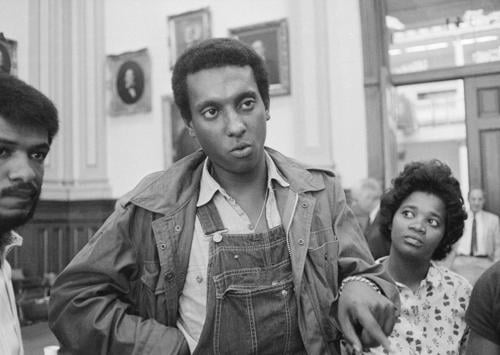
Stokely Carmichael, Charlie Cobb, and Courtland Cox discuss the philosophy of the SNCC ; part 2
1968 Stokely Carmichael, Charlie Cobb, and Courtland Cox discuss civil rights and African Americans in politics. Discussing the philosophy of SNCC. Includes Charlie Cobb reading his poem. Duplicate of 1916310-3-2.
-
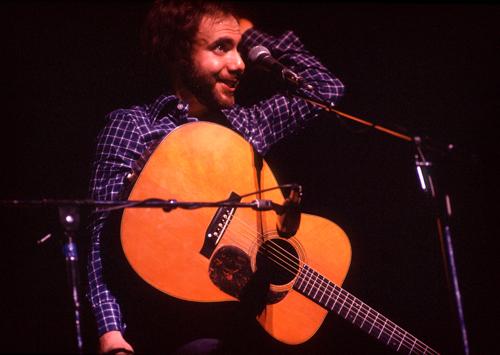
Steve Goodman discusses his album "Words We Can Dance To"
Apr. 30, 1976 Studs Terkel presents a “musical portrait” of Steve Goodman with the musician joining him in the studio to discuss, listen to, and play songs from his album “Words We Can Dance To.” Goodman begins by performing the blues song “Glory of Love,” and Terkel plays a clip from Big Bill Broonzy’s rendition of the song; Goodman cites Big Bill as one of his many influences. Goodman also plays an old jazz song called “When the Red, Red Robin,” with Terkel connecting that song to his first memories of jazz.
-
Sterling "Red" Quinlan discusses the book "The Hundred Million Dollar Lunch"
Jul. 30, 1974 Mr Quinlan a pioneering Chicago TV executive and one time general manager of Chicago's ABC affiliate WBKB, discusses the book "The Hundred Million Dollar Lunch." Mr Quinlan and Studs converse about the trials against RKO General/General Tire, a struggle that lasted 15 years. Includes an excerpt of an interview with Denis Mitchell.
-

Sterling "Red" Quinlan discusses his book "Inside ABC"
Oct. 18, 1979 Sterling "Red" Quinlan discusses his book "Inside ABC: American Broadcasting Company's Rise to Power". Quinlan was a pioneering Chicago TV executive who worked for ABC (which later became WLS-Ch. 7), WFLD-TV, and WTTW, Chicago's public television station.
-
Stephen T. Sohmer talks with Studs Terkel
Aug. 31, 1966 Stephen T. Sohmer discusses his first novel, "The Way It Was," a cynical commentary on his generation's struggle to develop stable relationships. In the context of stoic upper-middle-class conservatism, the novel chronicles how discontent can brew into rage beneath the veneer of social expectation.