

-

Studs Terkel discusses literature, mining and Moberly, Missouri with author Jack Conroy
1968 Studs discusses literature, mining and Moberly, Missouri with author Jack Conroy. Conroy had recently (1966) released "Anyplace But Here", a republished version of "They Seek A City", in collaboration with Arna Bontemps. Topics include proletarian literature, coal mining in America, Conroy's home town of Moberly, Missouri, and Conroy's earlier work, including "The Disinherited" (1933).
-
Studs Terkel discusses literature, Judaism, and the Holocaust with Richard Elman ; part 2
1967 Studs Terkel discusses literature, Judaism, and the Holocaust with the novelist, poet, journalist, and teacher Richard M. Elman (1934-1997). Their discussion revolves around Elman's recently published work of historical fiction, "The 28th Day of Elul", much of which takes place in the village of Clig, Hungary, during the time of the Nazi occupation of Hungary during World War II. Topics include Jewish identity, The Holocaust, persecution of The Jews, feelings of guilt and social prejudice among Holocaust survivors.
-
Studs Terkel discusses literature, Judaism, and the Holocaust with Richard Elman ; part 1
1967 Studs Terkel discusses literature, Judaism, and the Holocaust with the novelist, poet, journalist, and teacher Richard M. Elman (1934-1997). Their discussion revolves around Elman's recently published work of historical fiction, "The 28th Day of Elul", much of which takes place in the village of Clig, Hungary, during the time of the Nazi occupation of Hungary during World War II. Topics include Jewish identity, The Holocaust, persecution of The Jews, feelings of guilt and social prejudice among Holocaust survivors.
-
Studs Terkel discusses journalism and mass media with Norman Corwin
1968 Studs discusses poetry and mass media with American writer Norman Corwin, who was visiting Chicago to receive an honorary award from Columbia College. Works discussed include Corwin's radio address, "On A Note of Triumph," which the author delivered on May 8, 1945 to mark the end of World War II in Europe, and "Ballad for Americans", a cantata produced by Corwin on CBS radio in 1939. Topics include Corwin's personal and professional history, the process of writing "for the ear", World War II, the dawn of the nuclear age, and the television's role in eclipsing radio in popularity.
-
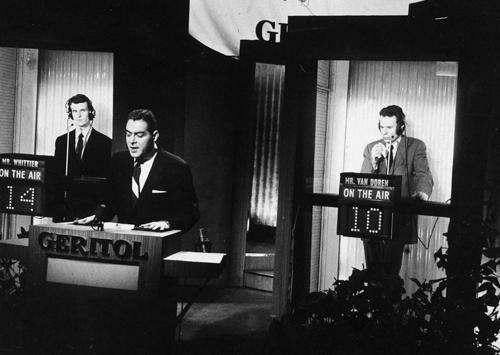
Studs Terkel discusses investigative journalism with author Fred J. Cook
May. 13, 1966 Studs and investigative journalist Fred J. Cook discuss Cook's book "The Corrupted Land: The Social Morality of Modern Americans" (Macmillan, 1966). The main topics of conversation are social morality and the corruption of the American business ethic. Terkel and Cook discuss unsung heroes, television quiz scandals,
-
Studs Terkel discusses interviews he conducted for his book "Working"
Aug. 22, 1978 Studs Terkel plays reenacted excerpts of interviews of various people from his book "Working." These interviews include people in a number of occupations including a car hiker, newspaper delivery boy, farm worker, homemaker, and waitress.
-

Studs Terkel discusses his life with Dorothy Hajek and Sylvia McDonnel of Rosary College
Mar. 21, 1963 Dorothy Hajek and Sylvia McDonnel discuss Studs Terkel's life. Includes Studs talking about his life, early career, and opinions on American society. Cuts off at 31:38 to 31:50.
-
Studs Terkel discusses his life and career with Norman Pellegrini
Mar. 1, 1994 Norman Pellegrini interviews Studs Terkel to discuss his life and career as a radio personality. Studs recalls a specific moment walking through the streets of Chicago and hearing blues music coming through the window of someone’s home. As Studs recalls, this moment is one that jump-started his interest in music and radio and inspired him to leave his life of studying law and move into the unknown of music radio. Technical engineer and producer of the show, Jim Unrath, joins the conversation to recount previous interviews and programs of Studs'.
-
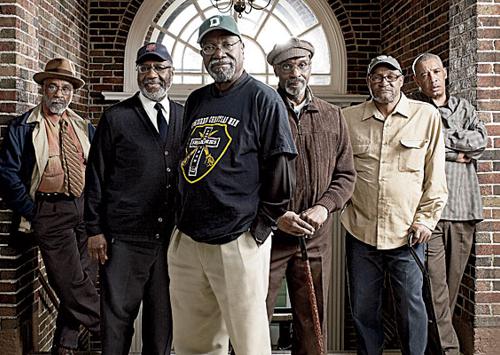
Studs Terkel discusses gang life with Allan Evans and Henry Jordan
1969 Studs Terkel discusses gang life with Allan Evans and Henry Jordan, members of the Vice Lords, an urban street gang based in Chicago. Evans and Jordan were both born and grew up in Chicago.
-
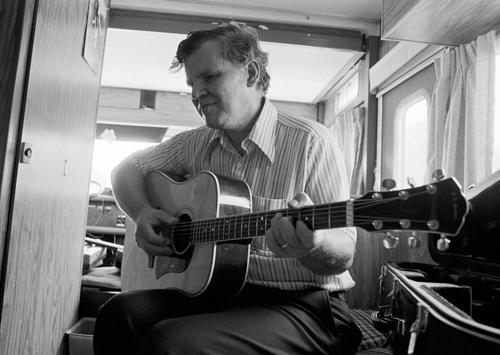
Studs Terkel discusses folk music with Doc Watson
Feb. 20, 1969 Studs Terkel interviews and discusses the history and cultural significance of folk music with Doc Watson. Topics include Watson's personal history and biography, the origins of some of the songs he sings, sacred music.
-
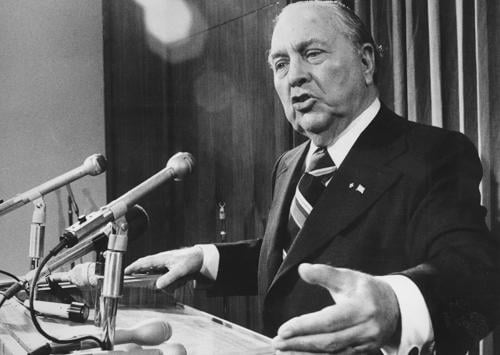
Studs Terkel discusses contemporary Chicago politics with Dick Simpson and Mike Royko
Jul. 22, 1971 Discussing Mayor Daley and nepotism in government with Alderman Dick Simpson, and author-journalist Mike Royko. Includes clips of Mayor Daley defending his appointment of Thomas P. Keane, son of Alderman Tommy E. Keane. Also includes Mike Royko reading his column from the "Chicago Daily News" July 22, 1971.
-
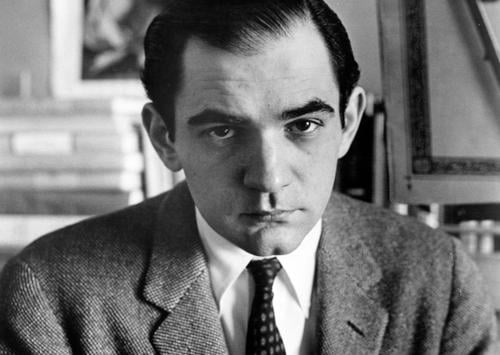
Studs Terkel discusses contemporary American music with composer and trombonist Bill Russo
May. 18, 1983 Discussing the origins of three schools of contemporary American music, their influence upon each other, and the new directions composers are taking with their music with composer and trombonist Bill Russo.
-

Studs Terkel discusses commercial and public broadcasting Nicholas Johnson of the FCC
Apr. 1, 1971 Studs Terkel discusses television and advertising with Nicholas Johnson, Commissioner at the Federal Communications Commission. Johnson had recently delivered a speech in Dubuque, IA about possibilities for the future of broadcasting, and had released a book a year prior, "How to Talk Back to Your Television Set". Topics of conversation include censorship, the role of advertising and corporate sponsorship of radio and television, and the hope and promise of public television.
-
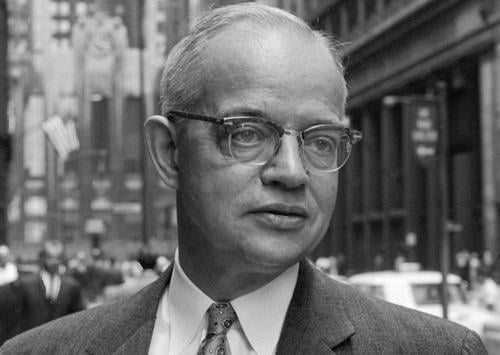
Studs Terkel discusses church architecture with William Cooley and Martin Marty
Apr. 27, 1965 Studs Terkel discusses church architecture William Cooley, a church architect, and Martin E. Marty, a theologian and scholar at the University of Chicago.
-
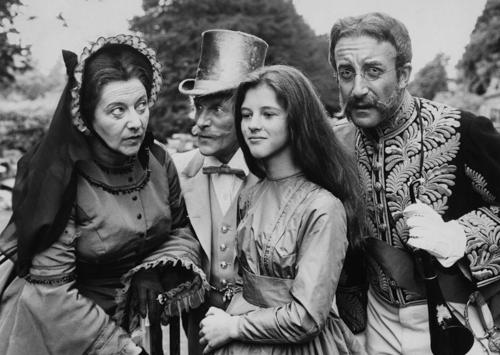
Studs Terkel discusses childhood, imaginiation, science, social history, politics, medicine and theater with Jonathan Miller in London, England
Jonathan Miller reminisces about his childhood in Regent Park, London and offers his opinion on philosophy and the changing English class structure with the loss of the Indian empire. His remake of "Alice in Wonderland" for BBC 1 is reviewed and he states he is most interested in the human imagination.