

-
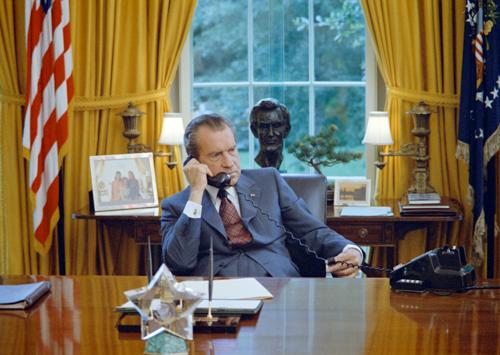
Frank Mankiewicz discusses his book "U.S. v. Richard M. Nixon: The Final Crisis"
Mar. 28, 1975 Frank Mankiewicz discusses the events surrounding the Watergate scandal and his new book, "U.S. vs Richard M. Nixon: The Final Crisis." A major theme of the book is the fact that legal issues were at the heart of the Watergate scandal, but the Nixon administration portrayed it as a public relations issue. Other topics of discussion include investigative journalism and the role of certain individuals in the prosecution of Richard Nixon.
-

Frank Mankiewicz discusses his book "Perfectly Clear"
Dec. 7, 1973 Watergate, wire tapping, and civil disobedience are among the topics covered in Frank Mankiewicz's book, "Perfectly Clear: From Nixon to Whittier to Watergate." According to Mankiewicz, Richard Nixon was involved in additional scandals, for example, how one year he only paid $700 in taxes when employees at the White House paid more than that.
-
-
Frank Galati discusses the play "She Always Said, Pablo"
Mar. 5, 1987 Director Frank Galati explains that the play "She Always Said, Pablo," was about Gertrude Stein's relationship with Pablo Picasso. Referring to the play itself, Galati also said that he tried to marry their narrative writings with some operatic song.
-
Frank Galati discusses the play "Cry, the Beloved Country"
Jul. 20, 1993 Frank Galati and some cast members of "Cry, the Beloved Country," talk about the play. Fathers, sons, relationships, faith and redemption are all areas covered in the play. Galati explains how the story of the play itself draws the audience inward and gets them mesmerized.
-
Frank Galati and cast members of "Mother of Us All" discuss the play
May. 10, 1984 When asked what the play meant to her, cast member Carmen Pelton, said the play was a presentation of Susan B. Anthony and her struggles. Alan Stone explained why he felt chills when Anthony spoke of her troubles. "Mother of Us All," explained director Frank Galati was a look at the good fight Susan B. Anthony pursued toward women's suffrage.
-
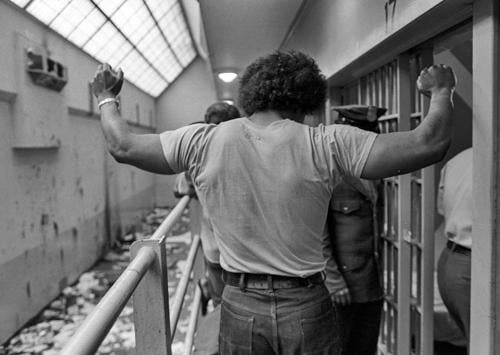
Frank Elli discusses his time as a prisoner and his novel "The Riot"
1968 Begins with a reading by Frank Eli from the opening of the book "The Riot." Mr. Elli discusses his early life, his time in three different prisons, and the writing of his book "The Riot," a personal account of a riot in Walla Walla Prison. (Note: last 5 minutes missing)
-
Frank Dolson in conversation with Studs Terkel
May. 13, 1983 Discussing the book "Beating the Bushes: Life in the Minor League," published by Icarus Press) with sports editor and author Frank Dolson.
-
Frank Chin reads from and discusses his book, "Donald Duk"
May. 21, 1991 Content Warning: This conversation includes racially and/or culturally derogatory language and/or negative depictions of Black and Indigenous people of color, women, and LGBTQI+ individuals. Rather than remove this content, we present it in the context of twentieth-century social history to acknowledge and learn from its impact and to inspire awareness and discussion. Unlike Disney's Donald Donald, this "Donald Duk" is 12-year-old boy who hates his last name and who hates his Chinese background and culture. Chin, also spends time going over characters from his book.
-
Frank Carney, Susie Gelaga, Linda Gelaga, Molly Gelaga and Fred Christy discuss the youth of Chicago ; part 2
1968 Interviewing Frank Carney, Susie Gelaga, Linda (daughter-in-law), Molly (daughter), and Fred Christy. They discuss the youth in Chicago, their own life experiences, and wants.
-
Frank Carney, Susie Gelaga, Linda Gelaga, Molly Gelaga and Fred Christy discuss the youth in Chicago ; part 1
1968 Interviewing Frank Carney, Susie Gelaga, Linda (daughter-in-law), Molly (daughter), and Fred Christy. They discuss the youth of Chicago and their own life experiences.
-
Frank Abbinanti, Peter Gena in conversation with Studs Terkel
May. 2, 1983 Discussing the "Cornelius Cardew Memorial Concert" with pianist Peter Gena and composer Frank Abbinanti.
-
Francis S. Chase discusses education, art, and science ; part 2
Dec. 30, 1964 Francis S. Chase discusses education, art, and science. Chase also discusses creativity, human behavior, and technology among other topics.
-
Francis S. Chase discusses education, art, and science ; part 1
Dec. 30, 1964 Francis S. Chase discusses education, art, and science. Chase also discusses creativity, human behavior, and technology among other topics. Includes a clip of an interview with Dr. Jay Bernofsky.
-

Francis Edmonds discusses education and the Waldorf School, part 2
Mar. 9, 1970 Educator Francis Edmonds discusses education and the Waldorf School, part 2 of 2. Topics include the London Waldorf School philosophy, which can be summed up by a quote from founder Rudolf Steiner-- "Accept the children with reverence, educate them with love, send them forth in freedom."