

-
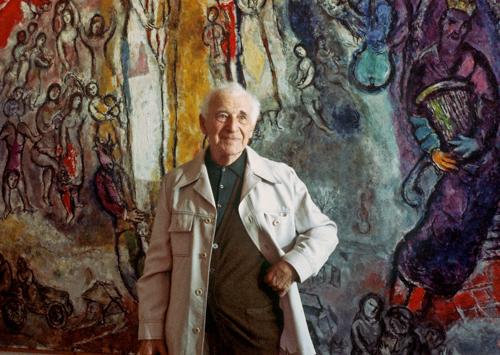
Through an interpreter, Marc Chagall discusses his approach to art and his views on people
1970 Professor John Nef explained that Marc Chagall came from an environment of nothing. From his dreams, Chagall created joy in his pieces of art. Nef lets the audience know that Chagall said he still has a lot of unfinished artwork to complete. The 3rd and last part of this program is a colloquy. Again, through another translator, Chagall’s words are translated. Chagall said his life’s purpose is art. Chagall said any man could be a bad artist but that no man can be an artist unless he is in fact, a good man.
-

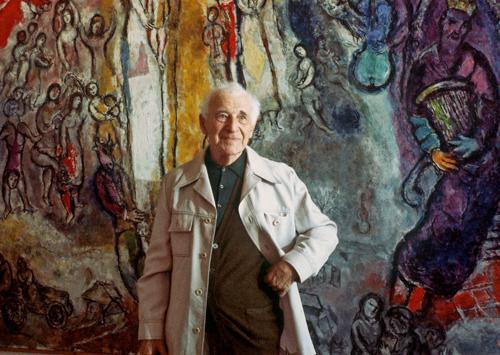
Through an interpreter, Marc Chagall discusses his approach to art and his views on people
1970 Professor John Nef explained that Marc Chagall came from an environment of nothing. From his dreams, Chagall created joy in his pieces of art. Nef lets the audience know that Chagall said he still has a lot of unfinished artwork to complete. The 3rd and last part of this program is a colloquy. Again, through another translator, Chagall’s words are translated. Marc and Valentina Chagall speak French.
-
Ted Coe, James Speyer, and Wayne Thibaud discuss art exhibitions at the Art Institute of Chicago
Apr. 26, 1965 Interviewing Ted Coe, James Speyer, and Wayne Thibaud : Jurors of the 1965 Art Institute Show. They discuss art exhibitions at the Art Institute of Chicago, visual arts, and art critics.
-
Talking with Michael Thomas
Sep. 23, 1982 The novelist joins Studs to discuss money, art, and power - among the many themes explored in his book, Someone Else's Money.*Please note: some sections have been edited out from the original recording due to copyright considerations
-
Sibyl Moholy-Nagy discusses the art of her husband, Laszlo Moholy-Nagy
Jun. 10, 1969 On the day before the opening at the Museum of Contemporary Art, Sibyl Moholy-Nagy, talks about the art of her husband, Laszlo Moholy-Nagy. Mrs. Moholy-Nagy said her husband believed in self discipline and the sacrifice to learn. In addition, she explained that her husband didn't believe in focusing on one type of material for his art but rather he worked with different types of materials like oil on canvas, steel, and plexiglass.
-
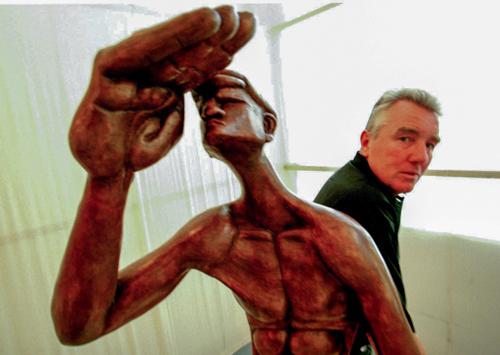
Richard Demarco discusses art and work of Jimmy Boyle
Feb. 5, 1976 Richard Demarco discusses the importance of riding the art experience of snobbery and the importance of art as relevant to everyone. In addition, Richard speaks on the work of Jimmy Boyle, convicted criminal turned successful artist. Demarco prompts the question: "Is art the language that transcends philosophy?"
-
Representatives discuss the Center for Human Understanding ; part 2
May. 5, 1963 Representatives discuss the Center for Human Understanding (part 2 of 2). Center for Human Understanding conference in Washington D.C. Includes interview with [Raghav Heer]. Interviews [Chaumont Hosie]. Note: lengthy interviews in French (translated).
-
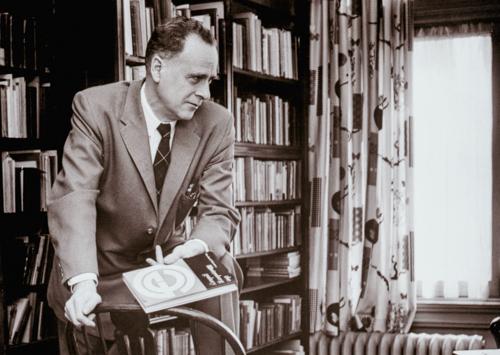
Marshall McLuhan discusses a wide range of philosophical topics
Jul. 1, 1966 Marshall McLuhan discusses a wide range of topics including conformity, changes in entertainment media, cultural change, art and artists, originality in dance, reading and language, human interaction with nature, and technology. Recorded in front of a live audience at Kendall College, McLuhan takes several questions from the audience throughout the program.
-
Konstantinos Doxiades discusses architecture and the modernization and industrialization of cities.
Aug. 8, 1965 Discussing architecture and modernization of cities with Greek city planner/architect Konstantinos Doxiades [also Constantinos Doxiadis, Doxiados]. They discuss the dangers of the city, modernizing nature, and losing natural beauty.
-
Kelly Swenson and kids discuss the Arts Lab Movement created by Jim Haynes ; part 2
The Arts Lab Movement was created by Jim Haynes in 182 Drury Lane, London. Studs Terkel interviews Kelly Swenson and the kids.
-
Kelly Swenson and kids discuss the Arts Lab Movement created by Jim Haynes ; part 1
The Arts Lab Movement was created by Jim Haynes in 182 Drury Lane, London. Studs Terkel interviews Kelly Swenson.
-
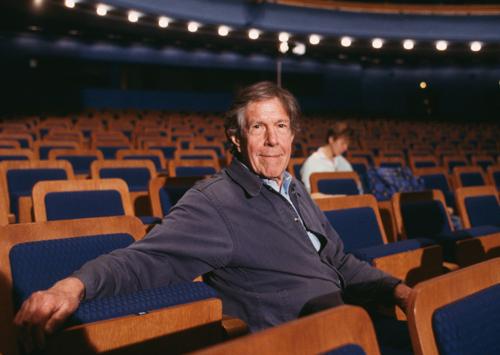
John Cage discusses his music, life, influences, and career
Aug. 13, 1992 John Cage discusses his music, life, influences, and career. Rebroadcast of an interview with John Cage to celebrate his life and what would have been soon his 80th birthday. Includes a clip of John Cage reading/ telling a story in 1969 to Studs Terkel.
-
Jim Grigsby discusses art classes with sound
Artist Jim Grigsby and other unnamed guests talk about introducing sound into art classes. Includes an unrehearsed production by a woodworking class.
-
James Steven George Boggs discusses his art and career
Sep. 29, 1988 Interest into James Steven George Boggs' artwork first started because Boggs had doodled a picture on a napkin at a coffee shop. The waitress there really liked Boggs' drawing and offered him $50.00 for it. Boggs, otherwise known as J.S.G. Boggs, also talks about how the Bank of England placed him on trial, accusing him of illegally producing currency.
-
Irwin Silber discusses music from the Civil War and his book “Songs of the Civil War” ; part 2 ; followed by Abdullah Ariff discussing Malayan culture
Jul. 1, 1960 Studs Terkel and Irwin Silber, a writer and Civil War historian, talk about music from the Civil War and Silber’s book “Songs of the Civil War.” This is the final part of the interview with Silber. A brief interview with Malayan artist Abdullah Ariff follows the Silber interview. Ariff discuss Malayan culture and the artwork he has on display in the United States.