

-

Willard Van Dyke discusses American history and its effects on the film, photography, and the arts
Apr. 3, 1985 Willard Van Dyke, cinematographer and co-director of documentaries like "The City" and "The River," talks about 20th century American history and how it effected the arts. Using his documentaries and other artists' work, he explores how the Great Depression, World War II, and the Cold War changed American art and culture. He discusses Public Works of Art, war propaganda, and McCarthyism and their challenges for artists. Near the end of this interview, Van Dyke discusses the changes in modern still photography and documentaries as Americans forget history.
-
Irwin Silber discusses music from the Civil War and his book “Songs of the Civil War” ; part 2 ; followed by Abdullah Ariff discussing Malayan culture
Jul. 1, 1960 Studs Terkel and Irwin Silber, a writer and Civil War historian, talk about music from the Civil War and Silber’s book “Songs of the Civil War.” This is the final part of the interview with Silber. A brief interview with Malayan artist Abdullah Ariff follows the Silber interview. Ariff discuss Malayan culture and the artwork he has on display in the United States.
-
Born to Live ; part 2
1970 Studs Terkel plays a variety of audio clips pertaining to the concepts of life and mankind destroying itself. The audio clips featured are from various established and respected writers, social leaders, and musicians.
-
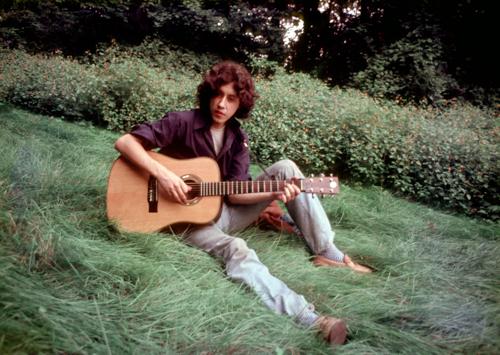
Arlo Guthrie discusses his music and influences
Jan. 23, 1971 In this interview with Terkel, folk singer-songwriter Arlo Guthrie talks about what influences his songwriting and the new definition of folk music. They touch on the shared experience of humanity, the role of the entertainer in society, and the older generation’s contributions to society. Guthrie expresses a desire to create a music “carnival” where performers and audience members both participate together. Guthrie also discusses how he began playing the banjo, and Studs comments on how Arlo has grown as a musician since his father's, Woody Guthrie, death.