

-
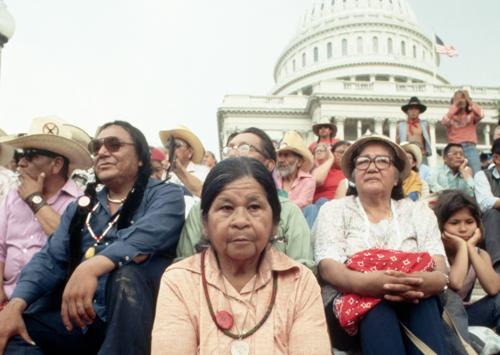
Stan Steiner talks with Studs Terkel ; part 2
1967 Discussing the book "The New Indians" and interviewing the author Stan Steiner.
-
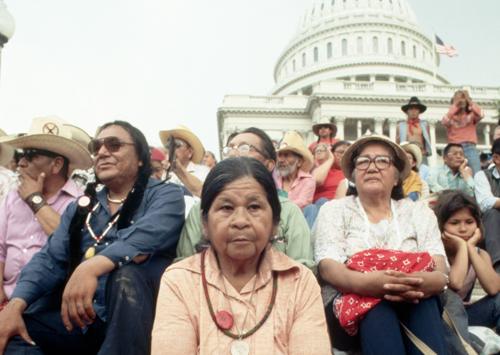
Stan Steiner talks with Studs Terkel ; part 1
1967 Discussing the book "The New Indians" and interviewing the author Stan Steiner.
-
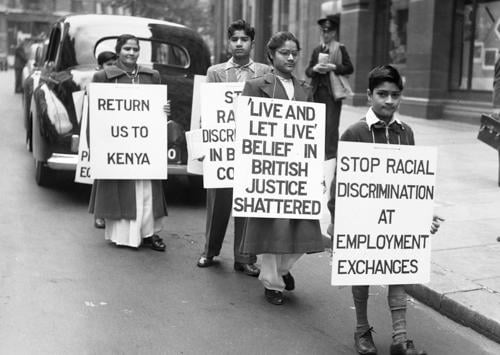
Richard Titmuss discusses poverty and how it keeps reoccurring
1968 Economist Richard Titmuss discusses the cycle and repetition of poverty, economic inequality, and obstacles for immigrants with Studs Terkel. “Fire Brigade” by Attila the Hun is played, as well as “Dance of Zalongo” and a Nepalese piece of music.
-

Richard Atcheison discusses his book "The Bearded Lady: Going on the Commune Trip and Beyond"
Aug. 27, 1971 Discussing the book "The Bearded Lady: Going on the Commune Trip and Beyond" with author Richard Atcheison.
-
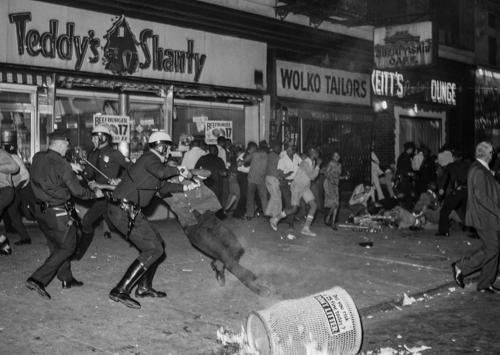
Paul Chevigny discusses his book "Police Power"
According to Paul Chevigny’s book, “Police Power: Police Abuses in New York," disobeying the police is what precipitated violence. Chevigny explained some of the police felt if they had to deal with the undesirables, whether they were criminals or not, anything goes on the street to get these guys and anything goes in court to make a conviction stick.
-
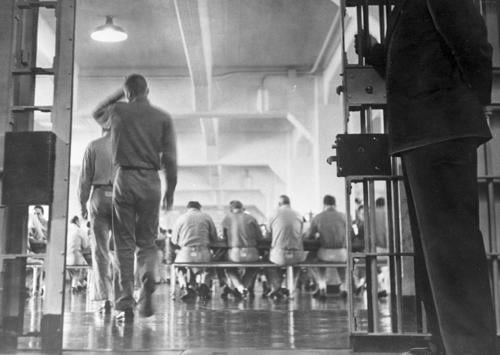
Nelson Algren, Nathan Kantrowitz, and David Maurer discuss language and characteristics of the criminal underworld
Jan. 29, 1967 Nelson Algren, Nathan Kantrowitz, and David Maurer discuss language and criminal subculture, including the development of institutional slang at different prisons, the nature of drug addiction and its influence on criminal language and vocabulary, and the myth of the criminal mind. Includes an Interview with an inmate at a Chicago prison.
-
Neil and Susan Sheehan discuss their respective books “A Bright Shining Lie: John Paul Vann and America in Vietnam" and "Is There No Place on Earth for Me?"
Apr. 11, 1990 Studs Terkel speaks with journalists Neil and Susan Sheehan about their respective books “A Bright Shining Lie: John Paul Vann and America in Vietnam” and “Is There No Place on Earth for Me?” Further discussion is had about journalism and Neil and Susan’s collaborations together. Audio clips of when Neil Sheehan and Susan Sheehan were previously on Terkel’s program are played.
-

Mothers discuss the hardships of living on welfare
1968 Five mothers from Chicago discuss the hardships of living in poverty and how little welfare actually helps with Studs Terkel.
-
Interviews with Dr. Bruno Bettelheim and Marlene Dixon
Feb. 6, 1969 Discussing the controversy at U.C. concerning the administration's refusal to renew Mrs. Dixon's contract (she later was reinstated but refused to accept) with Dr. Bruno Bettelheim, University of Chicago psychiatrist and Dr. Marlene Dixon, University of Chicago professor.
-

Indian musicians, vocalists, and University of Chicago students discuss Indian art and culture
May. 3, 1961 Discussing Indian poetry, music, and drama with Indian musicians, vocalists, and University of Chicago students.
-
Horace Cayton discusses is book "Long Old Road" ; part 3
Sep. 7, 1966 Content Warning: This conversation includes racially and/or culturally derogatory language and/or negative depictions of Black and Indigenous people of color, women, and LGBTQI+ individuals. Rather than remove this content, we present it in the context of twentieth-century social history to acknowledge and learn from its impact and to inspire awareness and discussion.
-
Horace Cayton discusses his book "Long Old Road" ; part 2
Sep. 7, 1966 Content Warning: This conversation has the presence of outdated, biased, offensive language. Rather than remove this content, we present it in the context of twentieth-century social history to acknowledge and learn from its impact and to inspire awareness and discussion. Loneliness and hardships of both fitting in and finding a job are covered in the continuation of Horace Cayton's, "Long Old Road: An Autobiography." By living in a middle class home in Seattle with a full time Japanese servant, Cayton was seen as better off than most people.
-
Horace Cayton discusses his book "Long Old Road" ; part 1
Sep. 7, 1966 Content Warning: This conversation includes racially and/or culturally derogatory language and/or negative depictions of Black and Indigenous people of color, women, and LGBTQI+ individuals. Rather than remove this content, we present it in the context of twentieth-century social history to acknowledge and learn from its impact and to inspire awareness and discussion. In "Long Old Road: An Autobiography," Horace Cayton talks about growing up in Seattle in a well to do, mostly white neighborhood. Cayton's grandfather was the first Black man elected to the U.S.
-
Hans W. Mattick and Father Robert Taylor discuss the scandal at Cook County Jail
1968 Content Warning: This conversation includes racially and/or culturally derogatory language and/or negative depictions of Black and Indigenous people of color, women, and LGBTQI+ individuals. Rather than remove this content, we present it in the context of twentieth-century social history to acknowledge and learn from its impact and to inspire awareness and discussion. Former Assistant Warden of the Cook County Jail, Hans W.
-
Frederick Wiseman discusses public welfare
Feb. 20, 1976 Discussing public welfare and interviewing Frederick Wiseman, director of the documentary film, "Welfare."