Listen to New Voices on Studs Terkel our partnership with 826CHI-here! Read the Story


Showing 466 - 480 of 1649 results
-

Jose Yglesias reads from and discusses his book "Goodbye Land"
1967 In "Goodbye Land," Jose Yglesias travels to Galicia, Spain, his father's native province. Yglesias found a number of cousins who remembered his father. Time was spent in a tavern owned by one of his cousins, talking about what they recalled about Yglesias' father. His cousins viewed Yglesias' travels to Spain as an event; a millionaire traveling to Spain and they showered him with an abundance of gifts.
-
Jonathan Yardley discusses his book about Ring Lardner
Sep. 15, 1977 Terkel interviews author Jonathan Yardley on his latest book. This book titled "Ring" is a biography of the sports writer columnist Ring Lardner.
-
Jonathan Wordsworth discusses William Wordsworth
Oct. 4, 1982 Terkel interviews Jonathan Wordsworth about his great-great uncle William Wordsworth.
-
Jonathan Spence discusses his book "God's Chinese Son: The Taiping Heavenly Kingdom of Hong Xiuquan"
Feb. 1, 1996 Jonathan Spence, author and Yale University history professor, talks about his book "God's Chinese Son: The Taiping Heavenly Kingdom of Hong Xiuquan." He discusses Hong Xiuquan who believed himself to be the son of God. Spence begins his interview explores how Christianity came to China and how Hong came into contact with its teachings. He explains Hong's belief that the Qing dynasty was an enemy government that needed to be overthrown which led to the Taiping Rebellion.
-
Jonathan Raban reads from and discusses his book "Hunting Mr. Heartbreak"
May. 15, 1991 With his book, "Hunting Mr. Heartbreak: A Discovery of America," Jonathan Raban wanted to see if, in the 20th century, a man could have a new life in America. Raban traveled to New York City, to the deep south in Alabama, to Seattle and finally to the Florida Keys.
-
Jonathan Raban discusses his book "Bad Land"
Dec. 6, 1996 Living in Montana in the early 20th century had many hardships, as covered in Jonathan Raban's book, "Bad Land: An American Romance". Raban said people were looking for new lives in the west but they encountered prairie fires, hail storms and grasshopper plagues.
-
Jonathan Miller discusses Shakespeare
Jan. 12, 1970 Jonathan Miller discusses Shakespeare. Includes Feste's song "Hey, ho, the Wind and Rain" sung by Alfred Deller. Includes a clip from Jonathan Miller as Bertrand Russell.
-
Jonathan Kwitny in conversation with Studs Terkel
Sep. 1, 1987 Discussing the book "The Crimes of Patriots: A True Tale of Dope, Dirty Money, and the CIA" (published by Norton) with the author, investigative journalist Jonathan Kwitny.
-
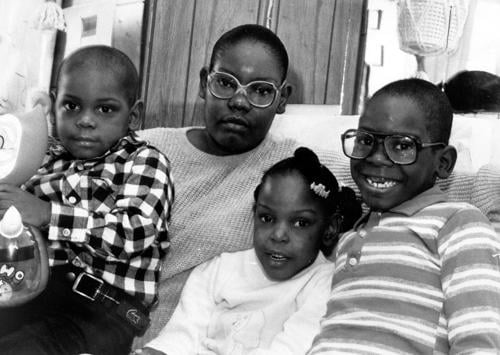
Jonathan Kozol reads from and discusses his book "Rachel and Her Children: Homeless Families in America"
Jan. 16, 1989 The people living at the Martinique feel as though they are a toxic waste substance being compressed in the density living quarters, explains Jonathan Kozol. Rachel of Kozol's book, "Rachel and Her Children: Homeless Families in America" said people don't want to see them. Refering to the song, "We are the World, " Rachel also asks how come people care so much for people they can't see? "We are the world, " says Rachel. "We live here, too".
-
Jonathan Kozol discusses his book "Savage Inequalities"
Sep. 18, 1991 With his book, "Savage Inequalities: Children in America's Schools," Jonathan Kozol spent time in six different schools and concluded that the school systems are no better off than they were 20 years ago.*Please note: some sections have been edited out from the original recording due to copyright considerations
-
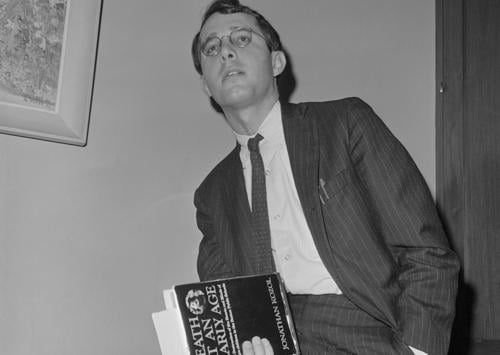
Jonathan Kozol discusses his book "Children of the Revolution: A Yankee Teacher in the Cuban Schools"
Nov. 10, 1978 Studs has a spirited discussion with Jonathan Kozol who shares his adventures and learnings in Cuba that formed the basis of his book "Children of the Revolution: A Yankee Teacher in the Cuban Schools." Kozol explains the ambitious Cuban Literacy Campaign begun in the 1960s that aimed to educate the entire population, tells of children teaching adults in remote villages by lantern light, and the unity and national pride that resulted. He and Studs explore the idea of generative words in literacy education and contemplate Kozol's hope to adapt a similar approach to American education.
-
John Wicklein discusses his book "The Electronic Nightmare"
Jul. 1, 1981 Content Warning: This conversation includes racially and/or culturally derogatory language and/or negative depictions of Black and Indigenous people of color, women, and LGBTQI+ individuals. Rather than remove this content, we present it in the context of twentieth-century social history to acknowledge and learn from its impact and to inspire awareness and discussion.
-
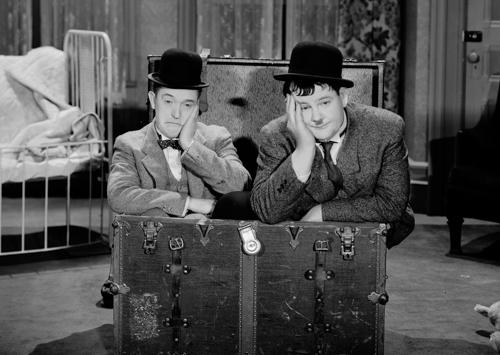
John West discusses Stan Laurel and Oliver Hardy
Nov. 2, 1965 John West discuss early classical Hollywood comedy double act Stan Laurel and Oliver Hardy. Four clips are played during the interview. The first three clips are from Laurel and Hardy's "Their First Mistake" (1932) and the fourth clip is from Laurel and Hardy's "Swiss Miss" (1938).
-
John Vinci, David Van Zanten, and Wim de Wit discuss the Chicago Historical Society’s exhibition “Louis Sullivan: The Function of Ornament”
Aug. 27, 1986 Architect John Vinci, art and architectural historian David Van Zanten, and curator Wim de Wit discuss Louis Sullivan and the Chicago Historical Society’s exhibition “Louis Sullivan: The Function of Ornament.” The group discusses Sullivan’s use of ornament to add an organic element to his architecture; as well as some of Sullivan’s most prominent work, including the Chicago Stock Exchange Building, the Auditorium Building, and the Sullivan Center. This program includes a clip from 1956 of Frank Lloyd Wright discussing Sullivan and his impact on architectural design.
-