Listen to New Voices on Studs Terkel our partnership with 826CHI-here! Read the Story


Showing 331 - 345 of 1649 results
-

Nat Hentoff in conversation with Studs Terkel
Apr. 25, 1986 Discussing the book "Boston Boy," with author Nat Hentoff.
-
Nat Hentoff in conversation with Studs Terkel
Oct. 31, 1992 Discussing the book "Free Speech For Me--But Not For Thee: How the American Left and Right Relentlessly Censor Each Other," (published by HarperCollins) with the author Nat Hentoff.
-
Naomi Lazard joins Studs to talk about her work
1970 The graphic designer turned poet shares some insight into her creative process, especially in the collections, Cry of the Peacocks, The Moonlit Upper Deckerina, and Ordinances.*Please note: some sections have been edited out from the original recording due to copyright considerations
-
Naomi Glasser discusses the book "What Are You Doing: How People Are Helped Through Reality Therapy"
Dec. 2, 1980 Naomi Glasser talks about her book "What Are You Doing: How People Are Helped Through Reality Therapy," by discussing cases where reality therapy has worked on patients with selective mutism, depression, relationship problems, and mental illnesses.
-

Nancy Milio reads from and discusses her book "9226 Kercheval"
Jun. 13, 1970 Nancy Milio's book, "9226 Kercheval: The Storefront That Did Not Burn," is about community health services offered in a ghetto on the south side of Detroit, Michigan. As a nurse, Milio knew how important it was to offer quality health services to poor and uneducated individuals. With their real names changed, Milio talks about her experiences with Mrs. Watkins, Johhnie West and others at the center.
-
Nancy Milford discusses her book "Zelda" a biography of Zelda Fitzgerald
Aug. 7, 1970 The interview begins with Ms. Milford reading from the prologue of her book "Zelda". Ms Meyer talks with Studs about her book and the lives of Zelda and F. Scott Fitzgerald. Studs reads a few lines of a farewell poem by Ring Lardner to Zelda Fitzgerald "To Z.S.F." Both Studs and Ms. Meyer read letters from Zelda and F Scott Fitzgerald from the book. Excerpt of Virginia Durr of Montgomery AL. talking about southern women and the image they have to live up to.(1965958-4-1 & -4-2) Excert of Mrs.
-
N. Scott Momaday discusses his poetry and book, "The Presence of The Sun"
Apr. 26, 1993 N. Scott Momaday, a Kiowa author and poet, discusses his collection of poetry in "The Presence of The Sun" and Native American history. Momaday also talks about horses, Native American shields, Billy the Kid, and Native American culture.
-
N. Scott Momaday discusses his book, "House Made of Dawn," with Studs Terkel
1970 A discussion about the book, "House Made of Dawn," awarded the Pulitzer Prize for Fiction in 1969. N. Scott Momaday reads from his book.
-
Mrs. Bailey Bishop and Edith Neisser talk about education of children, part 2
1965 Part 2 of a series sponsored by the national conference of Christians and Jews. Includes "Rearing the Child of Good Will" and "The Child and the Changing World." Mrs. Bailey Bishop and Ms. Neisser discuss the importance of an open mind and a accepting environment in education and at home, and how this helps the children to accept change as it happens.
-
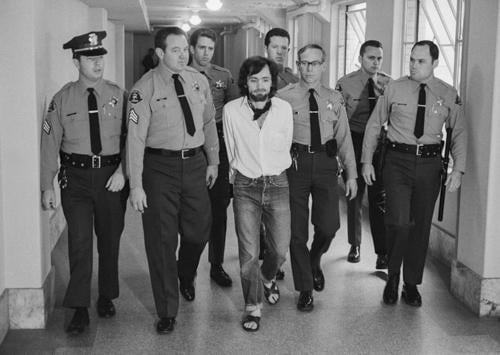
Mr Bugliosi and Mr. Gentry discuss, "Helter Skelter: The True Story of the Manson Murders"
Nov. 6, 1974 Mr Bugliosi and Mr. Gentry discuss, "Helter Skelter: The True Story of the Manson Murders,". Bugliosi was the prosecutor in the case against the Manson "family" for the murders of Sharon Tate and others. The interview opens with "Home is where you are happy" performed by Charles Manson and an excerpt of Catherine Shur Manson's sister talking about her brother. They speak in depth on the Manson "family" and the key players in the murders; Susan Atkins, Steve Grogan, Linda Kasabian, Patricia Krenwinkel, Leslie Van Houten and Charles Watson.
-
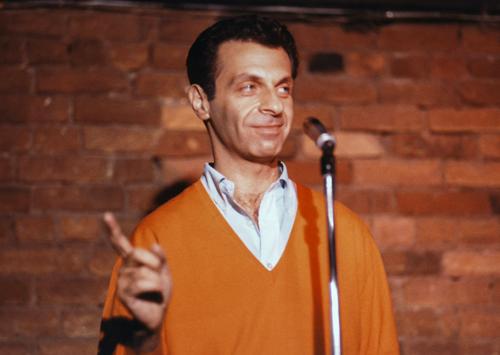
Mort Sahl discusses comedy, social satire, politics, and humorists
Feb. 17, 1960 Mort Sahl the comedian discusses comedy, social satire, and humorists. He discusses the difference between sick humor and social commentary. He discusses politics in America. Includes a speech by humorist Will Rogers towards the end of the program.
-
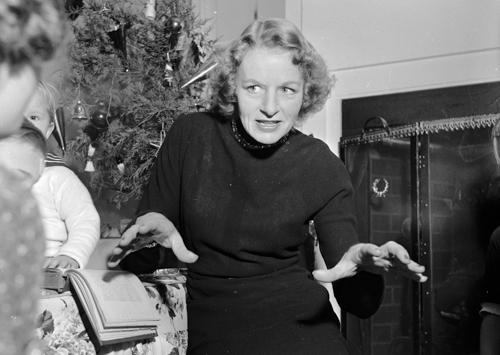
Monica Dickens reads from and discusses her memoir "An Open Book"
Oct. 1, 1981 Discussing the book "An open book" with the author Monica Dickens.
-
Mona Simpson discusses her novel “The Lost Father”
Mar. 4, 1993 Author Mona Simpson discusses and reads from her novel “The Lost Father”, a novel that focuses on a woman that becomes obsessed with finding the father she never met. This program includes an excerpt from a previous interview between Studs and Simpson in which Simpson discusses her novel “Anywhere But Here.” Studs plays “Any Place I Hang My Hat Is Home” - Susannah McCorkle (1977).
-
Millard and Ramona Lampell discuss their book "O, Appalachia"
Oct. 23, 1989 According to Ramona Lampell, Appalachia is often associated with hillbilles and poor people. The Lampells wanted to change that stereotype with their book, "O, Appalachia: Artists of the Southern Mountains". By showing off the work of 20 artists', the Lampells hope the people of Appalachia feel good about themselves and where they come from.
-
Mildred Loomis discusses the green revolution and the back to the land movement ; part 2
Mar. 6, 1968 Discussing the green revolution and the "modern homestead" and interviewing Mildred Loomis. Mildred Loomis discusses the back to the land movement.