

-

-
Mike Royko discusses his book "I May Be Wrong, but I Doubt It"
1970 Author-journalist Mike Royko's book, "I May Be Wrong, but I Doubt It" includes 65-70 of Royko's past articles. Royko talks about how his columns come to life. Never having been one to sit in an office, he talks about going out into the world to get the story and to report the facts. Royko includes a funny tale about the word, "clout," in his book.*Please note: some sections have been edited out from the original recording due to copyright considerations
-
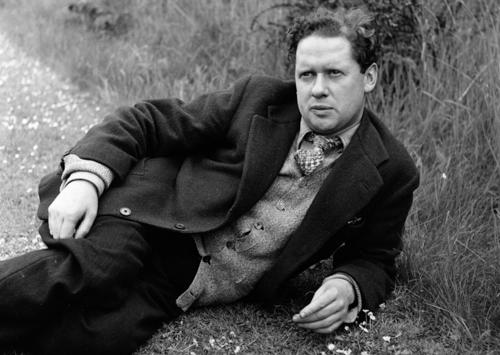
Mike Forrest, Beulah Garrick, and Donald Moffat discuss the work of Welsh poet Dylan Thomas
Mar. 22, 1961 Mike Forrest, Beulah Garrick, and Donald Moffat discuss and read the writings of Welsh poet Dylan Thomas. Forrest, Garrick, and Moffat are all cast members of "The Hostage," a play by Brendan Behan.
-
Micheál Mac Liammóir discusses his show "The Importance of Being Oscar"; part 2
Nov. 17, 1961 Micheál Mac Liammóir, actor and playwright, discusses his upcoming performance based on the writings of Irish playwright and poet Oscar Wilde.
-
Michael Rosenberg Meeropol discusses his book, "We Are Your Sons: The Legacy of Ethel and Julius Rosenberg"
May. 29, 1975 Michael Rosenberg Meeropol discusses his book, ""We Are Your Sons: The Legacy of Ethel and Julius Rosenberg," and talks about his life growing up in the shadow of the execution of his parents. He recalls his memories leading up to their arrest and trial and the legal battle for him and his brother, Robert, to be adopted. He also talks about growing up ashamed of his last name, but eventually coming to terms with his identity and starting the fight for his parents' exoneration.
-
Michael J. Arlen discusses his book "Thirty Seconds"
May. 28, 1980 Michael J. Arlen discusses his book Thirty Seconds, published in 1980. He goes on to discuss the advertising agencies and the work that goes into a television commercial. Rebroadcast.*Please note: some sections have been edited out from the original recording due to copyright considerations
-
Michael Frayn discusses satire in the first half and Oliver Howes discusses music in the second half; part 1
1962 Michael Frayn reads from his book "At Bay in Gear Street" and how he approaches writing. Oliver Howes, a livery driver, talks about music, his middle class background, and his work;part 1.
-
Michael Dorris in conversation with Studs Terkel
Jul. 26, 1989 Discussing the book "The Broken Cord" (published by Harper & Row) with the author Michael Dorris.
-
Michael Dorris discusses his novel "A Yellow Raft in Blue Water"
Oct. 6, 1987 Michael Dorris' book, "A Yellow Raft in Blue Water," is about 3 Native American women: Rayna, Christine and Ida. Dorris said when he started to write the book, he didn't know where it would end up. He further explained that Rayna was originally Raymond but that Dorris liked the character better as a woman.
-
Michael Burton discusses John Henry Faulk and John Henry Faulk discusses American history and politics
May. 3, 1982 This interview contains two parts. The first focuses on writer and John Henry Faulk biographer, Michael Burton, in which Burton discusses John Henry Faulk’s life as an American storyteller as well as his book entitled “John Henry Faulk: The Making of a Liberated Mind.” Burton makes mention of how the Hollywood Blacklist affected Faulk’s career.
-
Michael Anania, Ralph Mills, and Lisel Mueller discuss the art of poetry
Jul. 12, 1981 Three distinguished Chicago poets — Michael Anania, Ralph Mills, and Lisel Mueller — read selections of their work and discuss the art and rhythm of poetry, influences and inspiration, and the power of memory. Includes a recording of Gwendolyn Brooks reading her poem, "The Rites for Cousin Vit."
-
Michael Anania discusses his poetry collection, "The Color of Dust"
1970 Poet and editor Michael Anania discusses his poetry collection, “The Color of Dust” and reads selected works from the collection. Anania discusses Midwest history and geography and his own Nebraska roots as influences on the work and its themes of love, war, and social issues. Episode includes relevant music and theatrical recordings, including “Immortality” read by William Jennings Bryan, “Rake and Rambling Boy,” Jefferson Airplane’s “Somebody to Love,” “Dust Bowl Refugee” by Woody Guthrie, and “The Battle Hymn of the Republic.”
-
Michael Anania discusses his poetry collection, "Riversongs"
Mar. 2, 1979 Poet and editor Michael Anania discusses his poetry collection, “Riversongs” and reads selected works from the collection. Anania discusses the themes of place, transience, and permanence in the Midwest. Episode includes relevant music recordings, including a number of unidentified instrumental recordings and songs by Woody Guthrie, Los Jaivas, and Joni Mitchell.
-
Michael Anania discusses and reads his books of poetry "The Red Menace" and "The Sky At Ashland"
Nov. 24, 1986 Michael Anania discusses and reads his from his books of poetry called "The Red Menace" and "The Sky At Ashland". Anania also discusses his life and inspirations. Includes a clip of children speaking about the world and war. Includes a clip of a jazz song called "Lester Leap In" by Count Basie at the end of the program.
-
Meridel Le Sueur discusses her book "Ripening: Selected Work, 1927-1980," published in 1981
Mar. 30, 1982 Meridel Le Sueur discusses the publication of her selected works and her life as an activist, fighting for socialist ideals and women's rights. She goes on to discuss the time she spent with Native American Navajo tribes and their theory of nonlinear time.*Please note: some sections have been edited out from the original recording due to copyright considerations