Listen to New Voices on Studs Terkel our partnership with 826CHI-here! Read the Story


Showing 46 - 60 of 326 results
-

Ross Miller discusses his book "American Apocalypse: The Great Fire and the Myth of Chicago"
Jun. 7, 1990 Author Ross Miller discusses his latest work, which centers around Chicago and the aftermath of the Great Chicago Fire and its effects on rebuilding the metropolis and the advantages of gaining a new take on architecture and society.
-
Ronnie Dugger discusses his book "Politician: The Life and Times of Lyndon Johnson"
Jul. 15, 1982 Ronnie Duggar’s book, “Politician: The Life and Times of Lyndon Johnson,” shows Johnson’s rise to power. Duggar explained that from a young age, Johnson knew to court power. While at the Teachers College in Texas, Johnson told his cousin, “It starts at the president’s office,” where Johnson was the president’s right arm man. Once in the Senate, Johnson chose to be on the Armed Services Committee because he knew Senator Richard Russell ran the Senate. Johnson courted powerful men and in exchange, these men would advance his career.
-
Ronnie Dugger discusses his book "On Reagan: The Man & His Presidency"
Nov. 29, 1983 Past radio transcripts of former President Ronald Reagan were being hidden or suppressed. Ronnie Dugger worked tirelessly at getting the transcripts so that people would learn the truth about Reagan. In Dugger’s book, “On Reagan: The Man & His Presidency,” Dugger points out that President Reagan was against the ERA. He didn’t believe in anti-trust, and he opposed every civil rights act every placed in front of him. Dugger said Reagan’s genius was that he’d get elected without people knowing of his records.
-
Roger Wilkins discusses his book "A Man's Life"
Aug. 30, 1982 Discussing the book "A man's life" with the author Roger Wilkins.
-
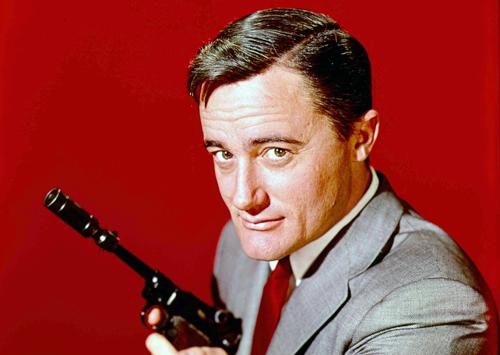
Robert Vaughn talks with Studs Terkel
1970 Robert Vaughn takes time out from his Drury Lane appearance in "Tender Trap" to discuss his new book "Only Victims" with Studs Terkel. The discussion spans the years 1938 when Martin Dies became the first House Committee on Unamerican Activities (HUAC) chairman to Vice President Spiro Agnew's condemnation of the "New York Times" and "Washington Post". Vaughn created the title of his book "Only Victims" from a Dalton Trumbo speech that reflected back on the era of HUAC as being one where there were no heroes, no villains, only victims.
-
Robert Jay Lifton discusses his book "Home from the War"
Jun. 21, 1973 In his book, "Home From the War: Learning from Vietnam Veterans", Robert Jay Lifton reflects on what he's learned from talking with soldiers who came home from the Vietnam War. For some men, guilt and betrayal were common issues -- guilt in what they had done while in Vietnam and betrayal of what their superiors and the government had told them about the war itself.
-
-
Robert Del Tredici discusses his book "At Work in the Fields of the Bomb"
Jun. 6, 1988 Robert del Tredici photographer, artist, and author discusses the history of nuclear weapon production plants around the United States and the effects of nuclear radiation.
-
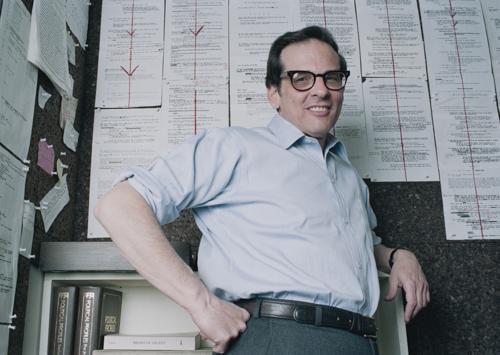
Robert Caro reads from and discusses his book "The Years of Lyndon Johnson"
Dec. 9, 1982 Discussing "The years of Lyndon Johnson, Vol 1: the path to power" with the biographer Robert Caro.
-
Robert Caro discusses his book, "The Power Broker: Robert Moses and the Fall of New York"
Oct. 30, 1974 Robert Caro, journalist, discusses his book, "The Power Broker: Robert Moses and the Fall of New York." Caro talks about Robert Moses and the power he had over New York for 44 years. He talks about parks, bridges, highways, and housing that Moses built as he challenged mayors, governors, and the working class.
-
Robert Caro discusses his book "The Years of Lyndon Johnson: volume two: Means of ascent"
Apr. 23, 1990 Interviewing journalist and author Robert Caro about his book "The Years of Lyndon Johnson: volume two: Means of ascent," which details seven years of Lyndon Johnson’s life in the House of Representatives as he tries to climb the political ladder.
-
Robert Borisage and Richard Criley discuss secrecy vs. the Constitution
1975 Robert Borisage, founder of the Center for National Security Studies, and Richard Criley, part of the Alliance to End Repression, talk about government spying on citizens and the constitutionality of it. The pair talk about corruption in the CIA and FBI and how new laws can help curb the issues. They also explain the S.1 - Criminal Justice Reform Act 94th Congress (1975-1976).
-
Robert Bendiner discusses his book "Just Around the Corner" ; part 2
Aug. 23, 1967 In Robert Bendiner's book, "Just Around the Corner: A Highly Selective History of the Thirties," Bendiner covered Herbert Hoover's ineptness and Franklin Roosevelt's heroism. Bendiner also remembers vividly the moment when Huey Long did a jig on the Senate floor. Long further explained that the New Deal had to happen because it was what all the people, of both parties needed.*Please note: some sections have been edited out from the original recording due to copyright considerations
-
Robert Bendiner discusses his book "Just Around the Corner" ; part 1
Aug. 23, 1967 Although he was not a historian, Robert Bendiner said he believed he could provide accounts of events through a journalist's eyes with his book "Just Around the Corner: A Highly Selective History of the Thirties". It was a depressing time, recalls Bendiner, a time he hopes no one has to experience again. Businesses needed people to buy goods but there wasn't enough money for people to buy food let alone goods and materials. Bendiner recalls Riverside Drive was once affluent and picturesque. The view then turned to one full of Hooverville shacks.
-
Richard Pollak, editor, writer and investigative journalist, talks with Studs about his life and work.
Jun. 17, 1975 Mr. Pollak editor of "[More]" an investigative journalism magazine and author of "Stop the Presses, I Want To Get Off!", talks with Studs about his life and work. Both Studs and Mr Pollak read excerpts from the book.