

-
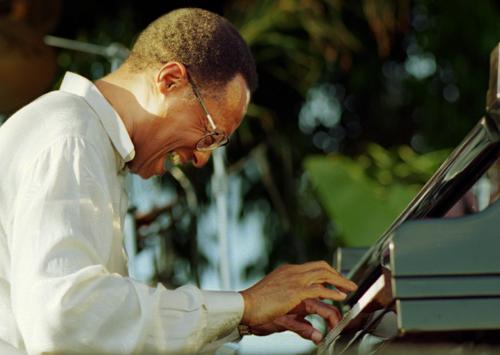
Studs comments and presents a concert at the Fairmont Hotel with Ramsey Lewis
Dec. 18, 1989 Presenting a concert at the Fairmont Hotel with jazz pianist, composer and radio host Ramsey Lewis.
-
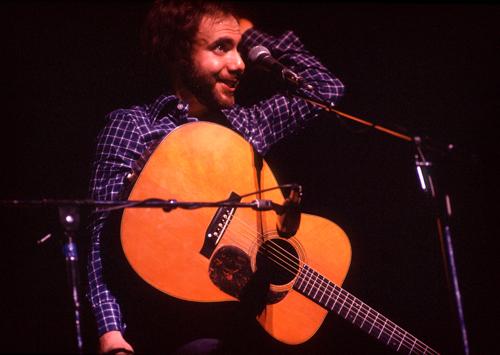
Steve Goodman discusses his album "Words We Can Dance To"
Apr. 30, 1976 Studs Terkel presents a “musical portrait” of Steve Goodman with the musician joining him in the studio to discuss, listen to, and play songs from his album “Words We Can Dance To.” Goodman begins by performing the blues song “Glory of Love,” and Terkel plays a clip from Big Bill Broonzy’s rendition of the song; Goodman cites Big Bill as one of his many influences. Goodman also plays an old jazz song called “When the Red, Red Robin,” with Terkel connecting that song to his first memories of jazz.
-
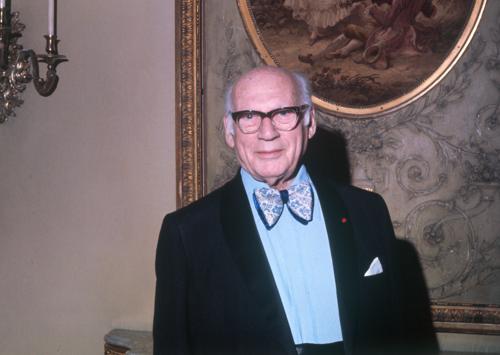
Sol Hurok discusses his career as an American impresario
May. 4, 1971 Sol Hurok discusses his work as an impresario, organizing events and bringing artists from around the world to the United States to perform. Studs Terkel plays songs by many of the artists and performers that Hurok has managed during the interview, including Feodor Chaliapin, Nellie Melba, Titta Ruffo, Luisa Tetrazzini, Sviatoslav Richter, Marian Anderson, and Arthur Rubinstein. Music has been removed from this version for copyright reasons.
-

Skip Kennon and David Rounds discuss the play "Herringbone"
Oct. 21, 1981 Skip Kennon wrote the music for "Herringbone", a one-man musical where all ten parts are played by the actor David Rounds. Madness, depression and schizophrenia are discussed as possible themes of the play.
-
Sir Georg Solti talks with Studs Terkel
Feb. 1, 1995 Studs engages the former Chicago Symphony Orchestra conductor, Sir Georg Solti, in a wide-ranging conversation about his life and career. From his early studies in Budapest with Béla Bartók, his string of good-luck opportunities before, during, and after World War II, meeting Toscanini in Lucerne, and starting on top conducting in Frankfurt, London, and finally Chicago. He discusses his many German and European musical influences and contemporaries, and stresses the importance of education, arts funding, and hard work.
-
Singer-songwriters Florence Reece and Pete Seeger discuss writing songs
Mar. 17, 1978 Known for their songs about the working class, both Florence Reece and Pete Seeger talk about how they come about writing the lyrics to songs. Seeger says unbeknownst to them, anyone can write a song. Included within this interview, Seeger plays the banjo and Reece sings a song.
-
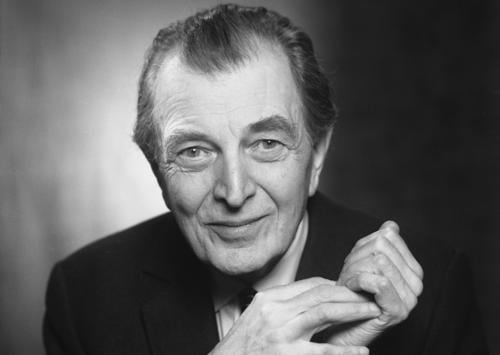
Russian-born composer Alexander Tcherepnin talks with Studs Terkel
Apr. 13, 1965 Studs Terkel and Tcherepnin discuss Tcherepnin's early years in Leningrad, his creative drive and its relation to real-life experiences and the influence of Chicago on his 1953 Op. 87 Suite for Orchestra.
-
Rudolph Ganz discusses his career
Feb. 23, 1964 When Rudolf Ganz was younger, he first played the cello. After his cello broke into 800 pieces, Rudolph Ganz's father told Ganz he had to play the piano. Ganz became a world-renowned pianist and composer. Ganz's attitude toward music: in order to be progressive, one has to respect the past.
-
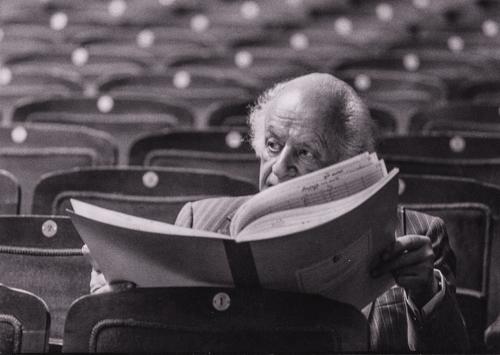
Rolf Liebermann discusses the Hamburg State Opera and describes their operation and performances
1967 Studs interviews Rolf Liebermann, director and composer, at the Hamburische Staatsoper in Hamburg, Germany. Liebermann explains some history of previous directors and performances. Many artists and operas are mentioned, but only a few were focused on in detail. Liebermann explains details about the operation of the opera highlighting the budget and the functions of the opera house. The recording stops short toward the end of the interview.
-
Roger Detmer and Virgil Thomson discuss the influence of technology onto music
1965 While their works and forte is classical music, Roger Detmer and Virgil Thomson talk about tape and electronic music. Detmer points out that in some eastern European countries, tape is considered pasee, and yet it's used often to recreate a sound to be used with their orchestras. Both men talk about electronic music and how it's sometimes used to make hand-made music sound artificial.
-
Robert Kaminskas, Egle Rukstelyte Sundstrom in conversation with Studs Terkel
Apr. 5, 1985 Discussing the Lithuanian Opera Company with conductor Robert Kaminskas and Egle Rukstelyte Sundstrom.
-
Rita Streich discusses her musical performances and the composers
Jul. 19, 1967 Studs interviews Rita Streich, and they discuss the meaning of some of her operas and lieds. Streich names Erna Berger and Maria Ivogun as her best teachers, and she speaks a little about her family. Studs and Streich read part of the poem, "The Nut Tree" by Robert Schuman. Streich reads a part of "Brahms Lullaby" and "Shepherd On the Rock" by Franz Schubert. She also discusses the difference between opera in her day compared to opera at the time of the interview. The musical pieces are removed from this edited version of the original recording.
-
Ravi Shankar discusses playing the sitar
Oct. 26, 1983 A master at playing the sitar, Ravi Shankar, also composed the music for the soundtrack of "Gandi". According to Shankar, there are 72 scales in Indian music and when he plays music, 90% of it is improvisation. Younger people became interested in playing the instrument after Shankar announced he was teaching George Harrison of the Beatles how to play the sitar. There is an excerpt of an interview with Shankar from 22 years ago, to the date of this program.
-

Queen Ida discusses Zydeco
Sep. 1, 1988 Interviewing Zydeco composer, singer and accordionist Queen Ida. Songs played include "Chere Duloone," "Willie on the Washboard," "Cotton Eyed Joe," "Every Now and Then," "Passe la Porte," "La Louisianne," "Celimene," and "La Femme du Doigt."
-
Presenting music with the Chicago ensemble the Loop Group
Feb. 16, 1987 Terkel comments and presents a musical performance by the Loop Group