Listen to New Voices on Studs Terkel our partnership with 826CHI-here! Read the Story


Showing 31 - 45 of 46 results
-

Interviewing humorist and author Jean Shepherd
Jun. 5, 1986 Program includes excerpts from Shepherd's comedy albums.
-
Interviewing Albert Goldman
Jul. 24, 1974 The sometimes controversial biographer of celebrities takes on the life of sometimes controversial comedian Lenny Bruce.*Please note: some sections have been edited out from the original recording due to copyright considerations
-
Interview with Michael Copley and Dag Ingram
Nov. 18, 1986 Interviewing the Cambridge Buskers, Michael Copley (flute and recorders) and Dag Ingram (accordion).
-
-
-
Discussing the character of Edith Ann with creators Lily Tomlin and Jane Wagner
Oct. 20, 1994 The comedic creative force of Lily Tomlin and comedy writer Jane Wagner discuss the character of Edith Ann as well as the bag lady, Trudy, upon the release of their book "Edith Ann: My Life So Far".* Please note: some sections have been edited out from the original recording due to copyright considerations.
-
-
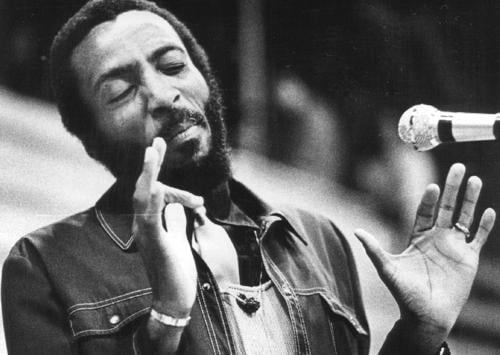
Dick Gregory discusses his career
May. 14, 1970 Lillian Smith excerpt opens the program.
-
Dick Gregory discusses American politics
Dec. 17, 1964 This interview begins with a clip of one of Dick Gregory’s performances, where he talks about nonviolence and Native Americans. Studs Terkel introduces his guest as an observer, explaining that comedians are the best observers in society. Gregory offers extended analogies to communicate his views on a variety of topics, including the Vietnam War, race relations, segregation, human rights, and urban renewal. [The date is unclear, but it has to be after 1970, since the Kent State Shootings were mentioned]
-
Cliff Norton discusses his career
1960 When Cliff Norton performed his first live gig, he tried out his comedy on the band. Norton credits having good performances because of being given good material, funny material. Norton further explained that being an entertainer, one always has to be writing in order to maintain their creative edge.
-
Charlie Hill discusses his approach to comedy
Sep. 23, 1982 Charlie Hill talks about his comedy career, the portrayal and stereotypes of Native American Indians, and the Bureau of Indian Affairs.*Please note: some sections have been edited out from the original recording due to copyright considerations
-
Carol Channing discusses her perspective about being a musical and comedic performer
Sep. 19, 1961 In this interview Carol Channing discusses her work as artist: comedic timing; live/club performing; her connection with the audience as a performer; theater as a "spiritual world"; the concept of "opening nights"; creation of Mehitabel's (alley cat) voice; "Lorelei", and her ability deliver comedic characterizations and impersonations (such as Marlene Dietrich, Sophie Tucker, and Cecilia Sisson). Included in this interview are excerpts from the "Little Girl from Little Rock", "Madeline and Other Bemelmans", "Shinbone Alley".
-
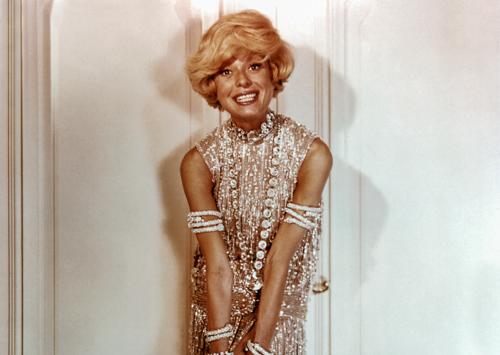
Carol Channing discusses her career
May. 11, 1959 Carol Channing discusses the following with Studs Terkel: her early career; her growth as actor/comedian; her approach to her work; her performance in "Lorelei" as Lorelei; her performance in "Wonderful Town" as Ruth; the job of the understudy; and breaking performance barriers and type casting.
-
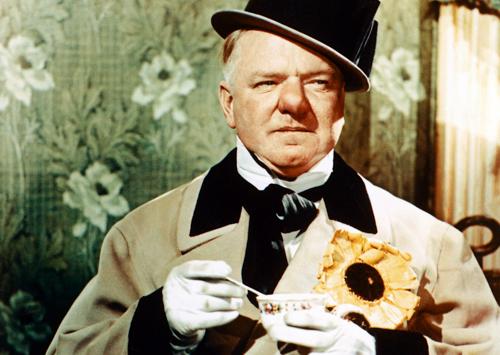
Carlotta Monti discusses W.C. Fields and her book "W.C. Fields & Me"
Jun. 7, 1971 Carlotta Monti discusses W.C. Fields and her book "W.C. Fields & Me".
-
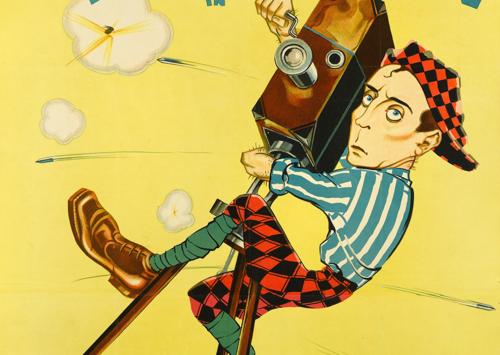
Buster Keaton discusses the release of "When Comedy Was King"
Sep. 5, 1960 Silent film pioneer Buster Keaton discusses his career following the release of "When Comedy Was King," a compilation of some classic shorts by Keaton, Charlie Chaplin, Harold Lloyd, and others. Keaton reveals how they shot the early silent films, generated material and gags, how they planned big chase scenes, the resurging European interest in silent classics, and more. Studs asks Keaton about the stylistic differences between him and Chaplin, whether he would recreate silent films, and how they compare to today's film-making.