

-

Tim Pat Coogan discusses his book "The IRA: A History"
Dec. 1, 1993 Author and historian Tim Pat Coogan talks about the history, culture, and division of Ireland. Coogan tells the backstory and summary of his book, "The IRA: A History." Later, he gives an in-depth view of the history, politics, and religion of the IRA and gives some ideas on how to fix the problems.
-
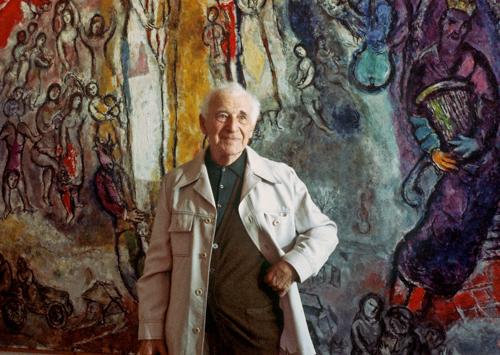
Through an interpreter, Marc Chagall discusses his approach to art and his views on people
1970 Professor John Nef explained that Marc Chagall came from an environment of nothing. From his dreams, Chagall created joy in his pieces of art. Nef lets the audience know that Chagall said he still has a lot of unfinished artwork to complete. The 3rd and last part of this program is a colloquy. Again, through another translator, Chagall’s words are translated. Chagall said his life’s purpose is art. Chagall said any man could be a bad artist but that no man can be an artist unless he is in fact, a good man.
-
Through an interpreter, Marc Chagall discusses his approach to art and his views on people
1970 Professor John Nef explained that Marc Chagall came from an environment of nothing. From his dreams, Chagall created joy in his pieces of art. Nef lets the audience know that Chagall said he still has a lot of unfinished artwork to complete. The 3rd and last part of this program is a colloquy. Again, through another translator, Chagall’s words are translated. Marc and Valentina Chagall speak French.
-
Three Vietman War veterans, Robert Black, Robert Johnson, Dr. Gordon Livingston, and Steve Perriman discuss the war, part 2
Nov. 13, 1973 Robert Black, Robert Johnson, Dr. Gordon Livingston, and Steve Perriman talk about the Vietnam War. All three are officers in the military and veterans of the Vietnam War. They discuss their lives before and after the war and the contradiction and changes that came after seeing the horrors of the Vietnam War.
-
Three Vietman War veterans, Robert Black, Robert Johnson and Dr. Gordon Livingston, discuss the war, part 1
Nov. 12, 1970 Robert Black, Robert Johnson, and Dr. Gordon Livingston talk about the Vietnam War. All three are officers in the military and veterans of the Vietnam War. They talk about the Tet offensive and the Battle of Hue in 1968, and the deplorable treatment of the Vietnamese people by the United States military . Upon returning they have chosen to become anti-Vietnam War because it is not a struggle to stop Communism so much as being a force of destruction.
-
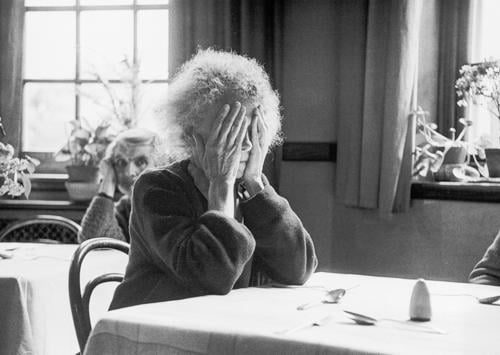
Theodore Marmor discusses his book "The politics of Medicare"
Nov. 5, 1974 Discussing the book, "The Politics of Medicare," and interviewing the author Theodore Marmor. Associate professor of Center of Health Administration studies at University of Chicago. Mr Marmor has been part of policy planning with the department of welfare, for medicare. He talks about National Healthcare or at the least affordable healthcare for all. He speaks of Medicare not covering all expenses specifically prescription drugs.
-
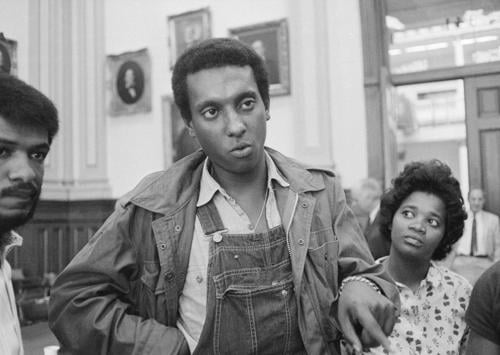
The Student Non-violent Coordinating Committee discusses the civil rights movement, protests, and jail with Studs Terkel
Sep. 1962 Terkel talks with Student Non-violent Coordinating Committee about the civil rights movement, protests, and jail.
-
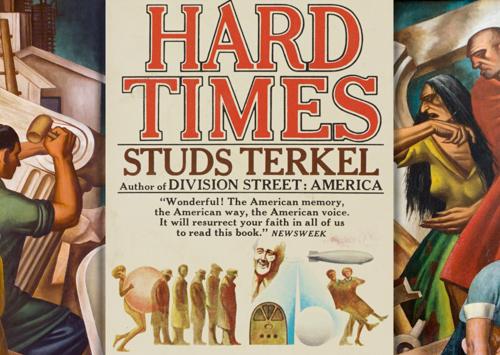
Terkel comments and presents "Hard Times: an oral history of the great depression" ; Program 15; part 1
1971 Presenting "Hard Times: an oral history of the great depression": "A gathering of survivors" with Joe Morrison, Evelyn Finn, Jose Iglesias, Bob Stinson, Oscar Heline, Eml & Ruth Loriks, Buddy Blankenship, Mary Owsley, Sally Rand, Jerome Zerbe, John Beeche (promgram XIII)
-
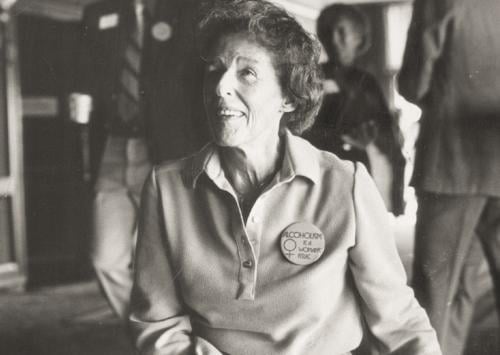
Susan Brownell Anthony discusses her book "The Ghost in My Life"
Oct. 29, 1971 Ms. Anthony, the grand-niece of Susan B. Anthony, comments on the women's liberation movement, her personal political life and her view of Christian life.
-
Studs Terkel talks with members of the Mattachine Midwest organization
Feb. 19, 1970 Content Warning: This conversation includes racially and/or culturally derogatory language and/or negative depictions of Black and Indigenous people of color, women, and LGBTQI+ individuals. Rather than remove this content, we present it in the context of twentieth-century social history to acknowledge and learn from its impact and to inspire awareness and discussion. Discussing homosexuality and American society and interviewing members of the Mattachine Midwest organization: Jim Bradford, Valerie Taylor (pen name of Velma N. Tate, 1913-1997), and Henry Weimhoff.
-
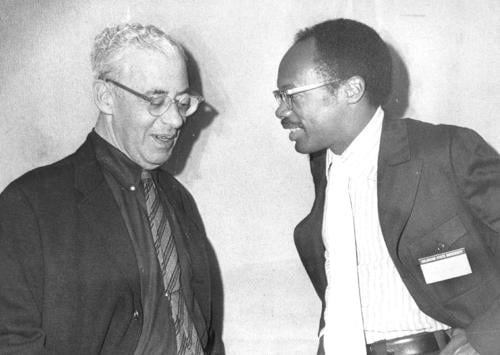
Studs Terkel recalls and plays excerpts from interviews with Saul D. Alinsky as tribute after his death in 1972
1970 Presenting "Agitator: A Tribute to Saul D. Alinsky," after Mr. Alinsky's death in 1972. Community organizer and social activist, discusses his work with advocacy for African-American labor rights, and his connection with the Mexican-American civil rights movement in California. Includes excerpts from interviews with him.(Wav ID: 1968312-3-1)
-
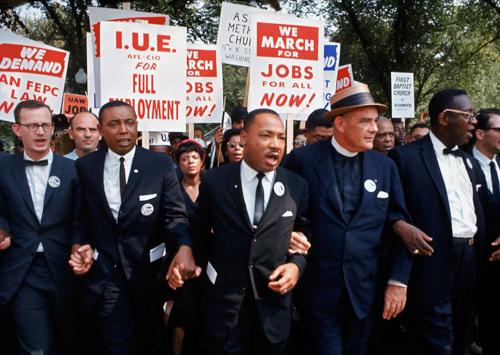
Studs Terkel presents a tribute to Martin Luther King, Jr.
Apr. 5, 1968 Studs Terkel shares a special program honoring the birthday of civil rights leader Martin Luther King, Jr. Includes excerpts from Terkel’s 1965 interview with King about King’s dream for civil rights in the United States, influence of his father, the damaging effects of segregation, and the role of love in bringing about social change. The program also includes excerpts from King’s 1963 “I Have a Dream” speech from the Civil Rights March on Washington, and his 1967 Christmas Eve speech at Bethesda Memorial Church in Atlanta.
-
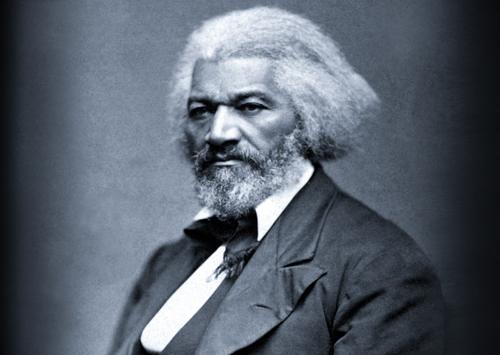
Studs Terkel presents a program in honor of the birthday of abolitionist and African American leader Frederick Douglass
Feb. 15, 1971 Studs Terkel presents a program in honor of the birthday of abolitionist and African American leader Frederick Douglass, including excepts from Terkel's 1964 interview with African-American scholar, author and social historian Lerone Bennett. Terkel reads at length from Douglass' autobiography, "My Bondage and My Freedom," focusing on Douglass' interactions with slave owners Hugh and Sophia Auld.
-
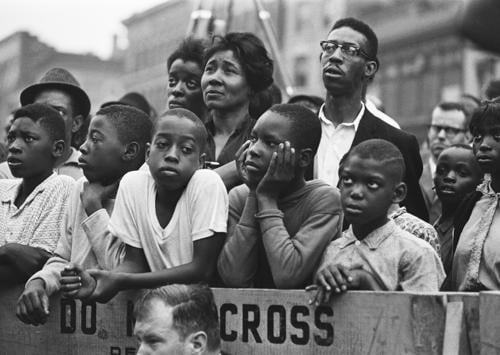
Studs Terkel interviews Professor Charles V. Hamilton on his book written with Stokely Carmichael entitled "Black Power: Politics of Liberation in America" ; part 1
Nov. 21, 1967 Using the backdrop of James Baldwin's "Nobody Knows My Name" and Baldwin's feelings that Blacks were ashamed of where they came from, Terkel interviews Professor and Chairman of the Political Science Department of Roosevelt University on his book coauthored with Stokely Carmichael entitled" Black Power: Politics of Liberation in America". Hamilton states that Blacks were taught to hate themselves and leave school believing that. Institutional racism and the deliberate oppression it creates, holds blacks back. Blacks are left out of crucial decision making processes that concern them.
-
Studs Terkel interviews Professor Charles V. Hamilton on his book written with Stokely Carmichael entitled "Black Power: Politics of Liberation in America" ; part 2
Nov. 21, 1967 Using the backdrop of James Baldwin's "Nobody Knows My Name" and Baldwin's feelings that Blacks were ashamed of where they came from, Terkel interviews Professor and Chairman of the Political Science Department of Roosevelt University on his book coauthored with Stokely Carmichael entitled" Black Power: Politics of Liberation in America". Hamilton states that Blacks were taught to hate themselves and leave school believing that. Institutional racism and the deliberate oppression it creates, holds blacks back. Blacks are left out of crucial decision making processes that concern them.