Listen to New Voices on Studs Terkel our partnership with 826CHI-here! Read the Story


Showing 106 - 120 of 390 results
-

Milton Mayer discusses Quakerism and the impact they have had on society
Dec. 27, 1974 Milton Mayer, journalist and educator, talks with Studs about Quakerism. They talk about how religion relates to society in the times of change. Mr Mayer describes an exchange with a gentleman who asked what is a Quaker. The man had been an SS officer who told Mr Mayer his story. The man had been touched by the anonymous generosity of the Quakers many years before. Mr Mayer speaks of A. J. Musty, clergyman and political activist as his mentor and friend, and the things he learned from him.
-
-
Mike Royko discusses some of his journalist stories ; part 1
Jul. 29, 1966 Mike Royko, a long-time journalist in Chicago, discusses some of his most popular columns. Topics include Cook County Hospital's lack of air conditioning in surgery rooms, the future of workers, and the Civil Right's Movement. The responsiblities of journalists and the effect of newspapers are also discussed.
-
Mike Chosa discusses the struggles of Native Americans
Jun. 17, 1971 Mike Chosa discusses the struggles of Native Americans, namely poverty, during the protests at Belmont Yacht Harbor. Includes the recitation of an unknown poem about Native Americans. Includes Buffy Sainte-Marie's songs "Now That the Buffalo's Gone" and "My Country Tis' of Thy People You're Dying." Includes an interview of John Tortes "Chief" Meyers. Includes the reading of a Chicago Daily News article about the Native American occupation of Belmont Yacht Harbor.
-
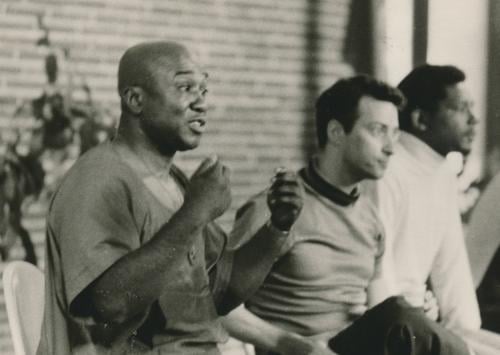
Mel River, Ken Jackson, and Fran Christman discuss criminal justice reform and advocacy
Nov. 20, 1970 Discussing prisons and interviewing members of the Fortune Society, an reentry services and advocacy group for individuals with justice involvement, headquartered in New York City. They also discuss capital punishment and life in prison. www.fortunesociety.org
-
Maude DeVictor discusses Veterans Affairs and Agent Orange
Oct. 12, 1981 Maude DeVictor, a Veterans Affairs worker, talks about how she discovered Agent Orange after a Vietnam Veteran's widow called asking for help. DeVictor recalls her time spent calling Universities and Government Agencies trying to figure out what chemical caused the cancer and then trying to bring light to her discoveries. Studs reads two passages from Jacques Cousteau's "The Cousteau Almanac: An Inventory of Life on our Water Planet."
-
Mary Harding discusses her time in a Bolivian prison
Apr. 30, 1973 Former ex-nun Mary Harding was accused of being a part of a group that was going to overthrow the Bolivian government. At the first meeting with counsel from the American Embassy, Harding could barely walk because she was kicked and punched over and over for information. Harding spent four of her five weeks in prison in solitary confinement.*Please note: some sections have been edited out from the original recording due to copyright considerations
-
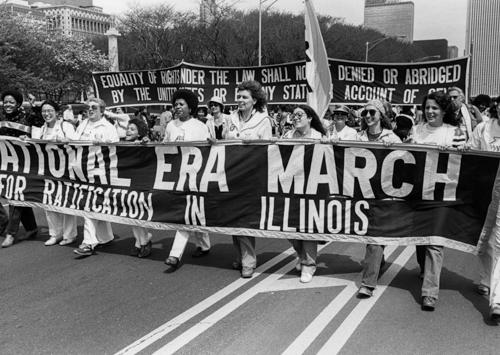
Marianne Bell, Shirley Wallace and Illinois Rep. Susan Catania discuss the Equal Rights Amendment
Jun. 2, 1982 Interviewing Equal Rights Amendment activists, Marianne Bell and Shirley Wallace, who were fasting as a political statement, and Illinois state representative and outspoken advocate of ERA, Susan Cantania.
-

Margie Adam discusses her music and career
May. 20, 1993 Margie Adam, musician, activist, and composer, discusses how events such as the women's movement and the lesbian-feminist movement inspired her to create music for her new album, Another Place. The album reflects on Adams's life and on topics such as her sexuality.
-
-
Maggie Kuhn discusses the elderly and nursing homes
Sep. 29, 1975 Maggie Kuhn, founder of the Gray Panthers, discusses the elderly and nursing homes. Kuhn notes the separation we currently see of older generations from the rest of the population, often in the form of separate housing and how this only enforces negative stigmas of the elderly. Studs plays "Hello in There" - John Prine (1971) and "Me and Bobby McGee" - Janis Joplin (1971) which have been removed due to copyright.
-
Maggie Kuhn discusses ageism and old people power
Jun. 28, 1974 Interviewing Maggie Kuhn of the Gray Panthers about the roles of senior citizens and the welfare of the aged in the United States. Kuhn talks about how society thinks once a person has retired, he or she is set aside or put to pasture. To the contrary, older people have a lot to offer with their wisdom, their knowledge and their experiences, says Kuhn.
-
Lois Wheeler Snow discusses her book “China on Stage”
Actor and author Lois Wheeler Snow discusses her book “China on Stage,” and shares her experiences in China, primarily involving ballet, opera, and plays.
-
Linda Stout discusses her book “Bridging the Class Divide and Other Lessons for Grassroots Organizing”
Apr. 7, 1997 Author, grassroots organizer, and activist Linda Stout discusses her book “Bridging the Class Divide and Other Lessons for Grassroots Organizing.” Growing up in a low-income family, Stout discusses poverty as “the lack of knowing about options” and how this served as the driving force in her activism. Studs plays “Bread and Roses” - Judy Collins (1976).*Please note: some sections have been edited out from the original recording due to copyright considerations
-