Listen to New Voices on Studs Terkel our partnership with 826CHI-here! Read the Story


Showing 76 - 90 of 126 results
-

Garry Wills discusses his book "The Kennedy Imprisonment: A Meditation on Power"
Mar. 16, 1982 Discussing the book, "The Kennedy Imprisonment: A Meditation on Power," and interviewing the author Garry Wills.
-
Fred and LaDonna Harris discuss their thoughts on the working class in America
Aug. 4, 1975 One of the questions discussed by Fred and LaDonna Harris is whether or not the government is going to protect the interests of the average family or continue to protect the super-rich and the giant corporations. Former senator Fred Harris says people are being over-taxed by the government and that there needs to be a fairer distribution of wealth, income, and power in America.*Please note: some sections have been edited out from the original recording due to copyright considerations
-
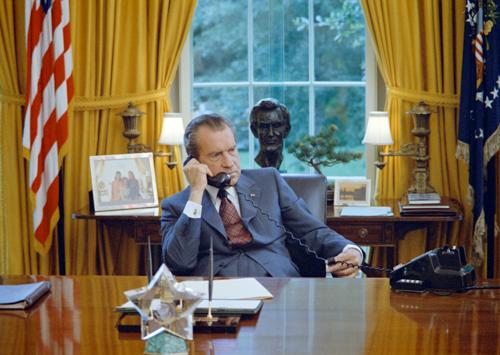
Frank Mankiewicz discusses his book "U.S. v. Richard M. Nixon: The Final Crisis"
Mar. 28, 1975 Frank Mankiewicz discusses the events surrounding the Watergate scandal and his new book, "U.S. vs Richard M. Nixon: The Final Crisis." A major theme of the book is the fact that legal issues were at the heart of the Watergate scandal, but the Nixon administration portrayed it as a public relations issue. Other topics of discussion include investigative journalism and the role of certain individuals in the prosecution of Richard Nixon.
-
Frank Mankiewicz discusses his book "Perfectly Clear"
Dec. 7, 1973 Watergate, wire tapping, and civil disobedience are among the topics covered in Frank Mankiewicz's book, "Perfectly Clear: From Nixon to Whittier to Watergate." According to Mankiewicz, Richard Nixon was involved in additional scandals, for example, how one year he only paid $700 in taxes when employees at the White House paid more than that.
-
Former President Jimmy Carter and Rosalynn Carter discuss their book "Everything To Gain"
Jun. 5, 1987 From the book, “Everything to Gain: Making the Most of the Rest of Your Life”, in a country with such great wealth, to see so many (people) without a place to live is devastating, according to Rosalynn Carter, and President Jimmy Carter said it was embarrassing. Their backgrounds, their time in the White House, the homeless and Habitat for Humanity are some of the topics covered in the Carters’ book. At the time when the Carters started to write this book, they had been married for 40 years. Mr. Carter revealed that writing this book together was the worst experience they shared.
-
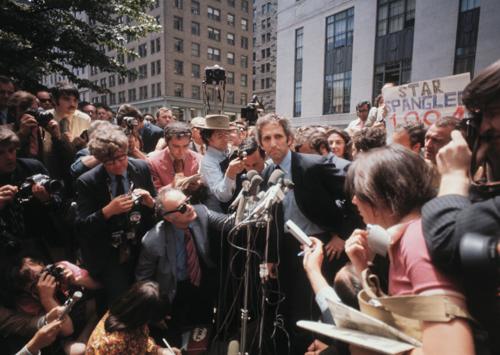
Eqbal Ahmad, Daniel Ellsberg, Anthony Lukas and Anthony Russo talk with Studs Terkel ; part 3
Jun. 9, 1972 Eqbal Ahmad, Daniel Ellsberg, Anthony Lukas and Anthony Russo discuss Anthony Russo's trial and treatment he endured during his time from conviction to release in federal prison compared to the treatment of prisoners tortured in Vietnam.
-
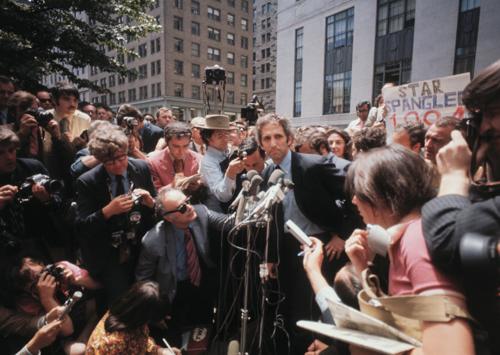
Eqbal Ahmad, Daniel Ellsberg, Anthony Lukas and Anthony Russo talk with Studs Terkel ; part 2
Jun. 9, 1972 Daniel Ellsburg, Eqbal Ahmad, Anthony Lukas, and Anthony Russo discuss Anthony Russo's time in jail, the leak of the Pentagon Papers, Vietnam War, torture of Vietnam prisoners being ignored, corruption in politics, and working for Rand.
-
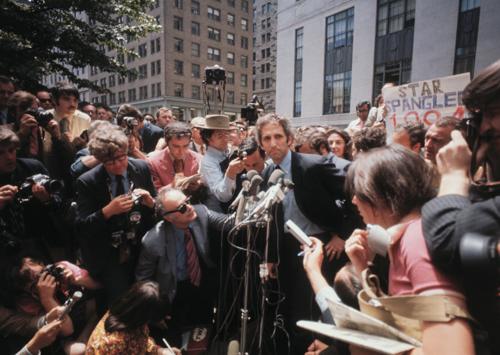
Eqbal Ahmad, Daniel Ellsberg, Anthony Lukas and Anthony Russo talk with Studs Terkel ; part 1
Jun. 9, 1972 Eqbal Ahmad, Daniel Ellsberg, Anthony Lukas and Anthony Russo discuss their introduction into becoming activitsts, leaking the Pentagon Papers, Nixon Administration, and their philosophy on working for men in power.
-
Elizabeth Drew discussing her book, "Washington Journal: The Events of 1973-1974"
Oct. 3, 1975 Elizabeth Drew discussing her book, "Washington Journal: The Events of 1973-1974," about the uncertain times during the Watergate scandal. She describes the Saturday Night Massacre and the military alert that were attempts to cover-up Watergate, along with how people working inside the White House felt during these events.
-
Elizabeth Drew discusses her book, "Senator," about U.S. Senator John C. Culver
Jun. 1, 1979 Elizabeth Drew discusses her book, "Senator," about U.S. Senator John C. Culver from Iowa. She explains how she followed Culver for ten days to learn what the day to day business is like for senators. Drew tells about some of the bills and amendments Culver worked on and how much time is spent working on them.
-
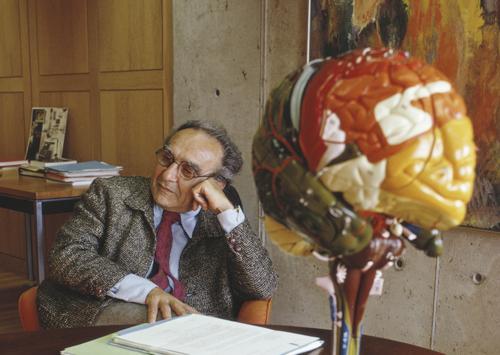
Dr. Jacob Bronowski discusses the philosophy of science in the post World War II world
Jan. 1, 1971 Dr. Jacob Bronowski, a mathematician and philosopher, discusses how the study of science has changed since the onset of government regulation or the military industrial complex. He also talks about humanity and explains how humans are the best species and therefore should come together to continue progress instead of killing each other. Content Warning: This conversation has the presence of outdated, biased, offensive language.
-
Dr. Erich Fromm discusses humanistic philosophy during the Cold War
1963 Dr. Erich Fromm explains how he believes the Cold War was a moment of change for humanity where it would either bring about a "renaissance of humanism or immense bloodshed and barbarism for decades to come." Using his study into humanism, Dr. Fromm warns about how the love of death can overtake the love of life as nationalism and group narcissism takes hold in different countries. He goes on to explain that humanity has to decide that they have a right to demand independence and freedom.
-
Dr. Charles Clements discusses his book "Witness to War"
Apr. 29, 1985 After having flown 50 missions in Vietnam, Charles Clements went to medical school and became a physician and a human rights activist. Dr. Clements talks about his observations in the poorest sections of Nicaragua. Because medicine for the poor people was considered contraband, Clements had to resort to putting rusty nails into a cup of water and having his patients drink the water for iron supplements. Clements reminds the audience if we don't know our history, we are bound to repeat it.
-
-
Discussing the Soviet military, with Andrew Cockburn
Jun. 30, 1983 The British journalist assesses the real military power behind the Iron Curtain in his book, The Threat: Inside the Soviet Military Machine. He and Studs attempt to separate the myth from the reality of the late Cold War USSR.*Please note: some sections have been edited out from the original recording due to copyright considerations