Listen to New Voices on Studs Terkel our partnership with 826CHI-here! Read the Story


Showing 46 - 60 of 134 results
-

Gerda Lerner discusses her book "The Creation of Patriarchy"
Jun. 27, 1986 Austrian-born American historian, woman's history author and feminist Gerda Lerner focuses on the origins of misogyny in society in her latest book
-
George Thayer discusses his book “The War Business: The International Trade in Armaments
Jun. 20, 1968 Author George Thayer speaks with Studs Terkel about Thayer’s book “The War Business: The International Trade in Armaments,” the business of weapons manufacturing, the arms trade, and what part the United States plays in international arms dealing. Terkel plays an audio clip of his interview with Gerald P. Nye, a Senator from South Dakota, and both Terkel and Thayer read excerpts from Thayer’s book.
-
Garry Wills discusses his book “Witches and Jesuits”
Dec. 27, 1994 Author, journalist, and historian Garry Wills discusses his book “Witches and Jesuits.” Wills’ book, and this discussion, focuses on recontextualizing Shakespeare’s “Macbeth” in the original setting of 17th century England, informing readers and listeners of how the play would have been received during that time and what exactly makes it a dark tale. Studs plays an English traditional song “Soul Cake” and a clip of a stage performance of William Shakespeare's "Macbeth" by Margaret Leighton.
-
Garry Wills discusses his book "John Wayne's America: The Politics of Celebrity"
Mar. 10, 1997 Garry Wills, writer and historian, discusses his book "John Wayne's America: The Politics of Celebrity." He explores the popularity of John Wayne that took him from an actor and made him into an American symbol. He explores how the symbol of John Wayne is used by white male politicians to influence their decisions and how that affected the Vietnam War. Wills gives a biography of John Wayne, including the many influential people in his life such as his working partner, John Ford.
-
Garry Davis discusses his book "Ready or Not: World Government"
Jun. 18, 1985 Garry Davis, an international peace activist and founder of the World Government Authority, discusses his philosophy on world peace and his stance on being a world citizen.
-
Gar Alperovitz discusses his book “Atomic Diplomacy: Hiroshima and Potsdam”
Gar Alperovitz, historian, writer, and political economist, discusses the bombing of Hiroshima, the Potsdam Conference, and the American confrontation with Soviet power.
-
Frye Gaillard in conversation with Studs Terkel
1980 Discussing the book "Lessons From the Big House: One Family's Passage through the History of the South: a Memoir," (published by Down Home Press) with author Frye Gaillard.
-
Erhard Dabringhaus in conversation with Studs Terkel
Aug. 20, 1984 Discussing the book "Klaus Barbie: The Shocking Story of How the U.S. used this Nazi War Criminal as an Intelligence Agent: a First Hand Account" (published by Acropolis) with the author Erhard Dabringhaus.
-
Edward W. Said discusses Palestine, history of and struggles in the Middle East
Oct. 1, 1984 Edward W. Said talks about the importance of language in shifting perceptions of Middle Eastern people, refutes some opinions about Palestine, identities, and overlapping Eastern and Western cultures.
-
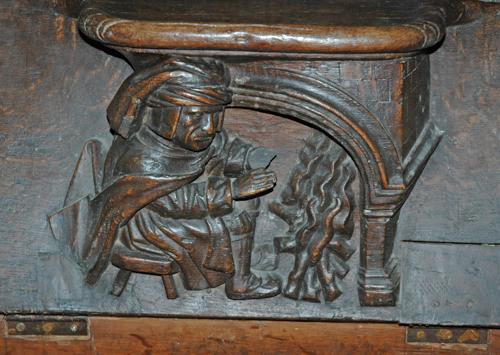
Dorothy and Henry Kraus discuss the book "The Hidden World of Misericords."
Feb. 10, 1976 Dorothy and Henry Kraus describe how they discovered an entire European collection of church-located woodcarvings depicting a wide variety of scenes crafted by local artisans. Hundreds of years of political, religious, and social events shaped the portrayals, and they explore many of the illustrations in their book, focusing on the themes of labor, animals, and religion. They marvel at the skill and craftsmanship and observe that the works can be a rich source of primary research material for modern scholars.
-
Doris Kearns Goodwin talks about her book "Lyndon Johnson and the American Dream"
1976 Doris Kearns Goodwin talks about her book and her relationship with President Johnson.
-
Doris Kearns Goodwin reads from and discusses her book "The Fitzgeralds and the Kennedys"
Feb. 18, 1987 Delving into their Irish immigrant backgrounds is what makes Doris Kearns Goodwin's book, "The Fitzgeralds and the Kennedys: An American Saga" stand out from other books. Although they had wanted to settle on a farm in the West, the Fitzgeralds ended up in Boston. Goodwin talks a lot about Rose Fitzgerald and her husband, Joe Kennedy.
-
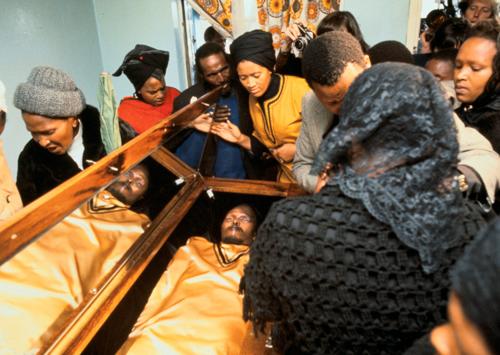
Donald Woods discusses his book "Biko"
May. 17, 1978 Discussing the book "Biko" with the author Donald Woods.
-
Donald Sassoon discusses his book “One Hundred Years of Socialism: The West European Left in the Twentieth Century”
May. 2, 1997 Author and historian Donald Sassoon discusses his book “One Hundred Years of Socialism: The West European Left in the Twentieth Century.” Sassoon discusses the history of socialism in European countries and the social and political circumstances that lead to socialist revivals. Studs plays "The Internationale (Recording of 1944)" - Arturo Toscanini, NBC Symphony Orchestra, The Westminster Choir.
-
Donald Sassoon discusses his book “One Hundred Years of Socialism: The West European Left in the Twentieth Century”
May. 2, 1997 Donald Sassoon, professor and writer, discusses his book “One Hundred Years of Socialism: The West European Left in the Twentieth Century.” Sassoon explores the history of socialism in Europe since 1889 and socialism's relationship with capitalism. He explains how the 1930 depression and World War II affected the growth of socialism in Europe and America. He also explains the creation and government of the Soviet Union