Listen to New Voices on Studs Terkel our partnership with 826CHI-here! Read the Story


Showing 61 - 75 of 535 results
-

Studs Terkel discusses journalism and mass media with Norman Corwin
1968 Studs discusses poetry and mass media with American writer Norman Corwin, who was visiting Chicago to receive an honorary award from Columbia College. Works discussed include Corwin's radio address, "On A Note of Triumph," which the author delivered on May 8, 1945 to mark the end of World War II in Europe, and "Ballad for Americans", a cantata produced by Corwin on CBS radio in 1939. Topics include Corwin's personal and professional history, the process of writing "for the ear", World War II, the dawn of the nuclear age, and the television's role in eclipsing radio in popularity.
-
Studs Terkel discusses his life and career with Norman Pellegrini
Mar. 1, 1994 Norman Pellegrini interviews Studs Terkel to discuss his life and career as a radio personality. Studs recalls a specific moment walking through the streets of Chicago and hearing blues music coming through the window of someone’s home. As Studs recalls, this moment is one that jump-started his interest in music and radio and inspired him to leave his life of studying law and move into the unknown of music radio. Technical engineer and producer of the show, Jim Unrath, joins the conversation to recount previous interviews and programs of Studs'.
-
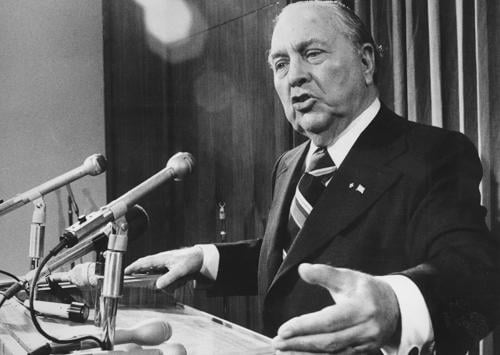
Studs Terkel discusses contemporary Chicago politics with Dick Simpson and Mike Royko
Jul. 22, 1971 Discussing Mayor Daley and nepotism in government with Alderman Dick Simpson, and author-journalist Mike Royko. Includes clips of Mayor Daley defending his appointment of Thomas P. Keane, son of Alderman Tommy E. Keane. Also includes Mike Royko reading his column from the "Chicago Daily News" July 22, 1971.
-
Studs Terkel continues his interview with Erich Luth in Hamburg discussing the aftermath of the war on Germany's youth ; part 3
1967 There is a silence in the tape from 3:48 to 3:58 due to Studs changing the tape. It should be noted that the word "clever" in this discussion means intelligent. The interview concludes at 35:36 where Studs offers his reflections on his stay. Luth is the retired Press Chief of Hamburg and has also helped with remunerations for the Jewish people in the aftermath of World War II. He has also facilitated detente between Israel and West Germany.
-

Studs Terkel concludes his interview with Erich Lüth going more in depth on the aftermath of the war on Germany's youth ; part 4
1968 Erich Lüth's discussion with Studs Terkel is similar to part 3 but Luth offers a more in-depth conversation on the role of teachers in schools and how the time of Hitler is taught. There were those teachers that joined the party to continue their love of teaching and those teachers that were brought into the Nazi Party to follow their convictions. This lack of courage to resist influences pupils today because teachers are not saying they were cowards. The relationship is altered out of shame, and embarrassment.
-
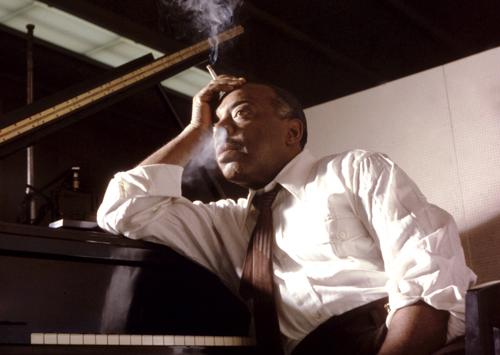
Studs Terkel and William (Bill) Leonard discuss their favorite memories of Frank Holzfeind and the Blue Note Jazz Club in Chicago
Jan. 9, 1975 Studs Terkel and William (Bill) Leonard share memories of the Blue Note Jazz Club as a tribute to Frank Holzfeind. Music is played throughout the episode: "After You've Gone" by the Benny Goodman Sextet, "The Flat Feet Floogie" by Slim and Slam, "How High the Moon" by Sarah Vaughan, "Destination K.C." by Count Basie, "West End Blues" by Louis Armstrong, "Lil' Augie Is A Natural One Man" by Chet Roble, and "Rock Skippin' at the Blue Note", Duke Ellington. Songs have been removed for copyright reasons.
-
Studs Terkel interviews writer Tom Wolfe ; part 2
Sep. 1, 1968 Studs Terkel and Tom Wolfe discuss Wolfe's recent work. At the time of the interview, Wolfe had recently released "The Electric Kool-Aid Acid Test", his chronicle of Ken Kesey and his colleagues, and a collection of articles, "The Pump House Gang".
-
Steve Neal discusses his book "Dark Horse"
Feb. 7, 1984 Steve Neal's book, "Dark Horse: A Biography of Wendell Willkie," covers the story of a man who ran for president with no political experience. As explained by Neal, Wendell lost the election but he was still very popular with celebrity status. Wendell believed a chapter ended in his life so that a new chapter could begin.
-
Stanislaw Pchenikov and Valentin Nikolaevich Pluchek discuss theater with Studs Terkel ; part 2
Jan. 19, 1962 Studs Terkel discusses Russian theater with Stanislaw Pchenikov and Theater director Valentin Nikolaevich Pluchek.
-
Soviet intellectuals discuss Soviet arts and culture
May. 28, 1962 Soviet intellectuals Tamara Mamedova, Nicolai Pogodin, and Anatol Safronov talk with Studs Terkel about their work with the Institute for Soviet-American Relations (U.S.) and Soviet arts and culture.
-
Sidney Blumenthal discusses his book "The Permanent Campaign: Inside the World of Elite Political Operatives"
Jun. 25, 1980 Author Sidney Blumenthal discusses his book "The Permanent Campaign," touching on topics including political consultants, modern campaigning, and the election process.
-
Shana Alexander reads from and discusses her book "Very Much a Lady"
Apr. 6, 1983 "Very Much a Lady: The Untold Story of Jean Harris and Dr. Herman Tarnower" is Shana Alexander's account of this true crime. Jean Harris had a 14-year love affair with Dr. Tarnower of the Scarsdale Diet fame. Alexander's book covers Jean Harris' background, her doomed triste and the trial after the tragic event.
-
Shana Alexander discusses her book "Happy Days"
Nov. 10, 1995 The book, "Happy Days: My Mother, My Father, My Sister and Me," gives a lot of background about Shana Alexander's father, Milton Ager. A few of Ager's songs are played throughout the interview. Alexander also glosses over her time spent with "Life Magazine," and with "60 Minutes."
-
Seymour M. Hersh reads from and discusses his book "My Lai 4"
May. 22, 1970 Innocent, unarmed villagers were murdered in the horrific massacre in March of 1968. In Seymour M. Hersh's book, "My Lai 4: A Report on the Massacre and Its Aftermath," Seymour further explains that to the soldiers, the killing was simply a game to them, of who could kill the most bodies.
-
Scott Ridley discusses the book “Power Struggle: The Hundred-Year War Over Electricity”
Feb. 25, 1987 Author Scott Ridley discusses the book “Power Struggle: The Hundred-Year War Over Electricity” and the corruption in the private power industry. Studs plays "Roll on Columbia" by Judy Collins (1972) and "Grand Coulee Dam" by Woody Guthrie (1941).