Listen to New Voices on Studs Terkel our partnership with 826CHI-here! Read the Story


Showing 166 - 180 of 549 results
-
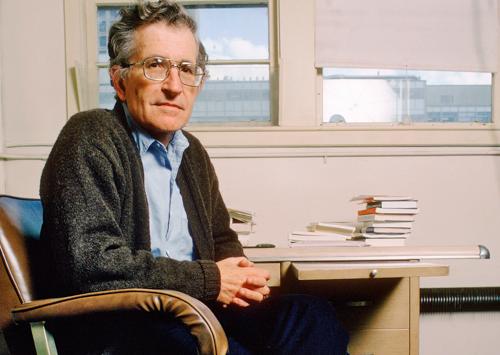
Noam Chomsky discusses his book "American Power and the New Mandarins"
Jan. 19, 1970 Noam Chomsky discusses his book "American Power and the New Mandarins," the Vietnam war, and the role of intellectuals, including interview with A.J. Muste; audio is slowed down from 47:30 - 52:52.
-

Nikolay Akimov, Theodore Komisarjevsky and Pavel Markov discuss the Soviet theater
Aug. 16, 1959 Nikolay Akimov, Theodore Komisarjevsky and Pavel Markov discuss the Soviet theater. The ending music on this record was edited out
-
Nicholas Von Hoffman discusses his book “Left at the Post”
Dec. 18, 1970 Nicholas Von Hoffman talks about his book "Left at the Post: Passions, Prejudices, and Laments of One of America's Most Generously Biased Writers". Additional topics include biased journalism, objectivism in news reporting, and politics.
-
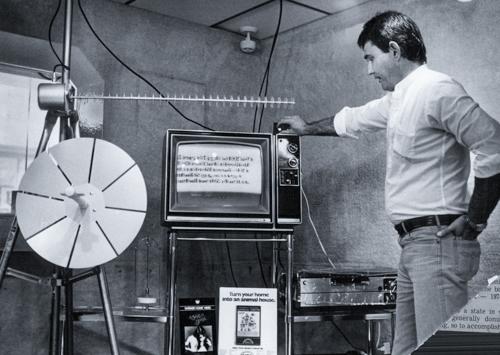
Nicholas Johnson talks about communication and its impact
Jan. 16, 1981 Interviewing Nicholas Johnson, a former member of FCC in which discusses communication, advanced technology, the role of the public, censorship and control of information
-
Newton Minow discusses broadcasting
Jan. 11, 1964 Interviewing Newton Minow, Chicago lawyer and chairman of the Federal Communications Commission. He discusses broadcasting as a public service and spends a great deal of time on the history of commercials and how they changed over time.
-
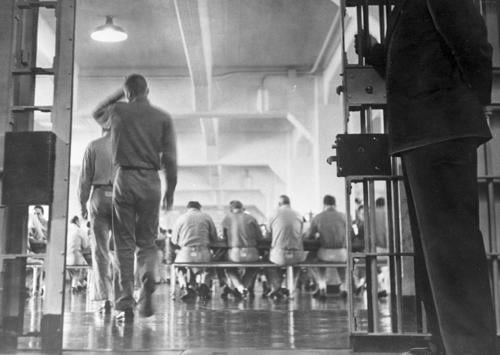
Nelson Algren, Nathan Kantrowitz, and David Maurer discuss language and characteristics of the criminal underworld
Jan. 29, 1967 Nelson Algren, Nathan Kantrowitz, and David Maurer discuss language and criminal subculture, including the development of institutional slang at different prisons, the nature of drug addiction and its influence on criminal language and vocabulary, and the myth of the criminal mind. Includes an Interview with an inmate at a Chicago prison.
-
Nelson Algren discusses love of a city
Mar. 9, 1961 Author Nelson Algren discusses what it means to love a city, the re-release of his book, "Chicago: City on the Make," and his interactions with Irish writer and playwright, Brendan Behan.
-
Nelson Algren discusses capital punishment
1965 Discussing capital punishment with author Nelson Algren. Includes interviews with William (Bill) Witherspoon, a death row inmate; Jack Johnson, warden of Cook County Jail; and an [unidentified woman] who marched in protest at the execution of James Dukes in 1962.
-
Ned Rorem discusses his career as a composer and his memoir "An Absolute Gift"
Nov. 20, 1980 Studs interviews Ned Rorem about his work and book "An Absolute Gift." Rorem discusses his work and how his Quaker background has influenced his work. He reflects on poets and other composers. Rorem shares the people and events that have influenced him and the arts. The musical recordings are not included in this edited version of the original.
-
Naturalist May Theilgaard Watts and Julie Nadelhoffer discuss "Reading the Landscape of America"
1969 Julie Nadelhoffer and Illinois naturalist May Theilgaard Watts discuss the changing landscape of America and the conflict between nature and development.
-
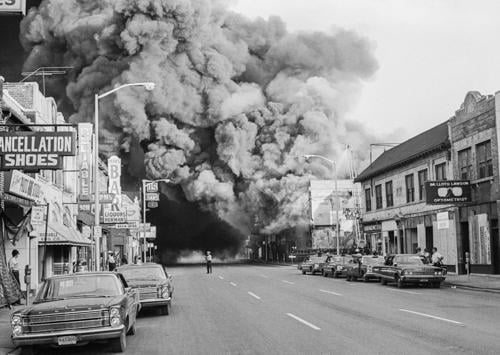
Nancy Milio reads from and discusses her book "9226 Kercheval"
Jun. 13, 1970 Nancy Milio's book, "9226 Kercheval: The Storefront That Did Not Burn," is about community health services offered in a ghetto on the south side of Detroit, Michigan. As a nurse, Milio knew how important it was to offer quality health services to poor and uneducated individuals. With their real names changed, Milio talks about her experiences with Mrs. Watkins, Johhnie West and others at the center.
-
Myra Alexander discusses what's wrong with Chicago
1980 Content Warning: This conversation includes racially and/or culturally derogatory language and/or negative depictions of Black and Indigenous people of color, women, and LGBTQI+ individuals. Rather than remove this content, we present it in the context of twentieth-century social history to acknowledge and learn from its impact and to inspire awareness and discussion. A citizen of Chicago, Myra Alexander, believes Chicago is lost and hopeless. Chicago, she explains, will always have its problems with its one party system. Alexander said prejudice is wide-spread in Chicago.
-
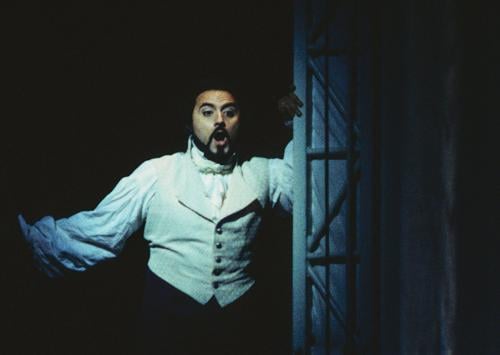
Musical performance of Giuseppe Sabbatini
Sep. 10, 1993 Celebrated young tenor Giuseppe Sabbatini discusses his upcoming performance as Alfredo in "Traviata" at the Lyric Opera as well as beginnings, church music, debuts with little/no rehearsal and more.
-
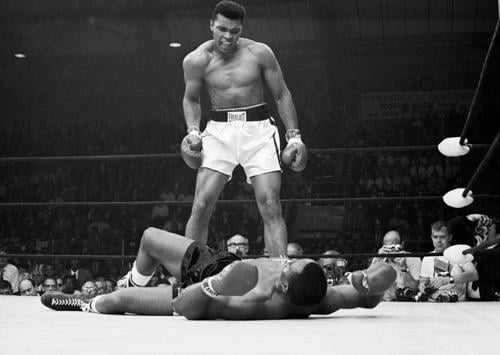
Muhammad Ali discusses his book "The Greatest: My Own Story"
Nov. 26, 1975 Content Warning: This conversation includes racially and/or culturally derogatory language and/or negative depictions of Black and Indigenous people of color, women, and LGBTQI+ individuals. Rather than remove this content, we present it in the context of twentieth-century social history to acknowledge and learn from its impact and to inspire awareness and discussion. Muhammad Ali discusses his book "The Greatest: My Own Story," touching on topics including his childhood and family, conversion to Islam, stance on the Vietnam War, and experiences in jail.
-
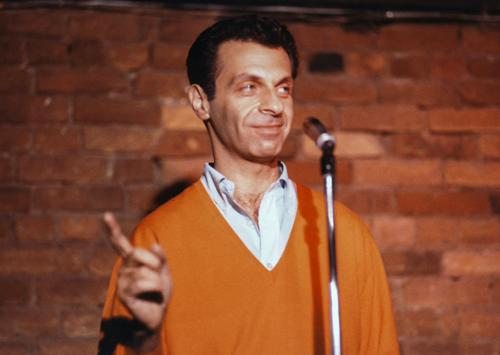
Mort Sahl discusses his career in comedy and paranoia in politics
Aug. 11, 1983 Humorist and commentator Mort Sahl talks with Studs Terkel on the roof of Sahl’s Chicago hotel. The two briefly discuss Lenny Bruce’s legacy, but Sahl is quick to discuss a topic he brings up frequently in this interview: American’s criticism of “paranoia” and the U.S. government’s power to persuade. Sahl criticizes his young audiences for being uneducated and discuss the United State’s involvement in the Vietnam War. He also speaks briefly on liberals in Chicago, calling them weak for supporting Daley.