Listen to New Voices on Studs Terkel our partnership with 826CHI-here! Read the Story


Showing 151 - 165 of 549 results
-
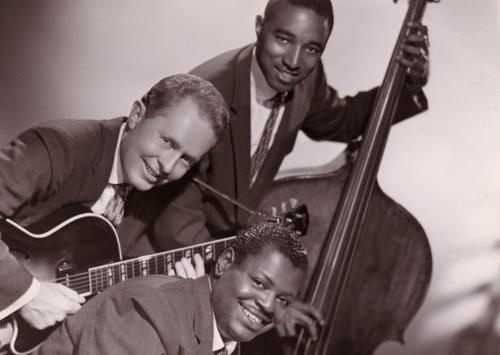
Oscar Peterson plays and discusses jazz
Sep. 8, 1961 Jazz pianist Oscar Peterson sits down with Studs Terkel to discuss historical developments in jazz piano, his own personal development as a pianist, and his experience directing a youth jazz piano school. Includes Peterson playing short excerpts from "Chicago (that toddlin' town)," "Soon," Chopin's Nocturne in E flat Major to demonstrate musical concepts.
-

On location in Melun, France at Maison Central Melun prison ; part 2
1962 Madame B. translates for Studs as he speaks with two inmates. Both inmates work in the prison one as a cook and the other as a librarian. Studs talks to each of the inmates about their early life, their work in the prison and their rehabilitation. Madame B is interviewed after the visit to the prison, and she speaks about her volunteer work at the prison. Following the interview, there is a postscript in which Madame B. records "notes" for Nelson Algren and Herman and Mrs. Kogan. Once he is on his own, Studs explains that Madame B.
-

On location in Melun, France at Maison Central Melun prison ; part 1
1962 Studs tours the prison and speaks with prison director Jean Blayrat and a lady referred to as Madame B translates. They talk about the crimes of the a few of the prisoners and the rehabilitation programs the prison system uses in France.
-
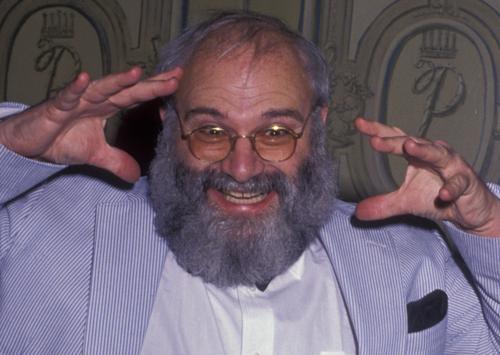
Oliver W. Sacks talks with Studs Terkel
Mar. 15, 1995 Discussing the book "An Anthropologist on Mars: Seven Paradoxical Tales" (published by Knopf) with the author, neurologist Dr. Oliver Sacks.
-

Oliver W. Sacks discusses the history of ASL and deaf community
Sep. 21, 1989 Dr. Oliver W. Sacks talks about the treatment of deaf people throughout history and the development of ASL as written in his book "Seeing Voices".
-
Oliver W. Sacks discusses deaf experiences as detailed in his book "Seeing Voices"
Oct. 26, 1990 Dr. Oliver W. Sacks discusses people and concepts presented in his book "Seeing Voices"; the interview is for the paperback release.
-
Novelist Robert Kotlowitz reads from and discusses his book "The Boardwalk"
Feb. 3, 1977 Content Warning: This conversation includes racially and/or culturally derogatory language and/or negative depictions of Black and Indigenous people of color, women, and LGBTQI+ individuals. Rather than remove this content, we present it in the context of twentieth-century social history to acknowledge and learn from its impact and to inspire awareness and discussion. Almost all the characters in Robert Kotlowitz's book, "The Boardwalk" are fictitious with the exception of Teddy, a Jewish, 14-year-old boy, who Kotlowitz explains is Robert Kotlowitz.
-
Noted Norwegian adventurer and ethnographer Thor Heyerdahl discusses his most recent book
Oct. 9, 1981 Noted Norwegian adventurer and ethnographer Thor Heyerdahl discusses his most recent book "The Tigris Expedition: In Search of Our Beginnings" in which Heyerdahl and a crew of 10 men built a reed boat in Iraq and sailed it through the Persian Gulf, around the Horn of Africa, to Pakistan and eventually the Red Sea. Their goal was to prove that the ancient peoples of Mesopotamia and the Indus Valley could have been in contact through marine trade and migration.
-
Norman Thomas discusses the book "Great Dissenters" ; part 1
Nov. 11, 1961 According to Norman Thomas, things in life are not as great as they used to be and there's nothing wrong with dissenting. Thomas chose 5 dissenters to write about, Socrates, Galileo, Thomas Paine, Wendell Phillips and Gandhi. Of of all of them, Gandhi was the biggest dissenter of our time, said Thomas.
-
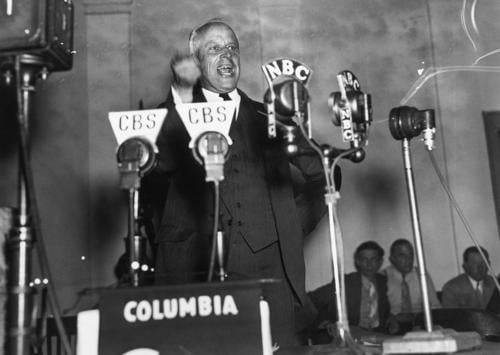
Norman Thomas discusses social progress ; part 2
Dec. 30, 1964 Socialist Party leader and Presbyterian minister Norman Thomas discusses social progress, his political views, and where society is headed with Studs Terkel. This is the final part of his interview.
-
Norman Thomas and Lillian Smith discuss dissenting ; part 2
Nov. 11, 1961 Content Warning: This conversation includes racially and/or culturally derogatory language and/or negative depictions of Black and Indigenous people of color, women, and LGBTQI+ individuals. Rather than remove this content, we present it in the context of twentieth-century social history to acknowledge and learn from its impact and to inspire awareness and discussion. Lillian Smith's father taught her that we're all human beings and that no one was better than another person.
-
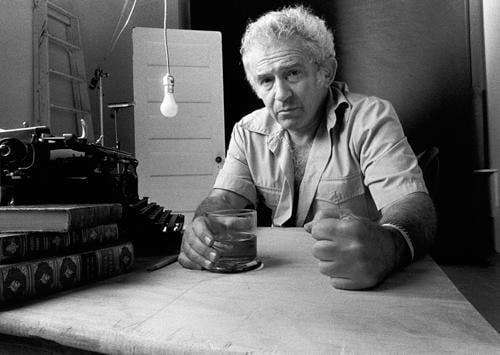
Norman Mailer discusses his writing, literature, and American life
Mar. 17, 1960 Norman Mailer discusses his writing, literary criticism, and American life. Other topics of conversation include Mailer’s thoughts on “affirmative” literary works, apathy and a lack of passion in modern life, beat writers and their reception in the United States, and many of his contemporary writers.
-
Norman Maclean reads from and discusses his book "A River Runs Through It"
Jun. 8, 1976 Fly fishing, relationships and people Norman Maclean has met are all apart of his book, "A River Runs Through It." Maclean's father taught Maclean and his brother the art of fly fishing. Maclean's book is semi-autobiographical with three short stories.
-

Nora Ephron discusses feminism and her book "Crazy Salad"
Jul. 28, 1975 Nora Ephron discusses the women’s movement and her book, “Crazy Salad: Some Things About Women.” Ephron discusses the influence of writer Dorothy Parker on her work, as well as topics including women’s rights; the exploitation of women in politics, war, and advertising; the many conflicts she faces in her role as a journalist; and traditional and non-traditional gender roles. Includes an excerpt from a previous interview with Dorothy Parker.
-
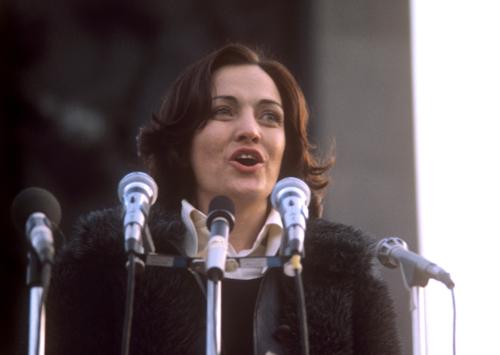
Nobel Peace Prize recipient Mairead Corrigan Maguire discusses the struggle for peace in Northern Ireland, and around the world
Dec. 1, 1993 Nobel Peace Prize recipient Mairead Corrigan Maguire discusses the struggle for peace in Northern Ireland, and around the world. Maguire, an Irish peace activist, founded Community of Peace People.