Listen to New Voices on Studs Terkel our partnership with 826CHI-here! Read the Story


Showing 136 - 150 of 151 results
-

Bill Ayers reads from and discusses his book "A Kind and Just Parent"
Jun. 25, 1997 Bill Ayers' book, "A Kind and Just Parent: The Children of Juvenile Court" takes a look at kids getting caught up and lost in the system. While observing in the courts, Ayers said all kids just became a thing.
-

Bernard Asbell discusses his book "The Plll"
Jun. 14, 1995 Scientists, women, birth control, religion and ethics are among the topics covered in Bernard Asbell's book, "The Pill: A Biography of the Drug that Changed the World"
-
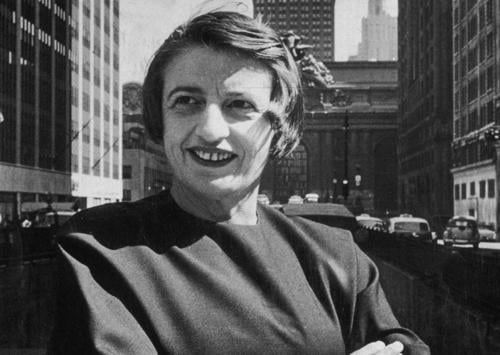
Barbara Branden discusses "The Passion of Ayn Rand"
Aug. 26, 1986 Discussing "The Passion of Ayn Rand" (published by Doubleday) with the author Barbara Branden.
-
Barbara and Betty Underwood discuss their book “Hostage to Heaven”
Nov. 15, 1979 Barbara and Betty Underwood, authors of the book “Hostage to Heaven,” discuss Betty’s involvement with Sun Myung Moon and the Unification Church.
-
Authors Louise Erdrich and Michael Dorris discuss "Tracks: A Novel"
Sep. 16, 1988 Living in the past and the present, Native American Indians and Catholicism are all parts of Louis Erdrich's book, "Tracks: A Novel." Both Michael Dorris and Erdrich have Native American Indian backgrounds. The husband and wife team also talk about how they take long walks with one another and discuss with each the ideas of future books and the books' characters.
-
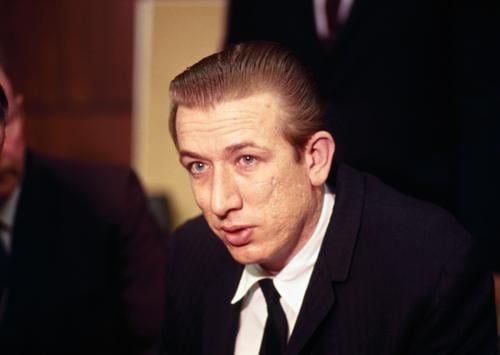
Authors Jack Altman and Dr. Marvin Ziporyn discusses their book "Born to Raise Hell"
1967 Richard Speck, the man who murdered eight student nurses in 1966, is the topic of Jack Altman's and Dr. Marvin Ziporyn's book, "Born to Raise Hell: The Untold Story of Richard Speck -- The Man, The Crime, The Trial". Altman saw Speck's public and private image as being quite different. When asked to smile for the cameras, Speck obeyed authority and was labeled a monster by the press when in reality, he blocked out the murders and was disgusted by his actions. Dr. Ziporyn sees this murderous violence as a disease and not as a monster as the press portrayed it.
-
Asa Baber reads from and discusses his book "Land of a Million Elephants"
Jun. 8, 1970 Having spent time as a Marine in southeast Asia and his military experience became material for Asa Baber's first book, "Land of a Million Elephants". Baber also talks about how he formulated his book. "Writing is music. Writing is jazz," said Baber. He didn't believe writing was about concepts and structure.
-
Arthur Miller discusses working in China
Jan. 22, 1984 In 1978, Arthur Miller saw a play in China and was asked to offer his expertise critique. A few years later, Arthur Miller was asked to direct "Death of a Salesman" in Beijing. Complimentary tickets were given away to the audience for a preview performance. Arthur was appalled at the audiences' behavior as they talked throughout the entire presentation. Miller's main concern was that his play would be seen as a political statement instead of a work of art. However, opening night arrived and his play was very well received.
-
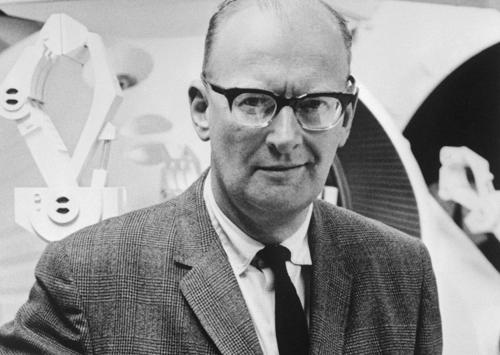
Arthur Charles Clarke discusses science fiction
Jan. 27, 1959 Arthur Charles Clarke discusses science fiction and his books "Childhood's End", "Prelude to Space", and "the Deep Range".
-
-

Anna Deavere Smith discusses her career
May. 4, 1995 Anna Deavere Smith discusses and demonstrates her unique character portrayals from her works "Fires in the Mirror" and "Twilight: Los Angeles, 1992."
-
Allen Ginsberg discusses poetry and meditation
Nov. 29, 1976 Studs Terkel and Allen Ginsberg talk about poetry, meditation, and the shifting of American socio-political consciousness between the 50's and 70's.
-
Allen Ginsberg and William S. Burroughs talk about their writing
Mar. 11, 1975 Writers Allen Ginsberg and William S. Burroughs discuss life and their writing; passages from their writing are read by the authors and clip is played of interview with Allen Ginsberg, Gregory Corso, and Peter Orlovsky.
-
Alan Watts discusses and reads from his book "In My Own Way"
1970 In Alan Watts' autobiography, "In My Own Way," he explains that the song "Onward Christian Soldier" is militant, and of a militant religion, whereas Zen Buddhism is not militant at all. Watts also says that most of the troubles that go in the world are created by people that take life too seriously.
-

Alan Ayckbourn discusses his background and career
May. 27, 1994 His total love for the theatre began when Alan Ayckbourn worked backstage, and then worked the lights. He eventually began writing plays. To date, he has written 47 of them. Ayckbourn admits that his plays may be dark but he explained that he tries to add some humor into them, too. When writing a play, and without any notes, Ayckbourn said, he'll take four or five days to write out an entire play on a word processor.