Listen to New Voices on Studs Terkel our partnership with 826CHI-here! Read the Story


Showing 106 - 120 of 151 results
-

Gordon Zahn talks with Studs Terkel
1970 Terkel interviews Gordon Zahn about war and peace.
-
Gordon Zahn discusses his book "In Solitary Witness" ; part 1
Jan. 15, 1965 One's conscience, morals and religion are all apart of Gordon Zahn's book, "In Solitary Witness: The Life and Death of Franz Jagerstatter". Zahn talks about who Jagerstatter was and what made him decide to say "No" to Hitler's army. Jagerstatter chose to lay with the community of saints rather than kill Jewish people.
-
Gordon Zahn discusses his book "In Solitary Witness" ; part 2
Jan. 15, 1965 Gordon Zahn continues to talk about his book, "In Solitary Witness: The Life and Death of Franz Jagerstatter". When doing his research for the book, it puzzled Zahn to find out that very few young people in Jaggerstatt's home village knew who Franz Jaggerstatt was. Zahn explained Jaggerstatt knew he was doing the right thing by objecting to Hitler's army because a Catholic priest had done the same thing.
-
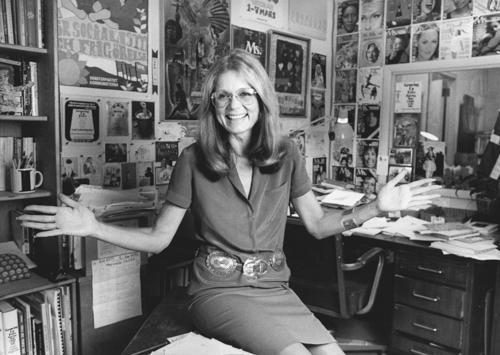
Gloria Steinem discusses the 10th anniversary of "Ms." magazine
Jun. 17, 1982 According to Gloria Steinem, "Ms." magazine is not only a national feminist magazine, but it's also a portable friend. A regular feature of the magazine is to celebrate found women, women who are not celebrities but who should be celebrated for what they do. This interview also includes an excerpt of Aunt Molly Jackson.
-
-
George Anastaplo discusses his denial into the Illinois State Bar Association
Feb. 6, 1986 Before admittance, 17 members of the Illinois Bar Association asked George Anastaplo two questions. Should people in the Communist Party be allowed to practice law, to which Anastaplo answered yes. The members then asked Anastaplo if he was a member of the party. Anastaplo refused to answer that question because he deemed it an improper question for the Bar to ask. Anastaplo himself argued his case in front of the U.S. Supreme Court.
-
Geoffrey Wolff discusses his book about Harry Crosby
Nov. 17, 1976 Terkel interview author Geoffrey Wolff about his latest book. Entitled "Black Sun," it is a biography of Harry Crosby.
-
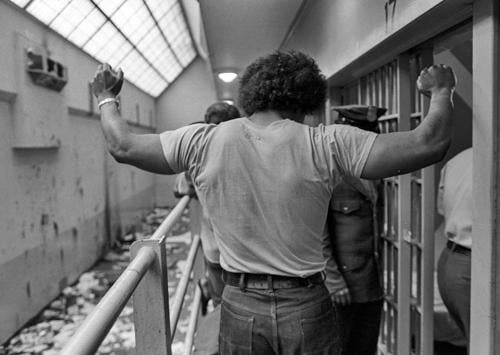
Frank Elli discusses his time as a prisoner and his novel "The Riot"
1968 Begins with a reading by Frank Eli from the opening of the book "The Riot." Mr. Elli discusses his early life, his time in three different prisons, and the writing of his book "The Riot," a personal account of a riot in Walla Walla Prison. (Note: last 5 minutes missing)
-
Ernest Morgan discusses the Arthur Morgan School in Burnesville, NC with Studs Terkel
Aug. 9, 1965 Interview with Ernest Morgan about the Arthur Morgan School in Burnesville, NC that was founded by family. They discuss the teaching and learning ideology for the students (aged 12-16) who attend the school. Ernest describes the curriculum that includes outdoor learning in Black Mountain where the school is located. Includes a piece from an interview with Alexander Sutherland Neill about student and school adjustment. Ernest Morgan quotes Martin Luther King on maladjustment.
-
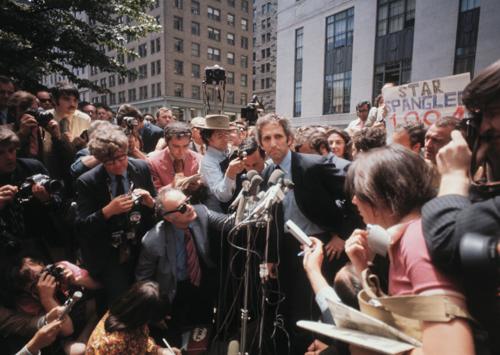
Eqbal Ahmad, Daniel Ellsberg, Anthony Lukas and Anthony Russo talk with Studs Terkel ; part 3
Jun. 9, 1972 Eqbal Ahmad, Daniel Ellsberg, Anthony Lukas and Anthony Russo discuss Anthony Russo's trial and treatment he endured during his time from conviction to release in federal prison compared to the treatment of prisoners tortured in Vietnam.
-
Emlyn Williams talks with Studs Terkel
Nov. 10, 1957 Terkel interviews Welsh actor/writer/dramatist Emlyn Williams.
-
Elsa Gress discusses her work, current events, cultural movements
Oct. 1, 1968 Danish essayist and novelist Elsa Gress discusses her work, current events, and cultural movements. Her book "My Many Homes" ("Mine mange hjem") is also mentioned. She talks about American and Demark, theater, and the sexual revolution.
-
Edward W. Said discusses Palestine, history of and struggles in the Middle East
Oct. 1, 1984 Edward W. Said talks about the importance of language in shifting perceptions of Middle Eastern people, refutes some opinions about Palestine, identities, and overlapping Eastern and Western cultures.
-
Dr. Quentin Young discusses his work at Cook County Hospital
Aug. 20, 1974 Dr. Young talks about his policy about addictive medications at Cook County Hospital, and about the financially driven connections between pharmaceutical companies and doctors.
-
Dr. Meir Yoeli discusses medicine
1969 It is not enough to just treat a disease, explained Dr. Meir Yoeli. Dr. Yoeli said there needs to be a bridge for both science and for the truth of the heart. Also a poet, Dr. Yoeli reads a poem in English and then in Hebrew.