Listen to New Voices on Studs Terkel our partnership with 826CHI-here! Read the Story


Showing 1051 - 1065 of 3671 results
-

Louis Untermeyer reads from and discusses "The Library of Great American Writing" ; part 1
Dec. 31, 1959 In his book, "The Library of Great American Writing," Louis Untermeyer points out great writers and their works. Untermeyer believed that there was no one great piece of literature, but rather many great works from ordinary people, as well. For instance, Untermeyer explained, that when Abraham Lincoln wrote the Gettysburg Address, Lincoln didn't realize he was writing a great piece of literature.
-
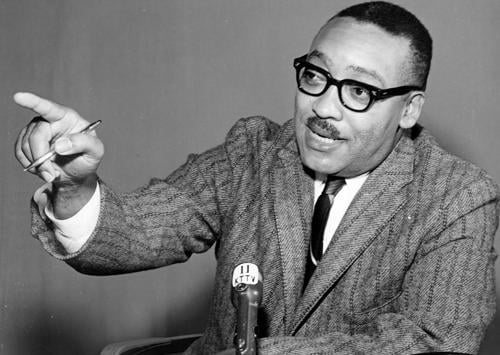
Louis Lomax discusses the book "Thailand: The War That Is, The War That Will Be"
1967 Discussing Thailand and interviewing journalist Louis Lomax. Includes passage from book.
-

Louis Font and Ed Fox discuss their time in the military and the Vietnam War
Jun. 11, 1971 Louis Font and Ed Fox discuss their time in the military, the Vietnam War, military rituals, and West Point military academy. They express their anti-war sentiments and describe atrocities committed in Vietnam.
-
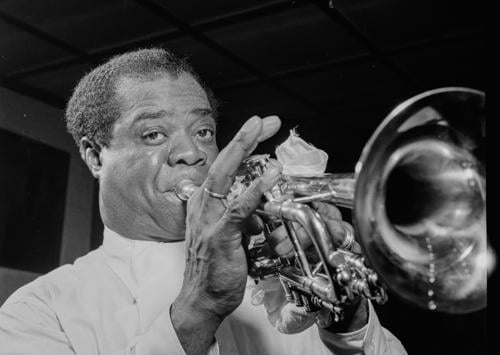
Louis Armstrong discusses music
Jun. 24, 1962 In a nightclub in Chicago, at two in the morning and after a performance, Louis Armstrong talks about his music stylings. Notes are good to learn the tune, says Armstrong, but it's all about the phrasing. Armstrong explained, it's up to you to express yourself. Armstrong shared the one piece of advice that had always stuck with him. King Oliver told Armstrong not to worry about the notes but rather to put some lead into the song.
-
Lou Conte, Shirley Mordine, and Nana Solbrig discuss dance in Chicago
Jun. 4, 1979 Studs Terkel interviews Chicago choreographers Lou Conte, Shirley Mordine, and Nana Solbrig.
-
Lotte Lehmann talks with Studs Terkel
Apr. 14, 1960 Lotte Lehmann discusses her retirement from opera and how she knew when to stop singing concerts.
-
Lotte Lehmann discusses her opera roles and how opera has changed ; part 2
May. 9, 1967 Lotte Lehmann, legendary opera soprano, discusses her book "Five Operas and Richard Strauss" about her portrayals of famous roles. Interviewing Lotte Lehmann, recorded at the Orrington Hotel, Evanston (including excerpt from master class at Northwestern and recording excerpts from Walkure with Melchior).
-
Lotte Lehmann discusses her opera roles and how opera has changed ; part 1
May. 9, 1967 Short wrap-up of interview and a few words about some of her favorite recordings - "Morgen" and "Die Walküre" / "Valkyrie" by Strauss. Interviewing Lotte Lehmann, recorded at the Orrington Hotel, Evanston (including excerpt from master class at Northwestern and recording excerpts from Walkure with Melchior).
-
Lotte Lehmann discusses her opera roles and how opera has changed
Apr. 18, 1960 Interviewing Madame Lotte Lehmann about her opera roles and how the genre of opera has changed.
-
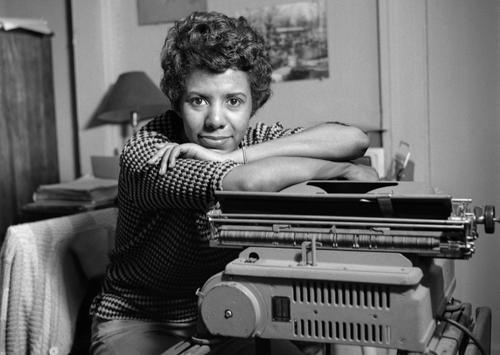
Lorraine Hansberry discusses her play "A Raisin in the Sun"
May. 12, 1959 Playwright Lorraine Hansberry discusses her play "A Raisin in the Sun" and theater in general; last 10 minutes is a reading of "Chicago: South Side Summers" from "To Be Young, Gifted, and Black." Orginal air date is 05/12/1959
-
Loren Baritz talks about his theories on professional intellectuals and discusses his book "The Servants of Power: A History of The Use of Social Science in American Industry"
Jan. 25, 1963 Loren Baritz a professor of Intellectual History discusses professional intellectuals as schizophrenics. His main theory being that they have to split themselves; the intellectual in the ivory tower and the Woman/Man, the side that needs to participate in society.
-

Loren Baritz discusses the relationship between education and work
Jul. 31, 1974 Loren Baritz, Executive Vice President of Empire State College (part of the State University of New York), discusses the purpose of higher education and the relationship between higher education and work. Topics of discussion include the current state of student apathy driven by economic insecurity, vocationalism, the structure of higher education institutions, and how the generation gap affects learning. Baritz also discusses the redefining of work in American culture and ideas for making liberal arts education more relevant to work.
-
-
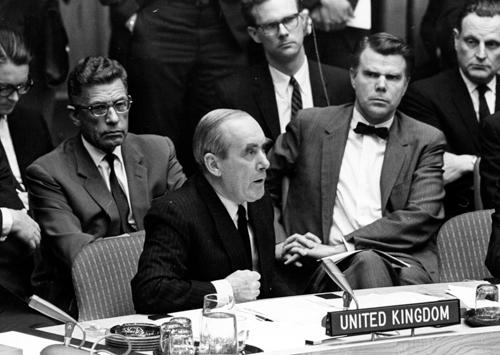
Lord Caradon discusses the United Nations
1967 Lord Caradon discusses the United Nations and its efforts.
-
London taxi driver discusses changes in London and speaks about present-day youth culture ; part 1
1968 During a visit to London, Studs interviews a 73 year old cab driver in London, who has 50 years on the job. They discuss traffic jams, the elderly and the young, poverty, welfare, and society. Studs also interviews a number of people attending the Tate Gallery's Lichtenstein Exhibition.