Listen to New Voices on Studs Terkel our partnership with 826CHI-here! Read the Story


Showing 811 - 825 of 3671 results
-

Oliver W. Sacks discusses his book "Awakenings"
1985 In the of first of many appearances on Studs' radio show, Oliver Sacks discusses his book "Awakenings" and recounts several patient profiles from his groundbreaking treatment application of L-DOPA to sufferers of Sleeping sickness and Parkinson's disease. They explore his work in the context of Studs' concept of Feeling Tone and Sacks tells of a remarkable scene with aphasic patients reacting to a speech of then President Ronald Reagan.
-
Oliver W. Sacks discusses deaf experiences as detailed in his book "Seeing Voices"
Oct. 26, 1990 Dr. Oliver W. Sacks discusses people and concepts presented in his book "Seeing Voices"; the interview is for the paperback release.
-
Oliver Sacks discusses his work in neurology and the books he has written
Dec. 4, 1985 Oliver Sacks, a neurologist and author, speaks with Studs Terkel about his work in neurology and some of the books he has written. This is the first part of two interviews with Sacks.
-
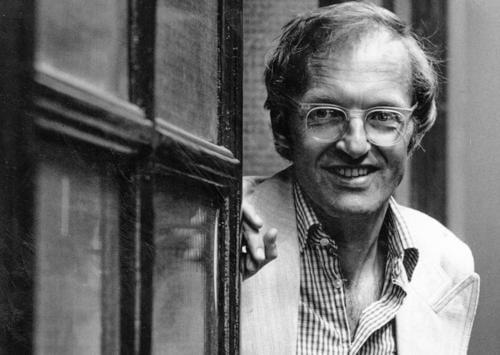
Oliver Howes discusses life in England; part 2
1962 Oliver Howes discusses his thoughts on racism in England, his daily life, and what he wants out of life. Audio is distorted from 15:39 to 35:42; part 2.
-
Ola Belle Reed, Sonny Miller & Bud Reed discuss their career and history with music
Mar. 17, 1977 Ola Belle Reed folk singer, songwriter and blue grass musician talks about her childhood in the Appalachians as well as her musical influences that inspire her musical career.
-
Odetta talks about her music career with Studs Terkel
1956 Odetta (often referred as "The Voice of the Civil Rights Movement") talks about her music career and sings to Studs Terkel. The interview segments are between songs. This record is part of the Studs Terkel Almanac.
-
Odetta discusses her music career
Mar. 12, 1970 Folk singer Odetta joins Studs to talk about her life and music, including her songs "Riding in My Car (Car Song)," "Gallows Pole," and "Sometimes I Feel Like a Motherless Child," among others.*Please note: some sections have been edited out from the original recording due to copyright considerations
-
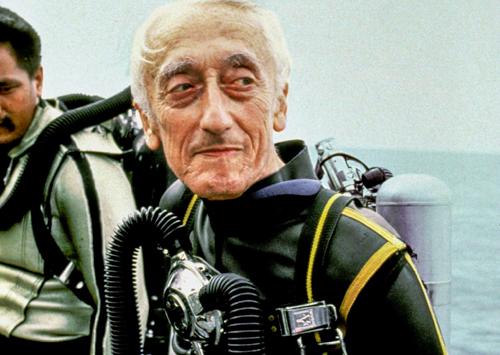
Oceanographer Jacques Cousteau talks with Studs Terkel
Aug. 26, 1976 Oceanographer Jacques Cousteau discusses man's effect on the planet. Includes a clip with whale sounds and statements by Joan McIntyre.
-
Ntozake Shange discusses her successful play and recent poetry
Oct. 26, 1978 Ntozake Shange discusses her play, "for colored girls who have considered suicide / when the rainbow is enuf." She goes on to discuss her advocacy for more Black authors and poets, especially in experimental artistic endeavors.*Please note: some sections have been edited out from the original recording due to copyright considerations
-
Novelist Robert Kotlowitz reads from and discusses his book "The Boardwalk"
Feb. 3, 1977 Content Warning: This conversation includes racially and/or culturally derogatory language and/or negative depictions of Black and Indigenous people of color, women, and LGBTQI+ individuals. Rather than remove this content, we present it in the context of twentieth-century social history to acknowledge and learn from its impact and to inspire awareness and discussion. Almost all the characters in Robert Kotlowitz's book, "The Boardwalk" are fictitious with the exception of Teddy, a Jewish, 14-year-old boy, who Kotlowitz explains is Robert Kotlowitz.
-
Noted Norwegian adventurer and ethnographer Thor Heyerdahl discusses his most recent book
Oct. 9, 1981 Noted Norwegian adventurer and ethnographer Thor Heyerdahl discusses his most recent book "The Tigris Expedition: In Search of Our Beginnings" in which Heyerdahl and a crew of 10 men built a reed boat in Iraq and sailed it through the Persian Gulf, around the Horn of Africa, to Pakistan and eventually the Red Sea. Their goal was to prove that the ancient peoples of Mesopotamia and the Indus Valley could have been in contact through marine trade and migration.
-
Norman Wallace discusses his music career
Jun. 8, 1980 Norman Wallace discusses his music career. Norman Wallace discusses his occupations as a pianist and a songwriter.
-
Norman Thomas talks with Studs Terkel
1968 Interviewing Norman Thomas on the occasion of his 80th birthday.
-
Norman Thomas discusses the book "Great Dissenters" ; part 1
Nov. 11, 1961 According to Norman Thomas, things in life are not as great as they used to be and there's nothing wrong with dissenting. Thomas chose 5 dissenters to write about, Socrates, Galileo, Thomas Paine, Wendell Phillips and Gandhi. Of of all of them, Gandhi was the biggest dissenter of our time, said Thomas.
-
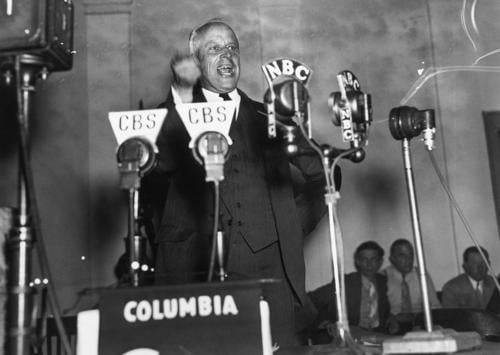
Norman Thomas discusses social progress ; part 2
Dec. 30, 1964 Socialist Party leader and Presbyterian minister Norman Thomas discusses social progress, his political views, and where society is headed with Studs Terkel. This is the final part of his interview.